Translate this page:
Summary
Ipomoea batatas,
Sweet Potato Vine is a perennial flowering climber that grows wild in warm climates worldwide. Without support, the rambling vine will cover the ground for many metres and climb anything upright, sometimes to the detriment of young trees. The leaves, young shoots and roots are all edible and used to make various foods, including tamales and paella. The sweet and fleshy root is cooked and is a rich source of vitamins and minerals. It is a common vegetable ingredient in Southeast Asian cuisine, such as stir-fries and soups. The leaves and shoots are excellent edible greens. The raw leaves have a strong flavour that is improved by sautéing them, adding them to stir-fries, or chopping them finely and adding them to salads.
Harvesting: Roots late summer to early spring, usually around 90-120 days after planting. Leaves and shoots - young growth.
Propagation: Seed. Stem cuttings obtained from terminal shoots – Easy. A fast-growing plant covering ground quickly and reaching full size within a few months. Flowers in late summer to early autumn. Main Bloom Time: Late summer, Mid summer. Form: Spreading or horizontal.
Physical Characteristics

 Ipomoea batatas is a PERENNIAL CLIMBER growing to 3 m (9ft 10in) at a fast rate.
See above for USDA hardiness. It is hardy to UK zone 9 and is frost tender. The species is hermaphrodite (has both male and female organs) and is pollinated by Insects, especially bees. The plant is self-fertile.
It is noted for attracting wildlife.
Suitable for: light (sandy) and medium (loamy) soils and prefers well-drained soil. Suitable pH: mildly acid and neutral soils. It cannot grow in the shade. It prefers moist soil.
UK Hardiness Map
US Hardiness Map
Synonyms
Plant Habitats
Cultivated Beds; South Wall. By. West Wall. By.
Edible Uses
Edible Parts: Leaves Root Shoots
Edible Uses:
Root - cooked[200]. Sweet and fleshy, it is a delicious staple food and is also very nutritious providing a rich source of vitamins and minerals[200, K]. There are cultivars with soft, moist flesh and also forms with a more dry flesh[200]. There are also less sweet cultivars, bred for industrial production of starch[200]. In order for the roots to store through the winter, they need to be cured in the sunshine at temperatures around 25°c fr about a week before being stored at around 14°c[264]. Young shoot tips[264].
References More on Edible Uses
Medicinal Uses
Plants For A Future can not take any responsibility for any adverse effects from the use of plants. Always seek advice from a professional before using a plant medicinally.
None known
References More on Medicinal Uses
The Bookshop: Edible Plant Books
Our Latest books on Perennial Plants For Food Forests and Permaculture Gardens in paperback or digital formats.
Edible Tropical Plants
Food Forest Plants for Hotter Conditions: 250+ Plants For Tropical Food Forests & Permaculture Gardens.
More
Edible Temperate Plants
Plants for Your Food Forest: 500 Plants for Temperate Food Forests & Permaculture Gardens.
More
More Books
PFAF have eight books available in paperback and digital formats. Browse the shop for more information.
Shop Now
Other Uses
Biomass Fuel
Agroforestry uses: It can be used as ground cover to prevent soil erosion, improve soil structure, and suppress weeds. The vines also provide habitat for beneficial organisms. Landscape Uses: Alpine garden, Arbor, Container, Groundcover, Specimen. The root is a source of starch[200]. Sweet potato tubers are being examined as a valuable raw material for producing alcohol bio-fuel[418]. 1. Nectary - Flowers rich in nectar and pollen:
Yes – Sweet potato vines produce attractive flowers that can provide nectar and pollen for pollinators.
2. Wildlife - Food (Fruit, Seeds, Leaf litter, Shelter, Nesting, Roosting):
Yes – The tubers (sweet potatoes) are a valuable food source for both humans and wildlife. The leaves can also be consumed by herbivores. While the plant itself may not serve as a primary nesting site, it can provide some cover and shelter due to its dense foliage.
3. Invertebrate Shelter (Overwintering sites, Leaf litter, Groundcover):
Yes – The sprawling nature of the sweet potato vine can create ground cover, providing habitat for invertebrates and helping to retain moisture in the soil. Additionally, the leaf litter can serve as shelter.
4. Pest Confuser (Smell):
Yes – The aromatic leaves may have pest-repelling properties and can help confuse some pests, benefiting neighboring plants.
Special Uses
Food Forest Ground Cover
References More on Other Uses
Cultivation details
An easily grown plant. Sweet potato is a plant of the tropics, but can also be grown in the subtropics and, if there is a sufficient growing season of 110 - 170 days, as an annual crop in warmer parts of the temperate zone. It is grown in the tropics at elevations up to 2,800 metres. It grows best in areas where annual daytime temperatures are within the range 18 - 28°c, but can tolerate 10 - 38°c[418
]. When dormant, the roots can survive temperatures down to about 1°c, but young growth can be killed by temperatures of 5°c[418
]. It prefers a mean annual rainfall in the range 750 - 2,000mm, but tolerates 350 - 5,000mm[418
].
An easily grown plant, it prefers a well-drained, sandy loam soil and requires a sunny position[200
, 264
]. Ample potash in the soil is essential for a good crop[264
]. Prefers a pH in the range 5 - 7, tolerating 4 - 8.7[418
]. A low humidity as the plants reach maturity is beneficial[200
].
Plants grow very vigorously in the tropics. They have escaped from cultivation in some areas and become invasive[296
, 305
].
Unlike many root crops, the sweet potato begins to store starch at an early age, making early harvests possible[298
]. It is one of the most efficient plants to capture the energy of the sun as calories[298
].
The plant can mature a crop within 2 months in tropical areas, though at least three months are required in sub-tropical regions[264
].
Optimum yields vary from 17.5 - 27.5 tonnes per hectare depending on the cultivar and growing conditions, while average yields are 5 tonnes per hectare in Africa, 10 tonnes in South America and 16 tonnes in Asia. The world highest production yield at 80 tonnes has been obtained in Israel[418
].
A short-day plant, it requires less than 11 hours of sunlight per day to initiate flowering[200
]. However, day length variation appears to have little effect upon tuber production[200
]. Special Features:
Attractive foliage, Edible. Sweet Potato Vine is self-fertile. Harvest typically occurs in late summer to early autumn, usually around 90-120 days after planting, depending on the variety.
Sweet Potato Vine flowers in late summer to early autumn.
Sweet Potato Vine is a fast-growing plant, often covering ground quickly and reaching full size within a few months.
References Carbon Farming Information and Carbon Sequestration Information
Temperature Converter
Type a value in the Celsius field to convert the value to Fahrenheit:
Fahrenheit:
The PFAF Bookshop
Plants For A Future have a number of books available in paperback and digital form. Book titles include Edible Plants, Edible Perennials, Edible Trees,Edible Shrubs, Woodland Gardening, and Temperate Food Forest Plants. Our new book is Food Forest Plants For Hotter Conditions (Tropical and Sub-Tropical).
Shop Now
Plant Propagation
Pre-soak the seed for 12 hours in warm water, or scarify the seed, and sow in individual pots in a greenhouse in early spring. The seed usually germinates in 1 - 3 weeks at 22°c. Plants are extremely resentful of root disturbance, even when they are quite small, and should be potted up almost as soon as they germinate. Grow them on in the greenhouse for at least their first winter then plant them out into their permanent positions in late spring or early summer, after the last expected frosts. Seedlings can be very variable and are likely to be less productive than vegetatively produced plants[200]. Stem cuttings obtained from terminal shoots[200]. Remove the lower leaves and insert the cuttings to half their depth in individual pots.
Other Names
If available other names are mentioned here
Sweet Potato, Agietu, Anago-te, Anamo, Atomo anago, Bambaira, Bath-ala, Blofo atomo, Boniato, Buteta, Camote, Chakarakilangu, Chelagada, Chokeh, Damloong chhvie, Dankali, Dinkale, Dukuma, Ekomeko, E-muna, Faan shu, Fanshu, Genasu, Hila, Hongshu, Huwi boled, Huwi matang, Imbambaila, Ji-oyibo, Kalembula wa lungu, Kamote, Kanangi, Kanda, Kaukau, Kawai-ni-vulagi, Keladi, Keledek, Ketela, Khoai lang, Klawang, Kudaku, Kukunduku, Kumala, Kumara, Lal alu, Luzu vaka, Man-thet, Mitha alu, N jowo, Ntommo, Odunkum, Petete, Phan-karo, Pilau katelo, Pot-ecok, Ranga alu, Ratalu, Sakaria, Sakarkenda, Sakarkhand, Sakkareivelleikilangu, Satsuma inno, Setilo, Shakar-kandi, Shakarkand, apichu, batat, batata, batata-da-terra, batata-doce, batate, boniato, bíme mábi, goguma, kkumara, kuumara, papa dulce, patate douce, sweet-potato, süßkartoffel, tuktuka, wild potato vine, wild potato wit, yam, zoete aardappel.
Native Range
NORTHERN AMERICA: Mexico, Veracruz de Ignacio de la Llave,
Weed Potential
Right plant wrong place. We are currently updating this section.
Please note that a plant may be invasive in one area but may not in your area so it's worth checking.
Conservation Status
IUCN Red List of Threatened Plants Status : This taxon has not yet been assessed
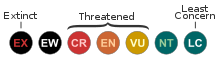
Growth: S = slow M = medium F = fast. Soil: L = light (sandy) M = medium H = heavy (clay). pH: A = acid N = neutral B = basic (alkaline). Shade: F = full shade S = semi-shade N = no shade. Moisture: D = dry M = Moist We = wet Wa = water.
Now available:
Food Forest Plants for Mediterranean Conditions
350+ Perennial Plants For Mediterranean and Drier Food Forests and Permaculture Gardens.
[Paperback and eBook]
This is the third in Plants For A Future's series of plant guides for food forests tailored to
specific climate zones. Following volumes on temperate and tropical ecosystems, this book focuses
on species suited to Mediterranean conditions—regions with hot, dry summers and cool, wet winters,
often facing the added challenge of climate change.
Read More
Expert comment
Author
(L.)Poir.
Botanical References
200
Links / References
For a list of references used on this page please go here
A special thanks to Ken Fern for some of the information used on this page.
Readers comment