 |
|
http://commons.wikimedia.org/wiki/File:Fagopyrum_tataricum_-_Kops.jpg |
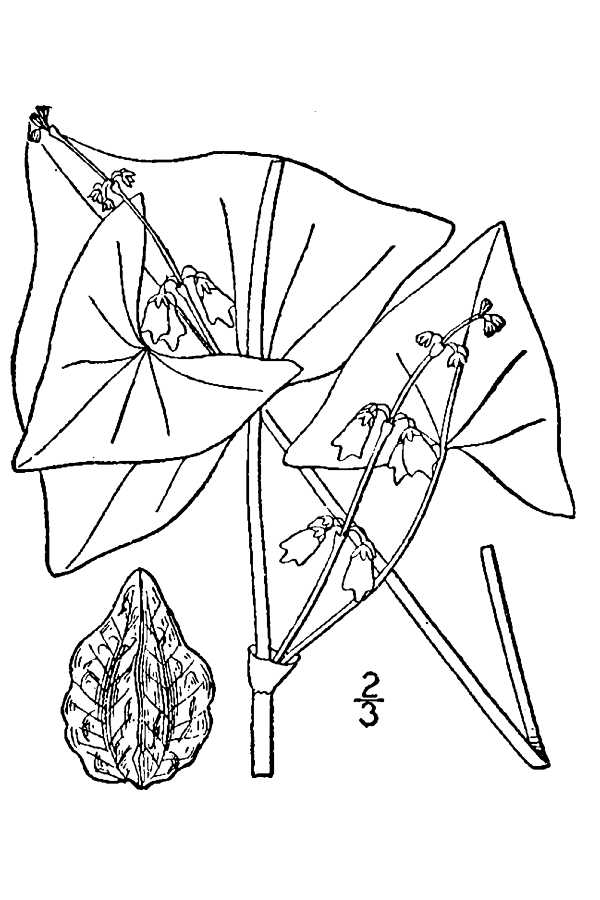 |
| USDA-NRCS PLANTS Database / Britton, N.L., and A. Brown. 1913. An illustrated flora of the northern United States, Canada and the British Possessions. Vol. 1: 672. |
Translate this page:
Summary
Physical Characteristics

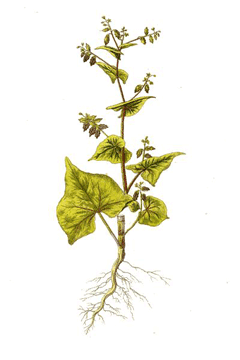
 Fagopyrum tataricum is a ANNUAL growing to 0.8 m (2ft 7in). It is in flower from July to September. The species is monoecious (individual flowers are either male or female, but both sexes can be found on the same plant) and is pollinated by Bees, flies.
Suitable for: light (sandy), medium (loamy) and heavy (clay) soils, prefers well-drained soil and can grow in nutritionally poor soil. Suitable pH: mildly acid, neutral and basic (mildly alkaline) soils and can grow in very acid soils.
It cannot grow in the shade. It prefers dry or moist soil.
UK Hardiness Map
US Hardiness Map
Synonyms
Polygonum tataricum.
Plant Habitats
Cultivated Beds;
Edible Uses
Edible Parts: Leaves Oil Seed
Edible Uses: Oil
Leaves - raw or cooked[183, 272]. Acceptable raw when added in small quantities to mixed chopped salads, otherwise the leaves are much better cooked[K]. They are rich in rutin. Seed - cooked as a cereal[2, 46, 100, 105, 272].The seed can also be sprouted and used in salads, or ground into a powder and used as a cereal[183]. An edible oil is obtained from the seed[177, 183].
References More on Edible Uses
Medicinal Uses
Plants For A Future can not take any responsibility for any adverse effects from the use of plants. Always seek advice from a professional before using a plant medicinally.
Astringent
The bark is astringent[240].
References More on Medicinal Uses
The Bookshop: Edible Plant Books
Our Latest books on Perennial Plants For Food Forests and Permaculture Gardens in paperback or digital formats.
Edible Tropical Plants
Food Forest Plants for Hotter Conditions: 250+ Plants For Tropical Food Forests & Permaculture Gardens.
More
Edible Temperate Plants
Plants for Your Food Forest: 500 Plants for Temperate Food Forests & Permaculture Gardens.
More
More Books
PFAF have eight books available in paperback and digital formats. Browse the shop for more information.
Shop Now
Other Uses
Oil
Fagopyrum tataricum (Tartary buckwheat) is highly valued for ecological and wildlife benefits. Beyond human consumption, it serves several important environmental and agricultural functions: Wildlife Forage and Cover: The seeds are a favorite food source for wildlife, particularly game birds like pheasants, as well as turkeys and deer. The foliage is also planted in dedicated wildlife food plots. Pollinator and Insectary Habitats: The flowers provide excellent pasture for foraging insects. They attract a diverse range of pollinators and beneficial predatory insects, such as hoverflies and parasitic wasps, which act as natural pest control for neighboring crops. Biodiversity Support: Cultivating it can help maintain broader biodiversity by providing essential forage for wild insects in monoculture-dominated areas. Because of its overall positive impact on ecosystems, it is celebrated as an environmentally and biodiversity-friendly crop. Soil Health and Cover: It is an aggressive, fast-growing crop that quickly smothers out weeds and prevents soil erosion. When plowed back into the ground, it acts as a green manure, breaking down to replenish the soil with organic matter and converting essential nutrients for future crops.
Special Uses
References More on Other Uses
Cultivation details
A very easily grown plant, it prefers dry sandy soils but succeeds in most conditions including poor, heavy or acid soils[160] and even sub-soils. Prefers a cool moist climate, also succeeds in dry and arid regions. Tartarian buckwheat is hardier and more resistant to cold than the more commonly grown buckwheat, F. esculentum, though it does not yield so highly[132]. Occasionally cultivated for its edible seed in Europe and the Himalayas[50, 51], there is at least one named variety[183]. 'Madawaska' is more cold hardy and drought tolerant than the type[183].
References Carbon Farming Information and Carbon Sequestration Information
Temperature Converter
Type a value in the Celsius field to convert the value to Fahrenheit:
Fahrenheit:
The PFAF Bookshop
Plants For A Future have a number of books available in paperback and digital form. Book titles include Edible Plants, Edible Perennials, Edible Trees,Edible Shrubs, Woodland Gardening, and Temperate Food Forest Plants. Our new book is Food Forest Plants For Hotter Conditions (Tropical and Sub-Tropical).
Shop Now
Plant Propagation
Seed - sow from the middle of spring to early summer in situ. The seed usually germinates in 5 days[115]. The earlier sowings are for a seed or leaf crop whilst the later sowings are used mainly for leaf crops or green manure.
Other Names
If available other names are mentioned here
Tartary buckwheat
Native Range
TEMPERATE ASIA: Mongolia, China (Gansu Sheng, Guizhou Sheng, Hebei Sheng, Heilongjiang Sheng, Hubei Sheng, Hunan Sheng, Jilin Sheng, Liaoning Sheng, Nei Mongol Zizhiqu, Qinghai Sheng, Shaanxi Sheng, Shanxi Sheng, Sichuan Sheng, Xinjiang Uygur Zizhiqu, Xizang Zizhiqu, Yunnan Sheng) TROPICAL ASIA: India, Nepal
Weed Potential
Right plant wrong place. We are currently updating this section.
Please note that a plant may be invasive in one area but may not in your area so it's worth checking.
Conservation Status
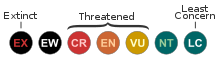
IUCN Red List of Threatened Plants Status :
Growth: S = slow M = medium F = fast. Soil: L = light (sandy) M = medium H = heavy (clay). pH: A = acid N = neutral B = basic (alkaline). Shade: F = full shade S = semi-shade N = no shade. Moisture: D = dry M = Moist We = wet Wa = water.
Now available:
Food Forest Plants for Mediterranean Conditions
350+ Perennial Plants For Mediterranean and Drier Food Forests and Permaculture Gardens.
[Paperback and eBook]
This is the third in Plants For A Future's series of plant guides for food forests tailored to
specific climate zones. Following volumes on temperate and tropical ecosystems, this book focuses
on species suited to Mediterranean conditions—regions with hot, dry summers and cool, wet winters,
often facing the added challenge of climate change.
Read More
Expert comment
Author
(L.)Gaertn.
Botanical References
51266
Links / References
For a list of references used on this page please go here
Readers comment