 |
|
http://flickr.com/photos/58096907%40N00/ |
 |
| http://flickr.com/photos/58096907%40N00/ |
Translate this page:
Summary
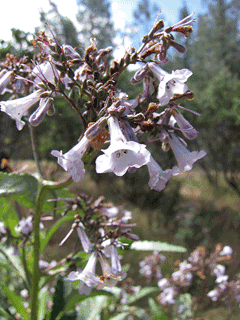
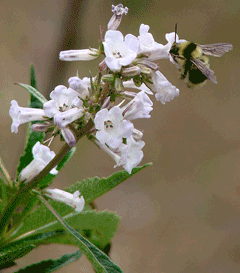
California yerba santa is the best-known yerba santa species and one of the classic medicinal shrubs of California chaparral and dry forest margins. Its sticky, fragrant leaves have a long history of use as a respiratory herb. As with the other yerba santas, it is not a food plant, but the leaves make a highly aromatic tea when used carefully. It is also a strong ecological plant, often responding vigorously after fire or soil disturbance. California yerba santa, Eriodictyon californicum, belongs to the borage family (Boraginaceae) in broad modern treatments, though many botanical and restoration references place the genus in Hydrophyllaceae or Namaceae. It belongs to the genus Eriodictyon. Common names include California yerba santa, yerba santa, mountain balm, and holy herb. It is an aromatic evergreen shrub generally suited to USDA Zones 7–10, especially in California and Oregon dryland climates. Plants commonly grow about 60–250 cm tall and may spread widely by rhizomes. It is native to dry habitats of chaparral and mixed evergreen forest communities in northern and central California and into Oregon.
Physical Characteristics

 Eriodictyon californicum is an evergreen Shrub growing to 2.3 m (7ft) by 2 m (6ft) at a medium rate.
See above for USDA hardiness. It is hardy to UK zone 8. It is in leaf all year, in flower from July to August. The species is hermaphrodite (has both male and female organs).
It is noted for attracting wildlife.
Suitable for: light (sandy) soils, prefers well-drained soil and can grow in nutritionally poor soil. Suitable pH: mildly acid, neutral and basic (mildly alkaline) soils. It cannot grow in the shade. It prefers dry or moist soil and can tolerate drought.
UK Hardiness Map
US Hardiness Map
Synonyms
Eriodictyon glutinosum Benth. Eriodictyon trichocalyx A.Heller.
Plant Habitats
South Wall. By. West Wall. By.
Edible Uses
Edible Parts: Leaves
Edible Uses: Condiment Tea
The leaves are used for tea only. The shrub is not edible as a vegetable, and the leaves should not be swallowed after chewing. The tea is best treated as medicinal and occasional rather than as a daily beverage [2-3]. Edible Uses & Rating: As a tea herb, California yerba santa ranks highly for its flavor and traditional significance. As a food plant, it ranks low because it provides no meaningful calories or edible bulk. Its value is medicinal, aromatic, and ecological [2-3]. Taste, Processing & Kitchen Notes: A light infusion has a sweet, resinous, fruity, piney, and bay-like character, often with a soothing, cooling effect in the throat. A strong infusion can become too resinous or medicinal. Fresh leaves are sticky and aromatic, and dried leaves remain useful for tea. The best preparation is a restrained hot infusion, strained before drinking. It is not a plant for salads, soups, or bulk food [2-3]. Seasonality (Phenology): Leaves are evergreen and can be gathered year-round, though spring growth is usually preferred. Flowering generally occurs in spring to early summer, depending on the region and elevation. Plants may respond strongly after fire or soil disturbance. Safety & Cautions (Food Use): Use tea in moderation. California yerba santa is a medicinal shrub, not a routine food. Strong or frequent use is not recommended. Avoid use during pregnancy, with complex medical conditions, or with medications unless advised by a qualified practitioner. Do not smoke or ingest plant material casually; smoking use belongs to traditional medicinal contexts, not ordinary food use. Harvest & Processing Workflow: Harvest a few clean, resinous leaves from healthy shrubs. Use fresh or dry in shade with good airflow. Steep lightly in hot water, strain, and drink in modest amounts. Avoid stripping plants heavily, especially because the shrub provides habitat and pollinator resources. Cultivar/Selection Notes: There are no food cultivars. Native plant nurseries sometimes grow it for restoration, erosion control, wildlife value, and drought-tolerant landscaping. Selection is usually based on local genotype, rhizomatous vigor, and ecological fit. Look-Alikes & Confusion Risks: California yerba santa resembles other Eriodictyon species. It differs from hairyleaf yerba santa by its generally more northern range and less densely hairy calyces and corollas. It may also be confused with other sticky, aromatic chaparral shrubs, so the combination of resinous, leathery leaves and coiled flower clusters is important [2-3]. Traditional/Indigenous Use Summary: California yerba santa has a strong history of medicinal use, especially for respiratory complaints such as colds, influenza, coughs, and asthma-like symptoms. Its common name, “holy herb,” reflects the high regard in which it was held. USDA plant guides describe traditional use by tribes, including the Kawaiisu, Miwok, and others, for respiratory and medicinal purposes [2-3]. The fresh leaves are chewed for their refreshing taste and to quench thirst [183]. Aromatic sweet tea is made from fresh or dried leaves [183]. An extract from the leaves is used as a flavoring in baked goods, sweets, ice cream, and soft drinks [183].
References More on Edible Uses
Medicinal Uses
Plants For A Future can not take any responsibility for any adverse effects from the use of plants. Always seek advice from a professional before using a plant medicinally.
Antiasthmatic Expectorant Pectoral Tonic
Yerba Santa (the name means Holy weed) is a famous domestic remedy from south-western N. America where it is considered to be especially useful as an expectorant[238]. It is an ingredient of many patent cough medicines[238]. The leaves are an aromatic pleasant tasting tonic herb that reduces spasms, expels phlegm and lowers fevers[238, 254]. They are especially recommended for treating diseases of the chest and respiratory system, including asthma, and are also used in the treatment of hay fever[4, 200, 238]. A bitter tea made from the leaves has been much used as a bitter tonic and a stimulating balsamic expectorant[207, 213]. A steam bath made from the branches and leaves has been used in the treatment of rheumatism[257]. A decoction of the leaves has been used as a wash for sore areas and painful fatigued limbs[257]. A natural mouthwash is prepared by rolling the leaves into balls and allowing them to dry in the sun[213]. These are then chewed and at first have a bitter flavour but this is soon replaced by a sweetness if a drink of water is taken[213]. The leaves are harvested in the summer and dried for later use[238]. The plant has been smoked as a remedy for asthma[213].
References More on Medicinal Uses
Other Uses
Weaving
In the landscape it is an evergreen, aromatic, rhizomatous shrub that can form colonies. It is useful for native slopes, restoration sites, dry woodland edges, and chaparral gardens, but may be too vigorous for small formal spaces. The leaves have been woven into skirts and aprons[257]. Ecology & Wildlife: California yerba santa is a strong chaparral and dry forest-edge shrub, valuable for post-fire recovery, pollinators, and slope stabilization. It often acts as an opportunistic pioneer after disturbance.
Special Uses
Scented Plants
References More on Other Uses
Cultivation details
California yerba santa is a classic medicinal tea shrub of western North America. It is flavorful, aromatic, ecologically important, and useful in dry native landscapes, but it should not be treated as a food plant. Growing Conditions: It prefers dry rocky hillsides, ridges, chaparral slopes, forests, canyons, and riverbank edges below about 1,600 m elevation. It performs best in full sun to part shade, in dry, well-drained soils, and in disturbance-adapted landscapes. Habitat & Range: California yerba santa occurs from California into southwestern Oregon, especially in chaparral, mixed evergreen forest, dry slopes, ridges, canyons, and disturbed openings. Size & Landscape Performance: In the landscape, it is an evergreen, aromatic, rhizomatous shrub that can form colonies. It is useful for native slopes, restoration sites, dry woodland edges, and chaparral gardens, but may be too vigorous for small formal spaces. Cultivation (Horticulture): Grow in well-drained soil with low to moderate water during establishment and very little summer water once established. It may stump-sprout or resprout after fire and can respond vigorously to disturbance. Pests & Problems: The main issue in gardens is spreading by rhizomes. Overwatering and heavy soils can also be problematic. In the right setting, it is tough and resilient. Identification & Habit: California yerba santa is an aromatic evergreen shrub with alternate, leathery, sticky leaves and terminal clusters of pale to lavender flowers. The leaves are shiny and resinous, and the shrub may form patches through underground rhizomes. Pollinators: The flowers support many native pollinators, including bees and butterflies. Yerba santa flowers are also associated with butterfly habitat value in native plant gardening. Requires a position in full sun in a well-drained sandy soil[200]. This species is not hardy in the colder areas of the country, it tolerates temperatures down to about -5°c[200]. It is probably best grown against a sunny wall. If the plant needs pruning to keep it within bounds, then this is best carried out in spring or early summer. Do not cut back to wood more than 2 years old[238]. This plant is remarkable for the coating of varnish-like resin that covers the upper leaf surface[200]. The foliage is very aromatic[200].
References Carbon Farming Information and Carbon Sequestration Information
Temperature Converter
Type a value in the Celsius field to convert the value to Fahrenheit:
Fahrenheit:
The PFAF Bookshop
Plants For A Future have a number of books available in paperback and digital form. Book titles include Edible Plants, Edible Perennials, Edible Trees,Edible Shrubs, Woodland Gardening, and Temperate Food Forest Plants. Our new book is Food Forest Plants For Hotter Conditions (Tropical and Sub-Tropical).
Shop Now
Plant Propagation
Propagation is by seed, rhizome division, or cuttings in some nursery settings. Fire or disturbance may stimulate regeneration in wild populations.
Other Names
If available other names are mentioned here
California yerba santa, yerba santa, mountain balm, and holy herb.
Native Range
NORTHERN AMERICA: United States (Oregon (southwest), California)
Weed Potential
Right plant wrong place. We are currently updating this section.
Please note that a plant may be invasive in one area but may not
in your area so it's worth checking.
Moderate in gardens because of rhizomatous spread, though it is native and ecologically valuable in its proper range. Calscape notes that it spreads by underground rhizomes and can form patches.
Conservation Status
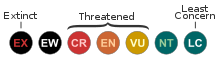
IUCN Red List of Threatened Plants Status : Not listed.
IUCN Red List
Growth: S = slow M = medium F = fast. Soil: L = light (sandy) M = medium H = heavy (clay). pH: A = acid N = neutral B = basic (alkaline). Shade: F = full shade S = semi-shade N = no shade. Moisture: D = dry M = Moist We = wet Wa = water.
Now available:
Food Forest Plants for Mediterranean Conditions
350+ Perennial Plants For Mediterranean and Drier Food Forests and Permaculture Gardens.
[Paperback and eBook]
This is the third in Plants For A Future's series of plant guides for food forests tailored to
specific climate zones. Following volumes on temperate and tropical ecosystems, this book focuses
on species suited to Mediterranean conditions—regions with hot, dry summers and cool, wet winters,
often facing the added challenge of climate change.
Read More
Expert comment
Author
(Hook. & Arn.) Decne.
Botanical References
200
Links / References
For a list of references used on this page please go here
Readers comment
| Add a comment |
|
If you have important information about this plant that may help other users please add a comment or link below. Only comments or links that are felt to be directly relevant to a plant will be included. If you think a comment/link or information contained on this page is inaccurate or misleading we would welcome your feedback at [email protected]. If you have questions about a plant please use the Forum on this website as we do not have the resources to answer questions ourselves.
* Please note: the comments by website users are not necessarily those held by PFAF and may give misleading or inaccurate information.
|
Subject : Eriodictyon californicum
|
|
|
|