Translate this page:
Summary
Dioscorea batatas Decne. is a synonym of Dioscorea polystachya Turcz.
Can be invasive if left unchecked. It invades open to shady areas in the Eastern United States and likely similar climate zones. A temperate or subtropical plant. It grows in forest and is cultivated from 100 - 2500 m in central and north China.
Physical Characteristics

 Dioscorea batatas is a PERENNIAL growing to 3 m (9ft) by 1.5 m (5ft).
See above for USDA hardiness. It is hardy to UK zone 5. It is in flower from September to October. The species is dioecious (individual flowers are either male or female, but only one sex is to be found on any one plant so both male and female plants must be grown if seed is required). . The plant is not self-fertile.
Suitable for: light (sandy), medium (loamy) and heavy (clay) soils and prefers well-drained soil. Suitable pH: mildly acid, neutral and basic (mildly alkaline) soils. It can grow in semi-shade (light woodland) or no shade. It prefers moist soil.
UK Hardiness Map
US Hardiness Map
Synonyms
D. polystachya Turcz. D. divaricata. D. opposita. Thunb.
Plant Habitats
Woodland Garden Sunny Edge; Cultivated Beds;
Edible Uses
Edible Parts: Fruit Root
Edible Uses:
Tuber - cooked[1, 46, 61, 105]. A floury texture[27] with a very pleasant flavour that is rather like a potato[K]. The tubers can be boiled, baked, fried, mashed, grated and added to soups[183]. They store well and for a long time[27, 37] and can also be left in the ground and harvested as required in the winter[K]. This is a top quality root crop, very suitable for use as a staple food[K]. An arrowroot can be extracted from the root[46], though this is not as good at binding other foods as the starch from D. japonica[183]. The root contains about 20% starch. 75% water, 0.1% vitamin B1, 10 - 15 mg% vitamin C[174]. Fruit. A starchy flavour, it is said to be very good for the health[206]. We wonder if this report is referring to the tubercles[K]. We've heard the aerial tubers can be eaten and are very tasty. Carbon Farming - Staple Crop: basic starch.
References More on Edible Uses
Medicinal Uses
Plants For A Future can not take any responsibility for any adverse effects from the use of plants. Always seek advice from a professional before using a plant medicinally.
Anthelmintic Antidote Contraceptive Digestive Miscellany Vitamin C
The Chinese yam, called Shan Yao in Chinese herbalism, is a sweet soothing herb that stimulates the stomach and spleen and has a tonic effect on the lungs and kidneys[238]. The tuber contains allantoin, a cell-proliferant that speeds the healing process[238]. The root is an ingredient of "The herb of eight ingredients", traditionally prescribed in Chinese herbalism to treat hyperthyroidism, nephritis and diabetes[254]. The tuber is anthelmintic, digestive and gently tonic[116, 147, 218, 254]. It is used internally in the treatment of tiredness, weight loss, poor appetite, poor digestion, chronic diarrhoea, asthma, dry coughs, frequent or uncontrollable urination, diabetes and emotional instability[238]. It is applied externally to ulcers, boils and abscesses[218, 238]. The tubers are harvested in the autumn and can be used raw or baked[238]. The leaf juice is used to treat snakebites and scorpion stings[218]. The roots of most, if not all, members of this genus, contains diosgenin[222, 240]. This is widely used in modern medicine in order to manufacture progesterone and other steroid drugs. These are used as contraceptives and in the treatment of various disorders of the genitary organs as well as in a host of other diseases such as asthma and arthritis[222].
References More on Medicinal Uses
The Bookshop: Edible Plant Books
Our Latest books on Perennial Plants For Food Forests and Permaculture Gardens in paperback or digital formats.

Edible Tropical Plants
Food Forest Plants for Hotter Conditions: 250+ Plants For Tropical Food Forests & Permaculture Gardens.
More

Edible Temperate Plants
Plants for Your Food Forest: 500 Plants for Temperate Food Forests & Permaculture Gardens.
More

More Books
PFAF have eight books available in paperback and digital formats. Browse the shop for more information.
Shop Now
Other Uses
References More on Other Uses
Cultivation details
Management: Standard Minor Global Crop Staple Crop: Basic Starch
An easily grown plant, succeeding in a fertile well-drained soil in a sunny position or light shade[27, 37, 200], though it is best in full sun[160]. Plants are hardy to at least -18°c[160]. This species of yam is much cultivated in China for its edible root which can be up to 1 metre long[1]. It has a great potential to be a commercial crop in Britain, though a satisfactory method of harvesting the root needs to be found[K]. Plants take 3 - 4 years to reach full maturity[160], though one year roots of well grown plants can weigh more than 500g. There are many cultivated forms with different root shapes in China and Japan[174]. The yam is a climbing plant that supports itself by twining around the branches of other plants[219]. It can be grown successfully into small bushes or, perhaps simpler when being grown as a root crop, it can be grown up a frame in a similar manner to growing runner beans[K]. Plants produce tubercles (small tubers that are formed in the leaf axils of the stems), and can be propagated by this means[K]. The small white flowers have a pleasant scent of cinnamon[219]. There is some confusion over the correct name for this species. One report says that D. batatas is an invalid name that is often erroneously applied to two distinct species D. opposita and D. japonica[218]. The Flora of China accepts D. batatas as a synonym for D. polystachya[266]. Dioecious. Male and female plants must be grown if seed is required. Carbon Farming - Cultivation: regional crop. Management: standard. The plant is heat tolerant in zones 10 through 6. (Plant Hardiness Zones show how well plants withstand cold winter temperatures.
Plant Heat Zones show when plants would start suffering from the heat.
The Plant Heat Zone map is based on the number of "heat days" experienced in a given area where the temperature climbs to over 86 degrees F (30°C).
At this temperature, many plants begin to suffer physiological damage. Heat Zones range from 1 (no heat days) to 12 (210 or more heat days).
For example Heat Zone. 11-1 indicates that the plant is heat tolerant in zones 11 through 1.) For polyculture design as well as the above-ground architecture (form - tree, shrub etc. and size shown above) information on the habit and root pattern is also useful and given here if available. Growth habit is a single or multiple shooting vine from a crown [1-2]. Herbaceous. The root pattern is a tap root similar to a carrot going directly down [1-2].
Carbon Farming
-
Management: Standard
Plants grow to their standard height. Harvest fruit, seeds, or other products. Non-Destructive management systems.
-
Minor Global Crop
These crops are already grown or traded around the world, but on a smaller scale than the global perennial staple and industrial crops, The annual value of a minor global crop is under $1 billion US. Examples include shea, carob, Brazil nuts and fibers such as ramie and sisal.
-
Staple Crop: Basic Starch
The Carbon Farming Solution. Eric Toensmeier.
References Carbon Farming Information and Carbon Sequestration Information
Temperature Converter
Type a value in the Celsius field to convert the value to Fahrenheit:
Fahrenheit:
The PFAF Bookshop
Plants For A Future have a number of books available in paperback and digital form. Book titles include Edible Plants, Edible Perennials, Edible Trees,Edible Shrubs, Woodland Gardening, and Temperate Food Forest Plants. Our new book is Food Forest Plants For Hotter Conditions (Tropical and Sub-Tropical).
Shop Now
Plant Propagation
Seed - sow March to April in a sunny position in a warm greenhouse and only just cover. It germinates in 1 - 3 weeks at 20°c[175]. Prick out the seedlings as soon as they are large enough to handle and grow on in a greenhouse for their first year. Plant out in late spring as the plant comes into new growth. Basal stem cuttings in the summer[37]. Division in the dormant season, never when in growth[1]. The plant will often produce a number of shoots, the top 5 - 10 cm of the root below each shoot can be potted up to form a new plant whilst the lower part of the root can be eaten[K]. Tubercles (baby tubers) are formed in the leaf axils. These are harvested in late summer and early autumn when about the size of a pea and coming away easily from the plant. They should be potted up immediately in individual pots in an unheated greenhouse or cold frame, covering them with about 10mm of soil. Protect them from mice etc and keep the soil moist but not wet. They should come into growth in the spring, plant them out in early summer when in active growth[K].
Other Names
If available other names are mentioned here
Shu yu, Igname de Chine, Naga imo, Yama imo, Shan yao, Tsukune-imo, Yama-imo, Ch'amma, Shanyao.
Native Range
TEMPERATE ASIA: Anhui Sheng, Fujian Sheng, Gansu Sheng (east), Guangdong Sheng (north), Guangxi Zhuangzu Zizhiqu, Guizhou Sheng, Hebei Sheng, Henan Sheng, Hokkaidô, Honshu, Hubei Sheng, Hunan Sheng, Japan, Jiangsu Sheng, Jiangxi Sheng, Jilin Sheng, Korea, Kyushu, Liaoning Sheng, Shaanxi Sheng (south), Shandong Sheng, Shikoku, Sichuan Sheng, Taiwan, Yunnan Sheng (north), Zhejiang Sheng,China.
Weed Potential
Right plant wrong place. We are currently updating this section.
Please note that a plant may be invasive in one area but may not in your area so it's worth checking.
Conservation Status
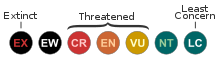
IUCN Red List of Threatened Plants Status : This taxon has not yet been assessed
| Related Plants
|
| Latin Name | Common Name | Habit | Height | Hardiness | Growth | Soil | Shade | Moisture | Edible | Medicinal | Other |
| Dioscorea alata | Water Yam, Purple yam, Greater yam, White yam | Perennial Climber | 15.0 |
10-12
| F | LMH | S | M | 4 | 1 | 2 |
| Dioscorea bulbifera | Aerial Yam, Air Potato | Perennial Climber | 10.0 |
9-12
| F | LMH | SN | M | 4 | 2 | 0 |
| Dioscorea cayennensis | Yellow Yam, Yellow Guinea yam | Perennial Climber | 10.0 |
10-12
| F | LM | SN | M | 4 | 0 | 0 |
| Dioscorea deltoidea | Yam | Perennial Climber | 3.0 |
-
| | LMH | SN | M | 2 | 2 | 2 |
| Dioscorea esculenta | Lesser Yam, Potato Yam, Chinese Yam, Wild Yam | Perennial Climber | 3.0 |
8-12
| F | LM | SN | M | 4 | 0 | 0 |
| Dioscorea japonica | Glutinous Yam, Japanese yam | Perennial Climber | 3.0 |
7-12
| | LMH | N | M | 4 | 2 | 0 |
| Dioscorea kamoonensis | | Perennial Climber | 2.5 |
-
| | LMH | N | M | 2 | 1 | |
| Dioscorea tokoro | | Perennial Climber | 0.0 |
-
| | LMH | N | M | 2 | 2 | |
| Dioscorea trifida | Cush Cush Yam, Sweet yam | Perennial Climber | 3.0 |
10-12
| F | LMH | SN | M | 4 | 0 | 2 |
| Dioscorea villosa | Wild Yam | Perennial Climber | 3.0 |
5-9
| | LMH | N | M | 2 | 4 | |
| Tamus communis | Black Bryony | Perennial Climber | 3.5 |
4-8
| M | LMH | SN | M | 1 | 2 | |
|
Growth: S = slow M = medium F = fast. Soil: L = light (sandy) M = medium H = heavy (clay). pH: A = acid N = neutral B = basic (alkaline). Shade: F = full shade S = semi-shade N = no shade. Moisture: D = dry M = Moist We = wet Wa = water.
Now available:
Food Forest Plants for Mediterranean Conditions
350+ Perennial Plants For Mediterranean and Drier Food Forests and Permaculture Gardens.
[Paperback and eBook]
This is the third in Plants For A Future's series of plant guides for food forests tailored to
specific climate zones. Following volumes on temperate and tropical ecosystems, this book focuses
on species suited to Mediterranean conditions—regions with hot, dry summers and cool, wet winters,
often facing the added challenge of climate change.
Read More
Expert comment
Author
Decne.
Botanical References
200266
Links / References
For a list of references used on this page please go here
Readers comment