Translate this page:
Summary
Prickly lettuce is a good example of an introduced weed that also has genuine food value. Its leaves are bitter and physically prickly, yet boiling converts them into a perfectly usable green, and their extraordinary abundance makes the plant worth knowing. Prickly lettuce is the most common wild lettuce across much of the arid Southwest. Roadsides, washes, gardens, fields, vacant land, and disturbed slopes frequently support large populations. It is highly adaptable, produces enormous quantities of wind-dispersed seed, and is now considered a widespread agricultural and environmental weed in many regions. Despite this reputation, it is a useful edible green. Young leaves can be eaten raw when mild, while older foliage becomes strongly bitter and prickly and is best boiled. Field observations emphasize that boiling effectively softens the prickles but does not completely remove the bitterness. Cooking the leaves separately and discarding the water gives the best results. The roots and stems exude abundant white latex. When collected and allowed to dry, this latex forms a surprisingly durable chewing gum, although its flavor is extremely unpleasant.
Physical Characteristics

 Lactuca serriola is a BIENNIAL growing to 1.6 m (5ft) by 0.9 m (3ft in) at a fast rate.
See above for USDA hardiness. It is hardy to UK zone 4. It is in flower from July to September, and the seeds ripen from August to September. The species is hermaphrodite (has both male and female organs). The plant is self-fertile.
Suitable for: light (sandy) and medium (loamy) soils, prefers well-drained soil and can grow in nutritionally poor soil. Suitable pH: mildly acid, neutral and basic (mildly alkaline) soils. It cannot grow in the shade. It prefers moist soil.
UK Hardiness Map
US Hardiness Map
Synonyms
Lactuca sativa subsp. serriola (L.) Frietema. Lactuca scariola L.
Plant Habitats
Cultivated Beds; East Wall. In. South Wall. In. West Wall. In.
Edible Uses
Edible Parts: Leaves Oil Oil Shoots
Edible Uses: Oil Oil
Young leaves are edible raw or cooked [2-3]. Older leaves remain edible but become strongly bitter and increasingly prickly. Boiling softens the physical prickles and removes some bitterness. The dried root latex can be chewed as gum, but it is not a desirable flavoring and should not be swallowed deliberately in quantity. Seeds have no important traditional food use [2-3]. Edibility Rating: 3/5. Prickly lettuce receives an edibility rating of 3 out of 5. Its flavor is inferior to blue lettuce, but abundance and long seasonal availability compensate substantially. Where other greens are scarce, it is a dependable resource [2-3]. Taste, Processing & Culinary Use; Young rosette leaves taste lettuce-like but noticeably bitter. As plants age, bitterness intensifies, and the prickly leaf margins become increasingly unpleasant raw. Boiling is highly effective at softening the spines. For the best flavor, boil the leaves separately and discard the first cooking water. A second short cooking in fresh water can further reduce bitterness. The cooked leaves can then be used like other potherbs. Drying is exceptionally easy. Leaves turn brittle quickly and can be stored for later cooking. The latex gum is an unusual secondary use. Cut roots exude milky white sap that gradually dries on exposure to air. Once completely dry, it develops a tough gum-like texture. Its initial flavor has been described in your notes as a combination of glue, paint, bitter earth, and flour, but much of this disappears with prolonged chewing, leaving the resilient gummy texture primarily. Large pieces can remain chewable for hours [2-3]. Seasonality (Phenology): Prickly lettuce can germinate during autumn, winter, or spring depending on climate. Young rosettes may be available through much of the cool season in the Southwest. Flowering can occur from March through October. The long season is one reason the plant is such a dependable wild green. Seeds mature continuously once flowering begins and are dispersed by wind [2-3]. Safety & Cautions: Young leaves have a long history of edible use, but extremely bitter mature material should not be eaten in large quantities. Prickly lettuce contains bitter sesquiterpene lactones and milky latex. Concentrated latex has historically been called lactucarium and used medicinally; this is not equivalent to ordinary food use. Therefore, chew dried latex gum conservatively and do not intentionally swallow large amounts. People with Asteraceae allergies should avoid the plant. Roadside populations may be contaminated by herbicides and vehicle pollution [2-3]. Harvest & Processing: Gather young basal leaves before the central flowering stalk develops. Use gloves if harvesting older plants because the midrib and leaf margins become prickly. Wash thoroughly. You can eat young, tender leaves raw. Boil older leaves, discarding the first water. For latex gum, expose a clean section of root, make a small cut, and allow the latex to collect and dry fully before removal. Repeated cutting damages the plant, so there is little reason to collect large quantities. Traditional Uses: Prickly lettuce originated in Eurasia and North Africa and therefore has no pre-contact Indigenous North American food history. Following introduction, it became a readily available wild green in many regions. In Europe and western Asia, related wild lettuces have long been eaten as cooked greens and used medicinally [2-3]. Nutritional Value: Young foliage is expected to provide fiber, carotenoids, vitamin K, folate, and minerals with few calories. The latex provides negligible useful nutrition. Young leaves - raw or cooked[13, 55, 62]. A bitter flavor [85]. The young tender leaves are mild and make an excellent salad[183, 217], but the whole plant becomes bitter as it gets older, especially when coming into flower[K]. As a potherb, it needs very little cooking[183]. Large quantities can cause digestive upsets[62]. Young shoots - cooked. Used as an asparagus substitute[13]. An edible oil is obtained from the seed[46, 61, 105]. The oil must be refined before it is edible[114]. A pleasant flavour[114, 183].
References More on Edible Uses
Medicinal Uses
Plants For A Future can not take any responsibility for any adverse effects from the use of plants. Always seek advice from a professional before using a plant medicinally.
Anodyne Antipyretic Diuretic Homeopathy Hypnotic Narcotic Sedative Urinary
The whole plant is rich in a milky sap that flows freely from any wounds. This hardens and dries when in contact with the air[4]. The sap contains 'lactucarium', which is used in medicine for its anodyne, antispasmodic, digestive, diuretic, hypnotic, narcotic and sedative properties[9, 21, 46, 165, 192, 213, 238]. Lactucarium has the effects of a feeble opium, but without its tendency to cause digestive upsets[4], nor is it addictive[7]. It is taken internally in the treatment of insomnia, anxiety, neuroses, hyperactivity in children, dry coughs, whooping cough, rheumatic pain etc[238]. Concentrations of lactucarium are low in young plants and most concentrated when the plant comes into flower[238]. It is collected commercially by cutting the heads of the plants and scraping the juice into china vessels several times a day until the plant is exhausted[4]. This species does not contain as much lactucarium as L. virosa[4]. An infusion of the fresh or dried flowering plant can also be used[9]. The plant should be used with caution, and never without the supervision of a skilled practitioner. Even normal doses can cause drowsiness whilst excess causes restlessness[238] and overdoses can cause death through cardiac paralysis[7, 9]. The fixed oil from the seeds is said to possess antipyretic and hypnotic properties[240]. A homeopathic remedy is made from the plant[9]. It is used in the treatment of chronic catarrh, coughs, swollen liver, flatulence and ailments of the urinary tract[9].
References More on Medicinal Uses
The Bookshop: Edible Plant Books
Our Latest books on Perennial Plants For Food Forests and Permaculture Gardens in paperback or digital formats.
Edible Tropical Plants
Food Forest Plants for Hotter Conditions: 250+ Plants For Tropical Food Forests & Permaculture Gardens.
More
Edible Temperate Plants
Plants for Your Food Forest: 500 Plants for Temperate Food Forests & Permaculture Gardens.
More
More Books
PFAF have eight books available in paperback and digital formats. Browse the shop for more information.
Shop Now
Other Uses
Oil Oil
The seed contains 35.2% of a semi-drying oil[240]. It is used in soap making, paints, varnishes etc[114]. Wildlife & Ecology: Foliage is eaten by herbivorous insects and some mammals. Seeds provide food for small birds. As an introduced plant, however, dense stands can compete with native vegetation.
Special Uses
References More on Other Uses
Cultivation details
Prickly lettuce grows in full sun and tolerates a wide range of soils. It thrives particularly well on disturbed, nitrogen-rich, and compacted ground. Once established, it tolerates drought exceptionally well. Its taproot allows mature plants to survive dry conditions that eliminate many annual greens. Habitat & Distribution: Kew records Lactuca serriola as native to Europe and North Africa across western Asia, while introduced populations now occur throughout virtually all of North America and Australia. Typical habitats include roadsides, fields, washes, railway corridors, gardens, vacant lots and disturbed rangeland. Cultivation; Intentional cultivation is rarely necessary because the species readily appears on its own. If grown for greens, fertile soil and regular watering produce larger, less bitter young leaves. Frequent harvesting before bolting can prolong the edible stage. Remove seed heads if you don't want them to spread. Pollinators; The small yellow flower heads attract bees, flies and other insects. Identification: Prickly lettuce is an annual or biennial with milky sap and an upright flowering stem. Leaves are alternate and may be deeply lobed or nearly unlobed. Margins and especially the underside of the central midrib bear conspicuous stiff prickles. Yellow flower heads occur in open branching panicles. The flattened fruits possess several conspicuous ribs and long thread-like beaks longer than the fruit bodies. The combination of milky sap, prickly midrib, yellow ligulate flowers, and long-beaked fruits distinguishes the species from most similar plants. Prickly lettuce, Lactuca serriola L. (syn. Lactuca scariola L.), belongs to the sunflower family (Asteraceae). Common names include prickly lettuce, compass lettuce and wild lettuce. It is native to Europe, western and central Asia, and North Africa, but has been introduced widely throughout North America, Australia, and many other temperate regions. Kew lists it as introduced throughout essentially all of the United States, Canada and Australia. It is an annual or biennial, generally growing 40–160 cm tall, occasionally approaching 2 meters, and around 30–90 cm wide. It succeeds through approximately USDA Zones 3–10 because it reproduces entirely by seed. Prefers a light sandy loam in a sunny position[1, 13]. The wild lettuce is cultivated for the oil in its seed in Egypt[46, 61]. A compass plant, the top leaves align north-south[200].
References Carbon Farming Information and Carbon Sequestration Information
Temperature Converter
Type a value in the Celsius field to convert the value to Fahrenheit:
Fahrenheit:
The PFAF Bookshop
Plants For A Future have a number of books available in paperback and digital form. Book titles include Edible Plants, Edible Perennials, Edible Trees,Edible Shrubs, Woodland Gardening, and Temperate Food Forest Plants. Our new book is Food Forest Plants For Hotter Conditions (Tropical and Sub-Tropical).
Shop Now
Plant Propagation
Seed - sow spring in situ and only just cover the seed. Germination is usually fairly quick.
Other Names
If available other names are mentioned here
Prickly lettuce, Lactuca serriola L. (syn. Lactuca scariola L.), Prickly lettuce, compass lettuce and wild lettuce.
Native Range
TEMPERATE ASIA: Saudi Arabia, Afghanistan, Cyprus, Egypt (Sinai), Iran, Iraq, Israel, Jordan, Lebanon, Syria, Turkey, Russian Federation-Ciscaucasia (Ciscaucasia), Armenia, Azerbaijan, Georgia, Russian Federation (Dagestan), Russian Federation (Tyva, Respublika, Altay, Kemerovskaja oblast, Kurganskaja oblast, Novosibirsk, Omsk, Tyumen (south)), Kazakhstan, Kyrgyzstan, Tajikistan, Turkmenistan, Uzbekistan, China (Xinjiang Uygur Zizhiqu) TROPICAL ASIA: India (Himachal Pradesh, Jammu and Kashmir (north), Uttar Pradesh, Arunachal Pradesh), Pakistan EUROPE: Denmark, United Kingdom, Austria, Belgium, Switzerland, Czech Republic, Germany, Hungary, Netherlands, Slovakia, Russian Federation (European part), Belarus, Moldova, Ukraine (incl. Krym), Albania, Bulgaria, Bosnia and Herzegovina, Greece (incl. Crete), Croatia, Italy (incl. Sardinia, Sicily), North Macedonia, Montenegro, Romania, Serbia, Slovenia, Spain (incl. Baleares), France (incl. Corsica), Portugal AFRICA: Spain (Canarias), Portugal (Madeira Islands), Algeria, Egypt, Morocco, Tunisia, Ethiopia
Weed Potential
Right plant wrong place. We are currently updating this section.
Please note that a plant may be invasive in one area but may not in your area so it's worth checking.
Prickly lettuce has high weed potential. It produces abundant wind-dispersed seed, colonizes disturbed ground rapidly, and is already introduced across most temperate regions. For PFAF purposes, its weed potential is best rated 4/5 (high).
Conservation Status
IUCN Red List of Threatened Plants Status : Not listed.
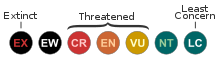
Growth: S = slow M = medium F = fast. Soil: L = light (sandy) M = medium H = heavy (clay). pH: A = acid N = neutral B = basic (alkaline). Shade: F = full shade S = semi-shade N = no shade. Moisture: D = dry M = Moist We = wet Wa = water.
Now available:
Food Forest Plants for Mediterranean Conditions
350+ Perennial Plants For Mediterranean and Drier Food Forests and Permaculture Gardens.
[Paperback and eBook]
This is the third in Plants For A Future's series of plant guides for food forests tailored to
specific climate zones. Following volumes on temperate and tropical ecosystems, this book focuses
on species suited to Mediterranean conditions—regions with hot, dry summers and cool, wet winters,
often facing the added challenge of climate change.
Read More
Expert comment
Author
L.
Botanical References
17200
Links / References
For a list of references used on this page please go here
Readers comment