 |
|
http://www.flickr.com/photos/38213125@N00/ |
 |
|
Translate this page:
Summary
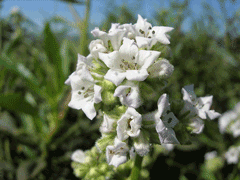
Hairyleaf yerba santa is a southern California and Baja California medicinal tea shrub with sticky aromatic leaves, showy pale to purple flowers, and strong chaparral associations. It is one of the most important yerba santa species for restoration and butterfly habitat in southern California. As a human-use plant, it is best understood as a medicinal tea and smoke plant, not as food. Hairyleaf yerba santa, Eriodictyon trichocalyx, belongs to the borage family (Boraginaceae) in broad modern treatments, though the genus is also treated in Hydrophyllaceae or Namaceae. It belongs to the genus Eriodictyon. Common names include hairyleaf yerba santa, hairy yerba santa, Yerba Ynez, and holy herb. It is an aromatic evergreen shrub generally suited to USDA Zones 8–10. Plants commonly grow about 50–200 cm tall and may spread widely by rhizomes, especially in suitable chaparral or alluvial scrub settings. It is native to southern California and Baja California, where it grows in chaparral, grassland, alluvial scrub, Joshua tree woodland, and open pine forest habitats.
Physical Characteristics

 Eriodictyon trichocalyx is an evergreen Shrub growing to 2 m (6ft) by 2 m (6ft) at a medium rate.
See above for USDA hardiness. It is hardy to UK zone 8. It is in leaf all year. The species is hermaphrodite (has both male and female organs) and is pollinated by Bees, insects.
It is noted for attracting wildlife.
Suitable for: light (sandy) soils, prefers well-drained soil and can grow in nutritionally poor soil. Suitable pH: mildly acid, neutral and basic (mildly alkaline) soils. It cannot grow in the shade. It prefers dry or moist soil and can tolerate drought.
UK Hardiness Map
US Hardiness Map
Synonyms
Includes 2 Accepted Infraspecifics KB Eriodictyon trichocalyx var. lanatum (Brand) Jeps.
Plant Habitats
Woodland Garden Sunny Edge; Cultivated Beds;
Edible Uses
Edible Parts: Leaves
Edible Uses: Tea
The leaves can be used for tea, but the plant is not edible as a vegetable. Leaves should not be swallowed after chewing. It is a medicinal shrub to use sparingly [2-3]. Edible Uses & Rating: As a tea plant, hairyleaf yerba santa ranks high for flavor and respiratory-herbal value. As a food plant, it ranks very low. Its main uses are tea, traditional medicine, aromatic smoke, pollinator support, and restoration [2-3]. Taste, Processing & Kitchen Notes: The tea has a sweet, resinous, cooling, pine-and-bay quality when made lightly. Fresh leaves are shiny, sticky, and highly aromatic. Dried leaves lose some tackiness but retain a citrus-like aroma and can crumble readily. Burned leaves produce a robust but generally non-irritating smoke; however, smoking is not recommended as a casual modern practice. For kitchen use, keep it to strained tea in small amounts [2-3]. Seasonality (Phenology): The shrub is evergreen, so leaves are available year-round. Spring leaves are preferred. Flowering generally occurs in late spring, with white-to-purple flowers in terminal clusters [2-3]. Safety & Cautions (Food Use): Regular consumption is not recommended. The plant is medicinal and resin-rich, and strong preparations may be too intense. Do not treat leaves as edible greens. Avoid use during pregnancy, in children, or with medications unless guided by a qualified practitioner [2-3]. Harvest & Processing Workflow: Harvest small amounts of clean, healthy leaves, ideally from vigorous plants. Use fresh or dry in shade. For tea, steep lightly and strain. Avoid overharvest, especially from wild stands that support pollinators and restoration communities [2-3]. Cultivar/Selection Notes: No food cultivars are known. Native plant nurseries value this species for butterfly habitat, erosion control, and dry-slope restoration. Theodore Payne Foundation describes it as excellent for butterfly habitat and erosion control, but also notes that it spreads vigorously by rhizomes and can become invasive in gardens. Look-Alikes & Confusion Risks: Hairyleaf yerba santa resembles California yerba santa and other Eriodictyon species. It is distinguished by its southern range, densely hairy calyces, often hairy flowers, resinous leaves, and chaparral/alluvial scrub habitat. Local species selection matters in restoration because using the wrong Eriodictyon outside its range can be ecologically inappropriate [2-3]. Traditional/Indigenous Use Summary: Hairyleaf yerba santa has been used as a medicinal plant for respiratory conditions, with leaves and flowers used in tea and leaves sometimes smoked in traditional contexts. It is part of the broader yerba santa tradition of “holy herb” respiratory medicine [2-3]. The fresh or dried leaves have been used as a tea[257]. The leaves have been used as a wayside nibble to quench the thirst[257].
References More on Edible Uses
Medicinal Uses
Plants For A Future can not take any responsibility for any adverse effects from the use of plants. Always seek advice from a professional before using a plant medicinally.
Antiasthmatic Antirheumatic Blood purifier Febrifuge
The leaves are blood purifier and febrifuge[257]. A poultice of the freshly pounded leaves has been applied to relieve the pain of rheumatic joints[257]. A decoction of the leaves has been taken internally to treat TB, sore throats, rheumatism, asthma, catarrh, fevers, coughs and colds[257].
References More on Medicinal Uses
The Bookshop: Edible Plant Books
Our Latest books on Perennial Plants For Food Forests and Permaculture Gardens in paperback or digital formats.
Edible Tropical Plants
Food Forest Plants for Hotter Conditions: 250+ Plants For Tropical Food Forests & Permaculture Gardens.
More
Edible Temperate Plants
Plants for Your Food Forest: 500 Plants for Temperate Food Forests & Permaculture Gardens.
More
More Books
PFAF have eight books available in paperback and digital formats. Browse the shop for more information.
Shop Now
Other Uses
Fire retardant Soil stabilization
Planted as a fire-break and also for erosion control in California[200]. Theodore Payne Foundation describes it as excellent for butterfly habitat and erosion control. It can be a strong evergreen shrub for dry slopes, wildlife gardens, and restoration sites. It may spread vigorously and is better suited to large naturalistic plantings than small irrigated gardens. Ecology & Wildlife: Hairyleaf yerba santa is an important shrub of southern California chaparral and alluvial scrub systems. It supports pollinators, stabilizes slopes, and contributes to post-disturbance shrub cover in dryland habitats.
Special Uses
References More on Other Uses
Cultivation details
Hairyleaf yerba santa is an excellent medicinal tea shrub and high-value habitat plant, but it is not a food plant. It is best appreciated for its aromatic leaves, pollinator value, drought tolerance, and role in southern California chaparral and alluvial scrub. Growing Conditions: It prefers full sun to light shade, dry slopes, mesas, ravines, chaparral, woodlands, alluvial scrub, Joshua tree woodland, and open pine forest settings. Lady Bird Johnson Wildflower Center lists slopes, mesas, ravines, chaparral, woodlands, and open pine forests as native habitats. Habitat & Range: It is native to southern California and Baja California and occurs in several habitat types, including chaparral and grassland. Size & Landscape Performance: It can be a strong evergreen shrub for dry slopes, wildlife gardens, and restoration sites. It may spread vigorously and is better suited to large naturalistic plantings than small irrigated gardens. Cultivation (Horticulture): Grow in well-drained soil with little summer water once established. It is useful for erosion control and butterfly habitat, but give it room because of its rhizomatous spread. Pests & Problems: Its main garden problem is vigorous rhizomatous spread. Overwatering and heavy soils can also reduce performance. Identification & Habit: Hairyleaf yerba santa is an aromatic evergreen shrub with sticky, shiny, resinous upper leaf surfaces and white-hairy lower surfaces. Leaves are lanceolate and often toothed. Flowers are white to purple, hairy, and borne in terminal, coiled, or head-like clusters. Pollinators: It is a strong butterfly- and bee-plant. Native plant nurseries specifically recommend it for butterfly habitat because its flowers attract many species. Requires a position in full sun in a well-drained sandy soil[200]. This species is not hardy in the colder areas of the country, it tolerates temperatures down to about -5°c[200]. It is probably best grown against a sunny wall.
References Carbon Farming Information and Carbon Sequestration Information
Temperature Converter
Type a value in the Celsius field to convert the value to Fahrenheit:
Fahrenheit:
The PFAF Bookshop
Plants For A Future have a number of books available in paperback and digital form. Book titles include Edible Plants, Edible Perennials, Edible Trees,Edible Shrubs, Woodland Gardening, and Temperate Food Forest Plants. Our new book is Food Forest Plants For Hotter Conditions (Tropical and Sub-Tropical).
Shop Now
Plant Propagation
Seed - sow spring in a greenhouse[200]. When they are large enough to handle, prick the seedlings out into individual pots and grow them on in the greenhouse for at least their first winter. Plant them out into their permanent positions in late spring or early summer, after the last expected frosts.
Other Names
If available other names are mentioned here
Hairyleaf yerba santa, hairy yerba santa, Yerba Ynez, and holy herb.
Native Range
NORTHERN AMERICA: United States (California (south)), Mexico (Baja California (Norte))
Weed Potential
Right plant wrong place. We are currently updating this section.
Please note that a plant may be invasive in one area but may not in your area so it's worth checking.
Moderate in cultivation because it spreads vigorously by rhizomes. It is not a problem when used appropriately in its native habitat, but it can outgrow small garden spaces.
Conservation Status
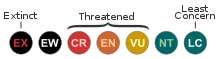
IUCN Red List of Threatened Plants Status : Not listed.
Growth: S = slow M = medium F = fast. Soil: L = light (sandy) M = medium H = heavy (clay). pH: A = acid N = neutral B = basic (alkaline). Shade: F = full shade S = semi-shade N = no shade. Moisture: D = dry M = Moist We = wet Wa = water.
Now available:
Food Forest Plants for Mediterranean Conditions
350+ Perennial Plants For Mediterranean and Drier Food Forests and Permaculture Gardens.
[Paperback and eBook]
This is the third in Plants For A Future's series of plant guides for food forests tailored to
specific climate zones. Following volumes on temperate and tropical ecosystems, this book focuses
on species suited to Mediterranean conditions—regions with hot, dry summers and cool, wet winters,
often facing the added challenge of climate change.
Read More
Expert comment
Author
A.A.Heller.
Botanical References
200
Links / References
For a list of references used on this page please go here
Readers comment
| Add a comment |
|
If you have important information about this plant that may help other users please add a comment or link below. Only comments or links that are felt to be directly relevant to a plant will be included. If you think a comment/link or information contained on this page is inaccurate or misleading we would welcome your feedback at [email protected]. If you have questions about a plant please use the Forum on this website as we do not have the resources to answer questions ourselves.
* Please note: the comments by website users are not necessarily those held by PFAF and may give misleading or inaccurate information.
|
Subject : Eriodictyon trichocalyx
|
|
|
|