 |
|
commons.wikimedia.org/wiki/User:Cillas |
 |
|
Translate this page:
Summary
Main Bloom Color: Green, Yellow. Form: Rounded, Vase.
Physical Characteristics

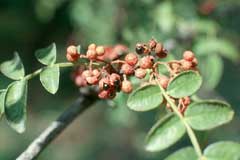
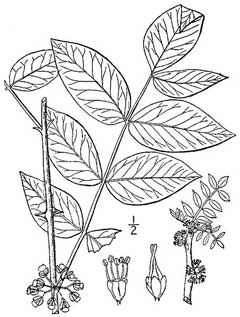
 Zanthoxylum americanum is a deciduous Shrub growing to 4 m (13ft) by 4 m (13ft) at a medium rate.
See above for USDA hardiness. It is hardy to UK zone 3. It is in flower from May to June, and the seeds ripen from September to October. The species is dioecious (individual flowers are either male or female, but only one sex is to be found on any one plant so both male and female plants must be grown if seed is required). . The plant is not self-fertile.
Suitable for: light (sandy), medium (loamy) and heavy (clay) soils and prefers well-drained soil. Suitable pH: mildly acid, neutral and basic (mildly alkaline) soils. It can grow in semi-shade (light woodland) or no shade. It prefers moist soil.
UK Hardiness Map
US Hardiness Map
Synonyms
Thylax fraxineum. Zanthoxylum fraxineum. Zanthoxylum fraxinifolium. Zanthoxylum mite.
Plant Habitats
Woodland Garden Sunny Edge; Dappled Shade; Shady Edge;
Edible Uses
Edible Parts:
Edible Uses: Condiment
Seed - cooked. It is used as a condiment. A pepper substitute[106]. The fruit is rather small, about 4 - 5m in diameter[229], but is produced in dense clusters which makes harvesting easy[K]. Each fruit contains a single seed[229].
References More on Edible Uses
Medicinal Uses
Plants For A Future can not take any responsibility for any adverse effects from the use of plants. Always seek advice from a professional before using a plant medicinally.
Anodyne Antirheumatic Antispasmodic Carminative Diaphoretic Diuretic Dysentery Irritant
Odontalgic Sialagogue Skin Stimulant
Prickly ash is a warming, stimulating herb that is beneficial for the circulation. It was highly regarded by the native North American Indians who used it especially to alleviate rheumatism and toothache[254]. All parts of the plant, but especially the bark and roots, contain the aromatic bitter oil xanthoxylin[229]. This has a number of applications in medicine, especially in the treatment of arthritic and rheumatic conditions, digestive problems and leg ulcers[229, 254]. The fruit has a similar medicinal action to the bark[4]. The bark and roots are irritant, odontalgic and antirheumatic[213]. Along with the fruit they are diaphoretic, stimulant and a useful tonic in debilitated conditions of the stomach and digestive organs[4]. They produce arterial excitement and are of use in the treatment of fevers, ague, poor circulation etc[4]. The fruits are considered more active than the bark, they are also antispasmodic, carminative, diuretic and antirheumatic[4, 213, 222]. The pulverized root and bark are used to ease the pain of toothache[213, 222]. One report says that it is very efficacious, but the sensation of the acrid bark is fully as unpleasant as the toothache[213]. Chewing the bark induces copious salivation[222]. Rubbing the fruit against the skin, especially on the lips or in the mouth, produces a numbing effect[K]. A tea or tincture of the bark has been used in the treatment of rheumatism, dyspepsia, dysentery, heart and kidney troubles etc[222]. A tea made from the inner bark has been used to treat itchy skin[213, 257].
References More on Medicinal Uses
The Bookshop: Edible Plant Books
Our Latest books on Perennial Plants For Food Forests and Permaculture Gardens in paperback or digital formats.

Edible Tropical Plants
Food Forest Plants for Hotter Conditions: 250+ Plants For Tropical Food Forests & Permaculture Gardens.
More

Edible Temperate Plants
Plants for Your Food Forest: 500 Plants for Temperate Food Forests & Permaculture Gardens.
More

More Books
PFAF have eight books available in paperback and digital formats. Browse the shop for more information.
Shop Now
Other Uses
Essential
Agroforestry Uses:
The plant's prickly nature and suckering habit can produce an effective barrier[277
].
Other Uses:
The fruits have been used by young men as a perfume[257
].
Wood - soft. It weighs 35lb per cubic foot[235
]. Of little use[229
].
Special Uses
Food Forest Scented Plants
References More on Other Uses
Cultivation details
Landscape Uses:Border, Massing. Prefers a good deep well-drained moisture retentive soil in full sun or semi-shade[1, 11, 200]. A relatively fast-growing plant in the wild, it often forms thickets by means of root suckers[229]. All parts of the plant are fragrant. The bruised foliage has a delicious resinous orange-like perfume[245]. Dioecious. Male and female plants must be grown if seed is required. Flowers are formed on the old wood[206]. Special Features:North American native, Attracts butterflies, Inconspicuous flowers or blooms, Blooms appear periodically throughout the year. For polyculture design as well as the above-ground architecture (form - tree, shrub etc. and size shown above) information on the habit and root pattern is also useful and given here if available. A sprouting standard sending up shoots from the base [1-2]. The root pattern is suckering with new plants from underground runners away from the plant [1-2].
References Carbon Farming Information and Carbon Sequestration Information
Temperature Converter
Type a value in the Celsius field to convert the value to Fahrenheit:
Fahrenheit:
The PFAF Bookshop
Plants For A Future have a number of books available in paperback and digital form. Book titles include Edible Plants, Edible Perennials, Edible Trees,Edible Shrubs, Woodland Gardening, and Temperate Food Forest Plants. Our new book is Food Forest Plants For Hotter Conditions (Tropical and Sub-Tropical).
Shop Now
Plant Propagation
Seed - best sown in a greenhouse as soon as it is ripe in the autumn. Stored seed may requires up to 3 months cold stratification, though scarification may also help[113]. Sow stored seed in a cold frame as early in the year as possible. Germination should take place in late spring, though it might take another 12 months. Prick out the seedlings into individual pots when they are large enough to handle and grow them on in a cold frame for their first winter. Plant them out in early summer. Cuttings of half-ripe wood, July/August in a frame. Root cuttings, 3cm long, planted horizontally in pots in a greenhouse. Good percentage[78]. Suckers, removed in late winter and planted into their permanent positions[113].
Other Names
If available other names are mentioned here
Native Plant Search
Search over 900 plants ideal for food forests and permaculture gardens. Filter to search native plants to your area. The plants selected are the plants in our book 'Plants For Your Food Forest: 500 Plants for Temperate Food Forests and Permaculture Gardens, as well as plants chosen for our forthcoming related books for Tropical/Hot Wet Climates and Mediterranean/Hot Dry Climates. Native Plant Search
Found In
Countries where the plant has been found are listed here if the information is available
Weed Potential
Right plant wrong place. We are currently updating this section.
Please note that a plant may be invasive in one area but may not in your area so it’s worth checking.
Conservation Status
IUCN Red List of Threatened Plants Status :

Growth: S = slow M = medium F = fast. Soil: L = light (sandy) M = medium H = heavy (clay). pH: A = acid N = neutral B = basic (alkaline). Shade: F = full shade S = semi-shade N = no shade. Moisture: D = dry M = Moist We = wet Wa = water.

Expert comment
Author
Mill.
Botanical References
1143200
Links / References
For a list of references used on this page please go here
Readers comment