Translate this page:
Summary
Bloom Color: Yellow. Main Bloom Time: Late spring, Mid spring. Form: Irregular or sprawling, Spreading or horizontal, Variable spread.
Physical Characteristics

 Vitis vinifera is a deciduous Climber growing to 15 m (49ft 3in) at a fast rate.
See above for USDA hardiness. It is hardy to UK zone 6 and is not frost tender. It is in flower from May to July, and the seeds ripen from September to October. The species is hermaphrodite (has both male and female organs) and is pollinated by Insects.
Suitable for: light (sandy), medium (loamy) and heavy (clay) soils and prefers well-drained soil. Suitable pH: mildly acid, neutral and basic (mildly alkaline) soils. It can grow in semi-shade (light woodland) or no shade. It prefers dry or moist soil.
UK Hardiness Map
US Hardiness Map
Synonyms
Plant Habitats
Woodland Garden Sunny Edge; Dappled Shade; South Wall. By. West Wall. By.
Edible Uses
Edible Parts: Flowers Fruit Leaves Oil Shoots
Edible Uses: Oil
Fruit - raw or dried for winter use[1, 2, 11, 46]. The dried fruits are the raisins, sultanas and currants of commerce, different varieties producing the different types of dried fruit. A fully ripened fresh fruit is sweet, juicy and delicious[K]. The fruit juice can be concentrated and used as a sweetener[183]. This fruit is widely used in making wine[183]. Leaves - cooked[55]. Young leaves are wrapped around other foods and then baked, they impart a pleasant flavour[183]. Young tendrils - raw or cooked[85]. The flower clusters are used as a vegetable[183]. An edible oil similar to sunflower oil is obtained from the seed[7, 183]. It needs to be refined before it can be eaten[46]. A polyunsaturated oil, it is suitable for mayonnaise and cooking, especially frying[238]. Sap - raw. Used as a drink, it has a sweet taste. The sap can be harvested in spring and early summer, though it should not be taken in quantity or it will weaken the plant. The roasted seed is a coffee substitute[7]. Cream of tartar, also known as potassium bitartrate, a crystalline salt, is extracted from the residue of pressed grapes, and from the sediment of wine barrels. It is used in making baking powder[238].
References More on Edible Uses
Medicinal Uses
Plants For A Future can not take any responsibility for any adverse effects from the use of plants. Always seek advice from a professional before using a plant medicinally.
Analgesic Antiinflammatory Astringent Bach Cholera Demulcent Diuretic Hepatic
Laxative Lithontripic Miscellany Skin Stomachic
Grapes are a nourishing and slightly laxative fruit that can support the body through illness, especially of the gastro-intestinal tract and liver[254]. Because the nutrient content of grapes is close to that of blood plasma, grape fasts are recommended for detoxification[254]. Analgesic[178]. The fresh fruit is antilithic, constructive, cooling, diuretic and strengthening[4, 218]. A period of time on a diet based entirely on the fruit is especially recommended in the treatment of torpid liver or sluggish biliary function[7]. The fruit is also helpful in the treatment of varicose veins, haemorrhoids and capillary fragility[254]. The dried fruit is demulcent, cooling, mildly expectorant, laxative and stomachic[218]. It has a slight effect in easing coughs[254]. The leaves, especially red leaves, are anti-inflammatory and astringent[4, 7, 218, 254]. A decoction is used in the treatment of threatened abortion, internal and external bleeding, cholera, dropsy, diarrhoea and nausea[4, 218, 254]. It is also used as a wash for mouth ulcers and as douche for treating vaginal discharge[254]. Red grape leaves are also helpful in the treatment of varicose veins, haemorrhoids and capillary fragility[254]. The leaves are harvested in early summer and used fresh or dried[238]. The seed is anti-inflammatory and astringent[4, 7, 218]. The sap of young branches is diuretic[7]. It is used as a remedy for skin diseases[218, 240] and is also an excellent lotion for the eyes[4, 7, 254]. The tendrils are astringent and a decoction is used in the treatment of diarrhoea[7]. The plant is used in Bach flower remedies - the keywords for prescribing it are 'Dominating', 'Inflexible' and 'Ambitious'[209].
References More on Medicinal Uses
The Bookshop: Edible Plant Books
Our Latest books on Perennial Plants For Food Forests and Permaculture Gardens in paperback or digital formats.

Edible Tropical Plants
Food Forest Plants for Hotter Conditions: 250+ Plants For Tropical Food Forests & Permaculture Gardens.
More
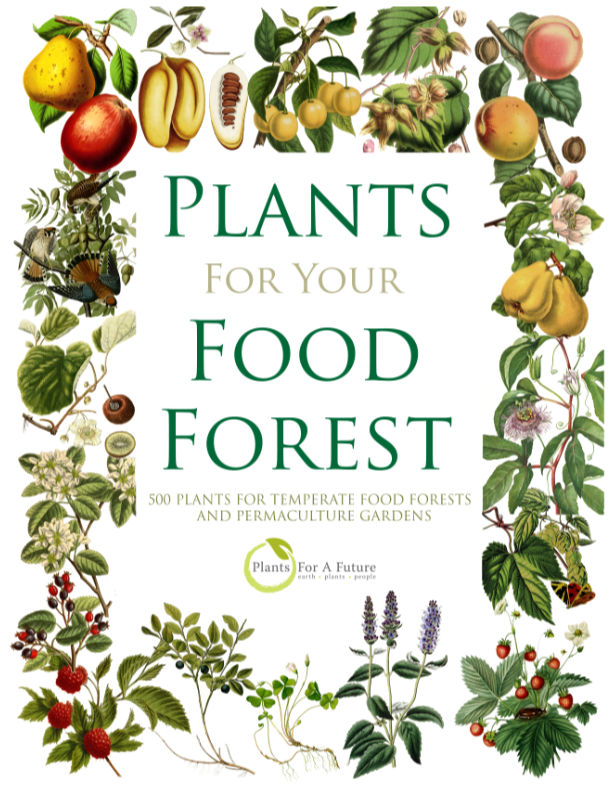
Edible Temperate Plants
Plants for Your Food Forest: 500 Plants for Temperate Food Forests & Permaculture Gardens.
More
More Books
PFAF have eight books available in paperback and digital formats. Browse the shop for more information.
Shop Now
Other Uses
Dye Miscellany Oil
A yellow dye is obtained from the fresh or dried leaves[168]. An oil from the seed is used for lighting and as an ingredient in soaps, paints etc[46, 61]. Cream of tartar, extracted from the residue of pressed grapes, is used in making fluxes for soldering[238]. Especially when growing in hotter countries than Britain, the stems of very old vines attain a good size and have been used to supply a very durable timber[4].
Special Uses
Food Forest Scented Plants
References More on Other Uses
Cultivation details
Landscape Uses:Arbor. Prefers a deep rich moist well-drained moderately fertile loam[1, 200]. Grows best in a calcareous soil, but dislikes excessively chalky soils[200]. Prefers a pH in the range 6.5 to 7[200] but tolerates a range from 4.3 to 8.6. Succeeds in sun or partial shade though a warm sunny sheltered position is required for the fruit to ripen[200]. Very commonly grown in the temperate zones of the world for its edible fruit, there are many named varieties, some of which have been developed for their use as a dried fruit, others for dessert use and others for wine[132, 183]. Good and regular crops are a bit problematical in Britain, grapes are on the northern most limits of their range in this country and the British summer often does not provide enough heat to properly ripen the fruit. Late frosts can also damage young growth in spring, though dormant shoots are very hardy, tolerating temperatures down to about -20°c[11]. Nonetheless, there are a number of commercial vineyards in Britain (usually producing wine grapes) and, given a suitably sunny and sheltered position, good dessert grapes can also be grown. In general it is best to grow the dessert varieties against the shelter of a south or west facing wall[219]. There are a number of varieties that have been bred to cope with cooler summers. Grapes are very susceptible to attacks by phylloxera, this disease is especially prevalent in some areas of Europe and it almost destroyed the grape industry. However, American species of grapes that are resistant to phylloxera are now used as rootstocks and this allows grapes to be grown in areas where the disease is common. Britain is free of the disease at the present (1989) and grapes are usually grown on their own roots. Plants in this genus are notably susceptible to honey fungus[200]. The flowers are intensely fragrant[245]. Grapes grow well in the company of hyssop, chives, basil and charlock[201]. They grow badly with radishes, both the grapes and the radishes developing an off taste[201]. Plants climb by means of tendrils[182]. Any pruning should be carried out in winter when the plants are dormant otherwise they bleed profusely[182]. The cultivated grape is thought to have been derived from V. vinifera sylvestris. (Gmel.)Hegi. This form has dioecious flowers and produces small black grapes. Special Features:Attractive foliage, Inconspicuous flowers or blooms. For polyculture design as well as the above-ground architecture (form - tree, shrub etc. and size shown above) information on the habit and root pattern is also useful and given here if available. Woody. Growth habit is a single or multiple shooting vine from a crown [1-2].
References Carbon Farming Information and Carbon Sequestration Information
Temperature Converter
Type a value in the Celsius field to convert the value to Fahrenheit:
Fahrenheit:
The PFAF Bookshop
Plants For A Future have a number of books available in paperback and digital form. Book titles include Edible Plants, Edible Perennials, Edible Trees,Edible Shrubs, Woodland Gardening, and Temperate Food Forest Plants. Our new book is Food Forest Plants For Hotter Conditions (Tropical and Sub-Tropical).
Shop Now
Plant Propagation
Seed - best sown in a cold frame as soon as it is ripe[K]. Six weeks cold stratification improves the germination rate, and so stored seed is best sown in a cold frame as soon as it is obtained. Germination should take place in the first spring, but sometimes takes another 12 months. Prick out the seedlings into individual pots when they are large enough to handle and grow them on in a cold frame for their first winter. Plant out in early summer. Cuttings of mature wood of the current seasons growth, December/January in a frame. These cuttings can be of wood 15 - 30cm long or they can be of short sections of the stem about 5cm long with just one bud at the top of the section. In this case a thin, narrow strip of the bark about 3cm long is removed from the bottom half of the side of the stem. This will encourage callusing and the formation of roots. Due to the size of these cuttings they need to be kept in a more protected environment than the longer cuttings. Layering.
Other Names
If available other names are mentioned here
Angur, Diva loza, Grozde yagorida, Tumpeang ba'y chu, Uva, Vid, Vigne, Vino, Weinrebe, aanab, ainab, aitoviiniköynnös, lehti, angoor, angur, blad från vinranka, bortermo szolo levél, cognac oil, common grape vine, dakh, darakh, drakh, draksa, draksh, draksha, draksha kottai, draksha pondu, drakshai, drakya, dry grapes, drak?a (fruit), european grape, feuille de vigne rouge, folha de videira, frunze de vita-de-vie, gostani, gostoni, grape, grape seeds oligomeric proanthocyanidins, grape vine, grapevine, grapevine leaf, kashmish, kishmish, kottai drakshai, lambrusca, lambrusque, lie de vin, list vinica, list vinske trte, lisc winorosli wlasciwej, maneka, maweez munaqqa, maweezak kohi, munaca, munaqqa, munkka, munthringya, m?dvika, parra, raisins, rote weinrebenblätter, rød vinranke, blad, tikruju vynmedžiu lapai, vid, vid, hoja de, vigne, vigne rouge, vigne vinifère, viinapuu lehed, vinblad, vine, vinho, vino, vite, vite, foglia, vitis vinifera, flos, vitis viniferae folium, vínviðarlauf, weinrebe, werqa tad-dielja, wijnstokblad, wine, wine grape, zabeeb-ul-jabal, cervený list vinné révy, ista vinkoka lapas.
Native Plant Search
Search over 900 plants ideal for food forests and permaculture gardens. Filter to search native plants to your area. The plants selected are the plants in our book 'Plants For Your Food Forest: 500 Plants for Temperate Food Forests and Permaculture Gardens, as well as plants chosen for our forthcoming related books for Tropical/Hot Wet Climates and Mediterranean/Hot Dry Climates. Native Plant Search
Found In
Countries where the plant has been found are listed here if the information is available
Afghanistan, Africa, Algeria, Argentina, Armenia, Asia, Australia, Azerbaijan, Brazil, Bulgaria, Burma, Cambodia, Chile, China, Cook Islands, Cyprus, East Africa, East Timor, Egypt, Ethiopia, Europe, Fiji, France, Georgia, Germany, Ghana, Greece, Guyana, Haiti, Hawaii, India, Indochina, Indonesia, Iran, Iraq, Italy, Jordan, Kazakhstan, Laos, Lebanon, Madagascar, Malaysia, Maldives, Mediterranean, Moldova, Myanmar, Nauru, Nepal, New Zealand, Niger, North Africa, North America, Pacific, Pakistan, Palestine, Papua New Guinea, PNG, Philippines, Portugal, Romania, Russia, Saudi Arabia, SE Asia, Spain, Solomon Islands, South Africa, Southern Africa, South America, Spain, Swaziland, Syria, Tajikistan, Tasmania, Thailand, Timor-Leste, Tokelau, Turkey, Turkmenistan, Uganda, USA, Uzbekistan, Vietnam, West Africa, Yugoslavia, Zimbabwe.
Weed Potential
Right plant wrong place. We are currently updating this section.
Please note that a plant may be invasive in one area but may not in your area so it’s worth checking.
Conservation Status
IUCN Red List of Threatened Plants Status :

| Related Plants
|
| Latin Name | Common Name | Habit | Height | Hardiness | Growth | Soil | Shade | Moisture | Edible | Medicinal | Other |
| Vaccinium vitis-idaea | Cowberry, Lingonberry, Northern mountain cranberry, Cranberry | Shrub | 0.3 |
3-8
| M | LM | SN | M | 3 | 2 | 3 |
| Vitis acerifolia | Bush Grape, Mapleleaf grape | Climber | 10.0 |
5-9
| | LMH | SN | DM | 2 | 0 | 1 |
| Vitis aestivalis | Summer Grape, Long grape | Climber | 20.0 |
3-7
| F | LMH | SN | DM | 3 | 1 | 1 |
| Vitis aestivalis argentifolia | Summer Grape | Climber | 25.0 |
3-7
| F | LMH | SN | DM | 3 | 0 | 1 |
| Vitis aestivalis var. linsecomii | Post-Oak Grape | Climber | 5.0 |
-
| | LMH | SN | DM | 2 | 0 | 1 |
| Vitis amurensis | Amur River Grape, Amur grape | Climber | 15.0 |
4-8
| M | LMH | SN | DM | 2 | 1 | 1 |
| Vitis arizonica | Canyon Grape | Climber | 5.0 |
5-9
| | LMH | SN | DM | 2 | 0 | 1 |
| Vitis baileyana | Graybark Grape | Climber | 10.0 |
5-9
| | LMH | SN | DM | 2 | 0 | 1 |
| Vitis belaii | Grape | Climber | 0.0 |
-
| | LMH | SN | DM | 4 | 0 | 1 |
| Vitis berlandieri | Spanish Grape | Climber | 10.0 |
6-9
| | LMH | SN | DM | 3 | 0 | 1 |
| Vitis californica | California Grape, California wild grape | Climber | 9.0 |
6-9
| M | LMH | SN | DM | 2 | 0 | 2 |
| Vitis cinerea | Sweet Winter Grape, Graybark grape, Florida grape, Heller's grape | Climber | 0.0 |
4-8
| | LMH | SN | DM | 3 | 0 | 1 |
| Vitis cinerea floridana | Currant Grape | Climber | 0.0 |
4-8
| | LMH | SN | DM | 3 | 0 | 2 |
| Vitis coignetiae | Crimson Glory Vine | Climber | 20.0 |
4-8
| F | LMH | SN | DM | 2 | 0 | 3 |
| Vitis cordifolia | Frost Grape | Climber | 20.0 |
4-8
| F | LMH | SN | DM | 2 | 0 | 1 |
| Vitis davidii | Spiny Vitis | Climber | 15.0 |
6-9
| | LMH | SN | DM | 2 | 0 | 3 |
| Vitis flexuosa | | Climber | 8.0 |
5-9
| | LMH | SN | DM | 2 | 1 | 1 |
| Vitis girdiana | Valley Grape, Desert wild grape | Climber | 12.0 |
7-10
| | LMH | SN | DM | 2 | 0 | 2 |
| Vitis labrusca | Northern Fox Grape, Fox grape | Climber | 15.0 |
4-9
| F | LMH | SN | DM | 3 | 1 | 2 |
| Vitis labruscana | | Climber | 15.0 |
4-8
| | LMH | SN | DM | 3 | 0 | 1 |
| Vitis lanata | Grape | Climber | 0.0 |
8-11
| | LMH | SN | DM | 3 | 1 | 1 |
| Vitis monticola | Sweet Mountain Grape | Climber | 10.0 |
5-9
| | LMH | SN | DM | 3 | 0 | 1 |
| Vitis munsoniana | Bird Grape, Munson's grape | Climber | 0.0 |
0-0
| | LMH | SN | DM | 3 | 0 | 1 |
| Vitis mustangensis | Mustang Grape | Climber | 10.0 |
4-8
| | LMH | SN | DM | 3 | 0 | 1 |
| Vitis palmata | Red Grape, Catbird grape | Climber | 20.0 |
4-8
| | LMH | SN | DM | 2 | 0 | 1 |
| Vitis parvifolia | | Climber | 0.0 |
6-9
| | LMH | SN | DM | 2 | 1 | 1 |
| Vitis riparia | Riverbank Grape | Climber | 15.0 |
2-6
| F | LMH | SN | DM | 3 | 0 | 2 |
| Vitis romanetii | | Climber | 10.0 |
5-9
| | LMH | N | DM | 2 | 0 | 1 |
| Vitis rotundifolia | Muscadine Grape, Muscadine, Southern Fox Grape, Scuppernong, Muscadine Grape | Climber | 25.0 |
5-9
| F | LMH | SN | DM | 4 | 0 | 1 |
| Vitis rupestris | Sand Grape | Climber | 2.0 |
-
| | LMH | SN | DM | 3 | 0 | 2 |
|
|
Growth: S = slow M = medium F = fast. Soil: L = light (sandy) M = medium H = heavy (clay). pH: A = acid N = neutral B = basic (alkaline). Shade: F = full shade S = semi-shade N = no shade. Moisture: D = dry M = Moist We = wet Wa = water.

Expert comment
Author
L.
Botanical References
1117200
Links / References
For a list of references used on this page please go here
A special thanks to Ken Fern for some of the information used on this page.
Readers comment