 |
|
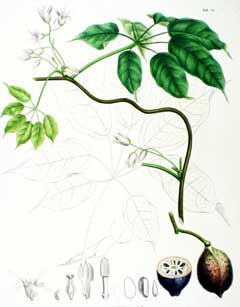
http://commons.wikimedia.org/wiki/File:Stauntonia_hexaphylla_SZ76.png |
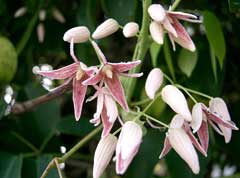 |
| http://commons.wikimedia.org/wiki/User:KENPEI |
Translate this page:
Summary
Physical Characteristics

 Stauntonia hexaphylla is an evergreen Climber growing to 10 m (32ft) by 7 m (23ft) at a medium rate.
See above for USDA hardiness. It is hardy to UK zone 9 and is frost tender. It is in leaf all year, in flower in April. The species is dioecious (individual flowers are either male or female, but only one sex is to be found on any one plant so both male and female plants must be grown if seed is required). and is pollinated by Insects, hand. The plant is not self-fertile.
Suitable for: light (sandy), medium (loamy) and heavy (clay) soils and prefers well-drained soil. Suitable pH: mildly acid, neutral and basic (mildly alkaline) soils and can grow in very acid and very alkaline soils.
It can grow in semi-shade (light woodland) or no shade. It prefers moist soil.
UK Hardiness Map
US Hardiness Map
Synonyms
Rajania hexaphylla.
Plant Habitats
Woodland Garden Sunny Edge; Dappled Shade; Shady Edge; West Wall. By.
Edible Uses
Edible Parts: Fruit
Edible Uses:
Fruit - raw or cooked[2, 3, 58, 179]. Sweet and watery[11] with a honey-like flavour[46], it is highly esteemed as a dessert fruit in Japan[183]. The fruit is up to 5cm long[188].
References More on Edible Uses
Medicinal Uses
Plants For A Future can not take any responsibility for any adverse effects from the use of plants. Always seek advice from a professional before using a plant medicinally.
Antirheumatic Diuretic Ophthalmic
The roots, stem and fruits are antirheumatic and diuretic[218]. The juice of the fruit is used in the treatment of ophthalmia[2].
References More on Medicinal Uses
The Bookshop: Edible Plant Books
Our Latest books on Perennial Plants For Food Forests and Permaculture Gardens in paperback or digital formats.
Edible Tropical Plants
Food Forest Plants for Hotter Conditions: 250+ Plants For Tropical Food Forests & Permaculture Gardens.
More
Edible Temperate Plants
Plants for Your Food Forest: 500 Plants for Temperate Food Forests & Permaculture Gardens.
More
More Books
PFAF have eight books available in paperback and digital formats. Browse the shop for more information.
Shop Now
Other Uses
References More on Other Uses
Cultivation details
Requires a well-drained moisture retentive soil in a sheltered position[200]. Succeeds in acid or alkaline soils, in full sun or in semi-shade[200]. It grows best if its roots are in a shady position and the top is allowed to grow into the sun[K]. A very ornamental plant, it is only hardy outdoors in the milder areas of Britain[3, 11, 59], tolerating temperatures down to about -10°c when the plant is fully dormant[184]. The young growth in spring, however, can be damaged by late frosts. It is cultivated for its edible fruit in Japan. The flowers have a pleasant sweet perfume[245]. A climbing plant that supports itself by twining around other plants and supports[219]. Plants are dioecious but females have borne fruit at times in the absence of a male pollinator[11, 200]. We have had a report of a single plant in Christchurch New Zealand producing continually after three years old. In Britain fruit is usually only formed in sunny summers[166, 219]. Hand pollination may improve fruit set[166]. Male and female plants must be grown if seed is required.
References Carbon Farming Information and Carbon Sequestration Information
Temperature Converter
Type a value in the Celsius field to convert the value to Fahrenheit:
Fahrenheit:
The PFAF Bookshop
Plants For A Future have a number of books available in paperback and digital form. Book titles include Edible Plants, Edible Perennials, Edible Trees,Edible Shrubs, Woodland Gardening, and Temperate Food Forest Plants. Our new book is Food Forest Plants For Hotter Conditions (Tropical and Sub-Tropical).
Shop Now
Plant Propagation
Seed - sow early spring in a greenhouse. The seed can take 18 months to germinate. Prick out the seedlings into individual pots once they are large enough to handle and grow them on in the greenhouse for at least their first winter. Plant them out into their permanent positions in early summer and consider giving them some protection from the cold for their first winter or two outdoors[K]. Cuttings.
Other Names
If available other names are mentioned here
Native Plant Search
Search over 900 plants ideal for food forests and permaculture gardens. Filter to search native plants to your area. The plants selected are the plants in our book 'Plants For Your Food Forest: 500 Plants for Temperate Food Forests and Permaculture Gardens, as well as plants chosen for our forthcoming related books for Tropical/Hot Wet Climates and Mediterranean/Hot Dry Climates. Native Plant Search
Found In
Countries where the plant has been found are listed here if the information is available
Weed Potential
Right plant wrong place. We are currently updating this section.
Please note that a plant may be invasive in one area but may not in your area so it’s worth checking.
Conservation Status
IUCN Red List of Threatened Plants Status :

Growth: S = slow M = medium F = fast. Soil: L = light (sandy) M = medium H = heavy (clay). pH: A = acid N = neutral B = basic (alkaline). Shade: F = full shade S = semi-shade N = no shade. Moisture: D = dry M = Moist We = wet Wa = water.

Expert comment
Author
(Thunb.)Decne.
Botanical References
1158200
Links / References
For a list of references used on this page please go here
Readers comment