Plants For A Future Logo Full Contact Details
Registered Charity No. 1057719

Back to main Search Page

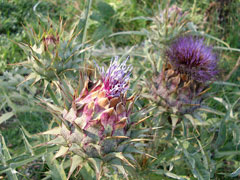
Silybum marianum - (L.)Gaertn.

Milk Thistle

Author(L.)Gaertn. Botanical references17, 200
FamilyCompositae GenusSilybum
SynonymsCarduus marianus - L.
Known Hazardswarning signWhen grown on nitrogen rich soils, especially those that have been fed with chemical fertilizers, this plant can concentrate nitrates in the leaves. Nitrates are implicated in stomach cancers.
RangeS. Europe, N. Africa and W. Asia. Naturalized in Britain.
HabitatWaste places[17], usually close to the sea[5], especially if the ground is dry and rocky[165].
Edibility Ratingapple iconapple iconapple icon 3 (1-5) Medicinal Ratingapple iconapple iconapple iconapple iconapple icon 5 (1-5)

Physical Characteristics

icon of man icon of perennial/biennial/annual Biennial growing to 1.2m by 1m at a fast rate.
It is hardy to zone 7 and is not frost tender. It is in leaf all year, in flower from July to September, and the seeds ripen from August to October. The flowers are hermaphrodite (have both male and female organs) and are pollinated by Bees.

The plant prefers light (sandy), medium (loamy) and heavy (clay) soils and requires well-drained soil. The plant prefers acid, neutral and basic (alkaline) soils and can grow in very alkaline soil. It cannot grow in the shade. It requires dry or moist soil. The plant can tolerates strong winds but not maritime exposure.

Habitats

Cultivated Beds;

Edible Uses

Edible Parts: Flowers; Leaves; Root; Stem.

Edible Uses: Coffee; Oil.

Root - raw or cooked[1, 2, 4, 52, 183]. A mild flavour and somewhat mucilaginous texture[K]. When boiled, the roots resemble salsify (Tragopogon hispanicus)[1, 4, 115]. Leaves - raw or cooked[1, 4, 5, 52, 89, 115]. The very sharp leaf-spines must be removed first[46, 183], which is quite a fiddly operation[K]. The leaves are quite thick and have a mild flavour when young, at this time they are quite an acceptable ingredient of mixed salads, though they can become bitter in hot dry weather[K]. When cooked they make an acceptable spinach substitute[238]. It is possible to have leaves available all year round from successional sowings[K]. Flower buds - cooked[1, 238]. A globe artichoke substitute[12, 183], they are used before the flowers open. The flavour is mild and acceptable, but the buds are quite small and even more fiddly to use than globe artichokes[K]. Stems - raw or cooked[4, 100]. They are best peeled and can be soaked to reduce the bitterness[5, 183]. Palatable and nutritious[4, 115], they can be used like asparagus or rhubarb[12] or added to salads. They are best used in spring when they are young[105]. A good quality oil is obtained from the seeds[4]. The roasted seed is a coffee substitute[21, 46, 61, 183].

Medicinal Uses

Plants For A Future can not take any responsibility for any adverse effects from the use of plants. Always seek advice from a professional before using a plant medicinally.

Astringent; Bitter; Cholagogue; Diaphoretic; Diuretic; Emetic; Emmenagogue; Hepatic; Homeopathy; Stimulant; Stomachic; Tonic.

Blessed thistle has a long history of use in the West as a remedy for depression and liver problems[254]. Recent research has confirmed that it has a remarkable ability to protect the liver from damage resulting from alcoholic and other types of poisoning[254]. The whole plant is astringent, bitter, cholagogue, diaphoretic, diuretic, emetic, emmenagogue, hepatic, stimulant, stomachic and tonic[4, 21, 160, 165, 238]. It is used internally in the treatment of liver and gall bladder diseases, jaundice, cirrhosis, hepatitis and poisoning[238]. The plant is harvested when in flower and dried for later use[238]. Silymarin, an extract from the seed, acts on the membranes of the liver cells preventing the entry of virus toxins and other toxic compounds and thus preventing damage to the cells[244]. It also dramatically improves liver regeneration in hepatitis, cirrhosis, mushroom poisoning and other diseases of the liver[222, 238, 254]. German research suggests that silybin (a flavonoid component of the seed) is clinically useful in the treatment of severe poisoning by Amanita mushrooms[222]. Seed extracts are produced commercially in Europe[222]. Regeneration of the liver is particularly important in the treatment of cancer since this disease is always characterized by a severely compromised and often partially destroyed liver[K]. A homeopathic remedy is obtained from equal parts of the root and the seed with its hulls still attached[4]. It is used in the treatment of liver and abdominal disorders[9].

Other Uses

Green manure; Oil.

A good green manure plant, producing a lot of bulk for incorporation into the soil[K].

Cultivation details

Succeeds in any well-drained fertile garden soil[1, 200]. Prefers a calcareous soil[12] and a sunny position[200]. Hardy to about -15°c[200]. The blessed thistle is a very ornamental plant that was formerly cultivated as a vegetable crop[1, 61, 238]. Young plants are prone to damage from snails and slugs[200]. Plants will often self sow freely[K].

Propagation

Seed - if sown in situ during March or April, the plant will usually flower in the summer and complete its life cycle in one growing season[K]. The seed can also be sown from May to August when the plant will normally wait until the following year to flower and thus behave as a biennial[K]. The best edible roots should be produced from a May/June sowing, whilst sowing the seed in the spring as well as the summer should ensure a supply of edible leaves all year round[K].

Links

References

[K] Ken Fern
Notes from observations, tasting etc at Plants For A Future and on field trips.

[1] F. Chittendon. RHS Dictionary of Plants plus Supplement. 1956 Oxford University Press 1951
Comprehensive listing of species and how to grow them. Somewhat outdated, it has been replaces in 1992 by a new dictionary (see [200]).

[2] Hedrick. U. P. Sturtevant's Edible Plants of the World. Dover Publications 1972 ISBN 0-486-20459-6
Lots of entries, quite a lot of information in most entries and references.

[4] Grieve. A Modern Herbal. Penguin 1984 ISBN 0-14-046-440-9
Not so modern (1930's?) but lots of information, mainly temperate plants.

[5] Mabey. R. Food for Free. Collins 1974 ISBN 0-00-219060-5
Edible wild plants found in Britain. Fairly comprehensive, very few pictures and rather optimistic on the desirability of some of the plants.

[9] Launert. E. Edible and Medicinal Plants. Hamlyn 1981 ISBN 0-600-37216-2
Covers plants in Europe. a drawing of each plant, quite a bit of interesting information.

[12] Loewenfeld. C. and Back. P. Britain's Wild Larder. David and Charles 0 ISBN 0-7153-7971-2
A handy pocket guide.

[17] Clapham, Tootin and Warburg. Flora of the British Isles. Cambridge University Press 1962
A very comprehensive flora, the standard reference book but it has no pictures.

[21] Lust. J. The Herb Book. Bantam books 1983 ISBN 0-553-23827-2
Lots of information tightly crammed into a fairly small book.

[46] Uphof. J. C. Th. Dictionary of Economic Plants. Weinheim 1959
An excellent and very comprehensive guide but it only gives very short descriptions of the uses without any details of how to utilize the plants. Not for the casual reader.

[52] Larkcom. J. Salads all the Year Round. Hamlyn 1980
A good and comprehensive guide to temperate salad plants, with full organic details of cultivation.

[61] Usher. G. A Dictionary of Plants Used by Man. Constable 1974 ISBN 0094579202
Forget the sexist title, this is one of the best books on the subject. Lists a very extensive range of useful plants from around the world with very brief details of the uses. Not for the casual reader.

[89] Polunin. O. and Huxley. A. Flowers of the Mediterranean. Hogarth Press 1987 ISBN 0-7012-0784-1
A very readable pocket flora that is well illustrated. Gives some information on plant uses.

[100] Polunin. O. Flowers of Europe - A Field Guide. Oxford University Press 1969 ISBN 0192176218
An excellent and well illustrated pocket guide for those with very large pockets. Also gives some details on plant uses.

[105] Tanaka. T. Tanaka's Cyclopaedia of Edible Plants of the World. Keigaku Publishing 1976
The most comprehensive guide to edible plants I've come across. Only the briefest entry for each species, though, and some of the entries are more than a little dubious. Not for the casual reader.

[115] Johnson. C. P. The Useful Plants of Great Britain. 0
Written about a hundred years ago, but still a very good guide to the useful plants of Britain.

[160] Natural Food Institute, Wonder Crops. 1987. 0
Fascinating reading, this is an annual publication. Some reports do seem somewhat exaggerated though.

[165] Mills. S. Y. The Dictionary of Modern Herbalism. 0
An excellent small herbal.

[183] Facciola. S. Cornucopia - A Source Book of Edible Plants. Kampong Publications 1990 ISBN 0-9628087-0-9
Excellent. Contains a very wide range of conventional and unconventional food plants (including tropical) and where they can be obtained (mainly N. American nurseries but also research institutes and a lot of other nurseries from around the world.

[200] Huxley. A. The New RHS Dictionary of Gardening. 1992. MacMillan Press 1992 ISBN 0-333-47494-5
Excellent and very comprehensive, though it contains a number of silly mistakes. Readable yet also very detailed.

[222] Foster. S. & Duke. J. A. A Field Guide to Medicinal Plants. Eastern and Central N. America. Houghton Mifflin Co. 1990 ISBN 0395467225
A concise book dealing with almost 500 species. A line drawing of each plant is included plus colour photographs of about 100 species. Very good as a field guide, it only gives brief details about the plants medicinal properties.

[238] Bown. D. Encyclopaedia of Herbs and their Uses. Dorling Kindersley, London. 1995 ISBN 0-7513-020-31
A very well presented and informative book on herbs from around the globe. Plenty in it for both the casual reader and the serious student. Just one main quibble is the silly way of having two separate entries for each plant.

[244] Phillips. R. & Foy. N. Herbs Pan Books Ltd. London. 1990 ISBN 0-330-30725-8
Deals with all types of herbs including medicinal, culinary, scented and dye plants. Excellent photographs with quite good information on each plant.

[254] Chevallier. A. The Encyclopedia of Medicinal Plants Dorling Kindersley. London 1996 ISBN 9-780751-303148
An excellent guide to over 500 of the more well known medicinal herbs from around the world.

Readers Comments

Plants for a Future does not verify the accuracy of reader comments, use at your own risk. In particular Plants For A Future can not take any responsibility for any adverse effects from the use of plants. You should always consult a professional before using plants medicinally.

Weeds as a future source for human consumption

Martha Díaz B Thu Jun 28 17:02:26 2001

We reciently recieved this article on the use of various weeds in south america. We though that you might enjoy it.

Abstract

Weeds may constitute an additional food source for humans. Up to 66% of weed species are edible and abound in urban and agricultural environments. A total of 43 species were sampled in tropical areas in Coatepec Mexico (e.g. roadsides, urban vacant lots, streets, sugar cane and coffee plantations). A similar survey performed in a temperate area in Bariloche Argentina with 32 species sampled. At a greater geographic scale, a comparison between Mexican and Argentine weeds shows that, proportionately, the food parts vary a little between regions. In general, the uses go from leaves, seeds, roots, fruits, and flowers.

Link: Weeds as a future source for human consumption

Weeds as a future source for human consumption

Klaus Thu Aug 16 16:12:55 2001

I really wonder what this has to do with montia perfoliata. The edible uses of weeds might be interesting, but not as a comment to this plant.

Silybum marianum

ysteban Sun Jan 19 13:16:13 2003

I don't see how you can rate it 2 out of 5 on a usefullness scale when it is probably the most powerful plant to repair and detox the liver, the cornerstone of the immune system... An impaired immune system is a factor in nearly every disease. Also nearly the entire plant is edible, easy to grow, etc. Even it is beautiful and beneficial to wildlife, Up the rating to a 5! I list another site below, but maybe you already have it?

Link: Natural Facts

Silybum marianum

Mitzi Sat Jul 31 07:36:59 2004

I was wondering the exact same thing. In these days of hepatitis outbreaks we should be on our knees thanking our Creator for this miraculous plant. I damaged my liver taking doctor recommended tylenol and if it weren't for milk thistle I may be dead or on a donors list somewhere. I am much more positive about this humble plant than I am about any medical treatment any doctor could ever offer me for the health of my liver. I am thankful I was fortunate enough to discover it. My doctor certainly would never have told me about it. He would rather let me die than to recommend I should take something that I can grow at home or buy at a health food store! I will take milk thistle for the rest of my life. The ranking should be raised to a 5.

Silybum marianum

Kathy Thu Mar 31 17:31:59 2005

As far as I know, I have not damaged my liver, but I have noticed a strong correlation with feeling mentally alert when I take this. I found it a bit diaretic, and had stopped using it, but have decided to take it again as it allows me to recover fast after a day of fairly extreme exercise. Otherwise, my brain feels foggy for a day after. Still wondering what is causing this.

Silybum marianum

Mark Fischer Sun Jun 19 00:42:02 2005

Just to answer your question Kathy, I see lots of people that have a clearing of their though when taking milk thistle. I believe that this is mainly caused by the fact that Milk Thistle helps speed up your body's detoxification process, and removes toxins from the body. For those people that notice an improvement in cognition with Milk Thistle, a gentle detoxificaiton plan may be the best direction. I wrote and article about a diet for helping the Liver detoxify at: http://www.skyeherbals.com/hepc/liverdiseasediet.html . Hope it helps!

Link: Milk Thistle Summary Report Article about Milk Thistle, with links to the latest research abstracts.

Silybum marianum

Joy O'Brien Fri Jan 13 2006

Please tell me, is milk thistle the same as Blessed Thistle? I have been advised to take the latter in conjunction with Fenugreek to stimulate lactation whilst breastfeeding my 11 week old baby. Holland & Barrett had never heard of Blessed Thistle. If its not the same thing, where can I get a hold of Blessed Thistle quickly?!

Silybum marianum

Alex Sun Apr 2 2006

I have exactly the same question as above, for milk supply can somebody please help? cant seem to find blessed thistle i the u.k

Silybum marianum

Margi Tue Jun 20 2006

Sorry - have only just found this while looking for something else. Never heard of blessed thistle, but in Tudor times Silybum marianum was known as milk thistle as it stimulates milk supply. Would imagine that it's the same plant, as the marianum bit is more than likely named after Mary/Maria, mother of Jesus, with all the 'blessed' connotations that implies... Hope this helps.

Silybum marianum

Barb Thu Jun 29 2006

Where can I purchase this plant and or seeds in California?

Silybum marianum

Suzanne Wed Dec 13 2006

I,m a newcomer to this and have been given the seeds amongst other ingrediants to grind up and eat with oats like museli. Does anyone know about this?

Silybum marianum

Ken Fern, Plants for a Future. Wed Dec 13 2006

The ground up seed has a slightly bitter flavour and a rather gritty texture. If this is not a problem, then grinding it up and adding it to muesli is a good idea. Personally, I find it easier to add it to a small glass of fruit juice and drink it. A reasonable amount to take would be a heaped tablespoonful of the ground up seed daily.

Silybum marianum

Jacqui Fri Jul 6 2007

I'm looking for blessed thistle too.. and no it's no that the same as Milk Thistle, although the two plants are of course very similar. Blessed Thistle's common name is St Bendicts Thistle and it's latin name is Common name: Cnicus benedictus

Silybum marianum

Ali Sun Aug 12 2007

Nettle tea is another excellent herb for lactating mothers. It really improves the amount of milk produced, and is full of great nutrients as well.

Silybum marianum

Veronica Mon Sep 10 2007

I've been doing a research about milk thistle, because I've been diagnosed with high estrogen. This is expelled out of the body through the liver, so anything that benefits the liver is good for a general body detox. FYI: I believe Blessed thistle and Milk thistle are the same thing, but I wouldn't take it while breastfeeding at all! It's a quite powerfull plant that shouldn't be entering into the body of a baby. Try instead anise, fennel and cumin extracts. ;-)

Silybum marianum

Logan Pillay Mon Dec 24 2007

Please advise me where can I buy this product in South Africa

Silybum marianum

ja Mon Feb 25 2008

I personally would not advise growing it yourself, as it grows invasivly in many wilderness areas in N america. The leaves are bitter when first bitten into, but by the time you finish one, you will want another!

Silybum marianum

Sandra Mon Apr 21 2008

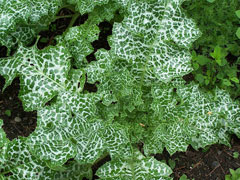
That's the trouble with common names - they can be applied to more than one plant. Silybum marianum is sometimes known as Blessed Thistle. The Milk Thistle tablets I have seen actually come with a warning not to use if you are pregnant or breast feeding. The plant was originally used to help mothers produce milk purely because of the white leaf markings. In old medicine and apothecary plants were often used for certain things because of what they looked like. Here, the white markings were associated with milk. It seems from what I have read that the only use proved by research is concerning the liver.

Silybum marianum

Ian Mon Oct 13 2008

A Beneficial Herbal Medicine Information Resource A wonderful herbal medicine resource that offers a wide range of information about herbal remedies and alternative medicine. www.herbal-meds-online.com offers a comprehensive herbal medicine database to help users treat a variety of ailments using herbal medicine.

Silybum marianum

Jay Tue Nov 18 2008

need more input from people using MT

Silybum marianum

B Henman Sun Nov 30 2008

Nov 2008. I have not found a scientific site that clearly supports the clinical efficacy of this plant.However I have read in scientific reports that it is found to be generally safe.So what can one lose by trying something different?

Silybum marianum

Dr MK Sharma Mon Apr 20 2009

Excellent

Silybum marianum

Jo Jo Thu Apr 30 2009

We have loads of this is North Israel The thing is,no one seems to talk about this plant and its benefits.I feel kind of worried to go and drink it. Can i drink the root with a cup of tea?How many times a day? Thanks for this topic,very interesting

Wild Flowers of Israel

Silybum marianum

david Thu Apr 30 2009

The roots are safe to eat or use in drinks , however the Eyewtness Handbook "Herbs" suggests the liver protecting quality may only be in the seeds and also says the seeds should only be used by qualified medical practitioners (it doesn't say why,toxic in large does perhaps). For this reason I've always taken it in the form of pills purchased in health shops even when I've had it growing wild nearby. Sorry I couldn't be more help.

Silybum marianum

Jo Jo Fri May 1 2009

Well i took home with me today i few of these plants,the purple and the white dried out ones,which is full of seeds. Anyway,i think i will try the root and see how it goes. Thanks for your quick reply David

Add a comment/link:

Enter your comment about this page here.
Note: please don't expect a quick reply to comments/questions posted here? We don't have the resources to answer questions ourselves. You can ask questions on our mailing list.

Subject: Silybum marianum


LinksTo add a link to another website with useful info add the details here.
Name of Site:
URL for Site:
Details:

Your Name:
email address:
Email addressed added here will not be displayed on the website or be passed to third parties.
They are used incase we need to get in touch with you.
To prevent spam all comments are moderated, comments with spam or swearing are blocked.

Discussion Monitor

To have posts to this page mailed to you enter your email address here:

email address: 

(Your email address will not appear on the webpage or be passed on to third parties).

All the information contained in these pages is Copyright (C) Plants For A Future, 1996-2008.

Plants For A Future is a charitable company limited by guarantee, registered in England and Wales. Charity No. 1057719, Company No. 3204567, 

HTML version prepared by Rich Morris - Home Page

Creative Commons License This work is licensed under a Creative Commons License. You can copy, distribute, display this works and to make derivative works but: Attribution is required, and it's Share Alike (GNUish/copyleft) i.e. has an identical license. We also ask that you let us know (webmaster@pfaf.org) if you link to, redistribute, make a derived work or do anything groovy with this information.