 |
|
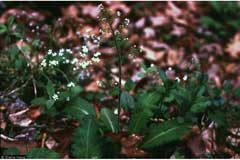
Elaine Haug @ USDA-NRCS PLANTS Database |
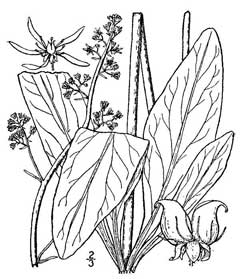 |
| USDA-NRCS PLANTS Database / Britton, N.L., and A. Brown. 1913. An illustrated flora of the northern United States, Canada and the British Possessions. 3 vols. Charles Scribner's Sons, New York. Vol. 2 |
Translate this page:
Summary
Physical Characteristics

 Saxifraga pensylvanica is a PERENNIAL growing to 0.5 m (1ft 8in) by 0.5 m (1ft 8in). The species is hermaphrodite (has both male and female organs).
Suitable for: light (sandy), medium (loamy) and heavy (clay) soils. Suitable pH: mildly acid, neutral and basic (mildly alkaline) soils. It can grow in semi-shade (light woodland) or no shade. It prefers moist or wet soil.
UK Hardiness Map
US Hardiness Map
Synonyms
Micranthes pensylvanica.
Plant Habitats
Woodland Garden Dappled Shade; Shady Edge; Bog Garden;
Edible Uses
Edible Parts: Leaves
Edible Uses:
Young leaves - raw or cooked[105, 177, 257]. Harvested as they are unrolling, they are used in salads or eaten as a potherb[183].
References More on Edible Uses
Medicinal Uses
Plants For A Future can not take any responsibility for any adverse effects from the use of plants. Always seek advice from a professional before using a plant medicinally.
Blood purifier Kidney Poultice
A poultice of the root has been used to treat sore, swollen muscles[257]. An infusion of the roots and leaves has been used as a blood purifier[257]. An infusion of the roots has been used to treat weak kidneys and dropsy[257].
References More on Medicinal Uses
The Bookshop: Edible Plant Books
Our Latest books on Perennial Plants For Food Forests and Permaculture Gardens in paperback or digital formats.

Edible Tropical Plants
Food Forest Plants for Hotter Conditions: 250+ Plants For Tropical Food Forests & Permaculture Gardens.
More

Edible Temperate Plants
Plants for Your Food Forest: 500 Plants for Temperate Food Forests & Permaculture Gardens.
More

More Books
PFAF have eight books available in paperback and digital formats. Browse the shop for more information.
Shop Now
Other Uses
References More on Other Uses
Cultivation details
Prefers an open soil[1]. Does well in a shady position in a wild garden[1]. Plants grow best in cool woodland conditions[233].
References Carbon Farming Information and Carbon Sequestration Information
Temperature Converter
Type a value in the Celsius field to convert the value to Fahrenheit:
Fahrenheit:
The PFAF Bookshop
Plants For A Future have a number of books available in paperback and digital form. Book titles include Edible Plants, Edible Perennials, Edible Trees,Edible Shrubs, Woodland Gardening, and Temperate Food Forest Plants. Our new book is Food Forest Plants For Hotter Conditions (Tropical and Sub-Tropical).
Shop Now
Plant Propagation
Seed - we have no information for this species but suggest sowing the seed in a cold frame in the spring. Surface sow, or only just cover the seed, and make sure that the compost does not dry out. Prick out the seedlings into individual pots when they are large enough to handle and grow them on in the greenhouse or cold frame for their first winter. Plant them out in late spring after the last expected frosts. Division in spring. Larger divisions can be planted out direct into their permanent positions. We have found it best to pot up the smaller divisions and grow them on in a lightly shaded position in a cold frame, planting them out once they are well established in the summer.
Other Names
If available other names are mentioned here
Native Plant Search
Search over 900 plants ideal for food forests and permaculture gardens. Filter to search native plants to your area. The plants selected are the plants in our book 'Plants For Your Food Forest: 500 Plants for Temperate Food Forests and Permaculture Gardens, as well as plants chosen for our forthcoming related books for Tropical/Hot Wet Climates and Mediterranean/Hot Dry Climates. Native Plant Search
Found In
Countries where the plant has been found are listed here if the information is available
Weed Potential
Right plant wrong place. We are currently updating this section.
Please note that a plant may be invasive in one area but may not in your area so it’s worth checking.
Conservation Status
IUCN Red List of Threatened Plants Status :

| Related Plants
|
| Latin Name | Common Name | Habit | Height | Hardiness | Growth | Soil | Shade | Moisture | Edible | Medicinal | Other |
| Astilbe chinensis | Pumila Spirea,Chinese Astilbe | Perennial | 0.7 |
4-8
| M | LMH | S | MWe | 1 | 0 | 3 |
| Astilbe longicarpa | | Perennial | 1.0 |
0-0
| | LMH | S | M | 1 | 0 | 2 |
| Astilbe thunbergii | Astilbe | Perennial | 0.5 |
4-9
| M | LMH | SN | M | 1 | 0 | 3 |
| Bergenia ciliata | | Perennial | 0.3 |
6-9
| | LMH | SN | M | 1 | 2 | 3 |
| Bergenia cordifolia | Siberian-tea, Pigsqueak, Heartleaf Bergenia | Perennial | 0.3 |
3-9
| M | LMH | FSN | M | 0 | 0 | 3 |
| Bergenia crassifolia | Siberian Tea | Perennial | 0.3 |
3-7
| | LMH | FSN | M | 2 | 0 | 3 |
| Bergenia purpurascens | | Perennial | 0.5 |
4-8
| | LMH | SN | M | 0 | 2 | 3 |
| Chrysosplenium alternifolium | Golden Saxifrage, Alternate-leaf golden saxifrage, Iowa golden saxifrage | Perennial | 0.3 |
4-8
| | LMH | SN | MWe | 2 | 0 | 3 |
| Chrysosplenium americanum | Water Mat, American golden saxifrage | Perennial | 0.1 |
3-7
| | LMH | SN | MWe | 1 | 0 | 2 |
| Chrysosplenium carnosum | | Perennial | 0.1 |
-
| | LMH | SN | MWe | 0 | 2 | |
| Chrysosplenium oppositifolium | Golden Saxifrage | Perennial | 0.2 |
4-8
| | LMH | SN | MWe | 2 | 0 | 3 |
| Darmera peltata | Umbrella Plant, Indian rhubarb, Indian Rubarb, Indian Rubarb | Perennial | 1.2 |
5-8
| M | LMH | SN | WeWa | 2 | 0 | 3 |
| Heuchera americana | Rock Geranium, American alumroot, Alumroot, Coral Bells, Rock Geranium | Perennial | 0.5 |
4-9
| M | LM | SN | M | 0 | 3 | 2 |
| Heuchera cylindrica | Alum Root, Roundleaf alumroot, Alpine alumroot, Beautiful alumroot, Poker alumroot | Perennial | 0.5 |
4-8
| | LM | SN | M | 1 | 2 | 3 |
| Heuchera diversifolia | Alum Root, Crevice alumroot | Perennial | 0.6 |
4-8
| | LM | SN | M | 1 | 1 | 3 |
| Heuchera glabra | Alpine Heuchera | Perennial | 0.6 |
4-8
| | LM | SN | M | 1 | 1 | 3 |
| Heuchera micrantha | Alum Root, Crevice alumroot, Hartweg's alumroot, Coral Bells | Perennial | 0.7 |
4-9
| F | LM | SN | M | 1 | 2 | 3 |
| Heuchera sanguinea | Alum Root, Coralbells, Crimson Bells | Perennial | 0.5 |
4-10
| M | LM | SN | M | 0 | 0 | 3 |
| Heuchera versicolor | Pink alumroot | Perennial | 0.2 |
8-11
| | LM | SN | M | 0 | 1 | 3 |
| Mitella diphylla | Mitrewort, Twoleaf miterwort | Perennial | 0.4 |
3-7
| | LMH | SN | M | 0 | 1 | 2 |
| Parnassia cabulica | | Perennial | 0.0 |
-
| | LMH | SN | M | 0 | 2 | |
| Penthorum sedoides | Virginian Stonecrop, Ditch stonecrop | Perennial | 1.0 |
0-0
| | LMH | SN | WeWa | 1 | 2 | |
| Pimpinella saxifraga | Burnet Saxifrage, Solidstem burnet saxifrage | Perennial | 1.0 |
4-8
| | LMH | SN | DM | 2 | 2 | |
| Rodgersia podophylla | | Perennial | 1.3 |
-
| | LMH | SN | MWe | 1 | 0 | 3 |
| Saxifraga cortusifolia | | Perennial | 0.4 |
6-9
| | LMH | S | MWe | 1 | 0 | |
| Saxifraga fortunei | Saxifrage | Perennial | 0.4 |
6-9
| M | LMH | S | M | 1 | 0 | |
| Saxifraga fusca | | Perennial | 0.2 |
-
| | LMH | SN | M | 1 | 0 | |
| Saxifraga japonica | | Perennial | 0.3 |
-
| | LMH | SN | MWe | 1 | 0 | |
| Saxifraga mertensiana | Wood saxifrage | Perennial | 0.0 |
0-0
| | LMH | SN | MWe | 1 | 0 | |
| Saxifraga micranthidifolia | Mountain Lettuce, Lettuceleaf saxifrage | Perennial | 1.0 |
0-0
| | LMH | SN | M | 3 | 0 | |
|
|
Growth: S = slow M = medium F = fast. Soil: L = light (sandy) M = medium H = heavy (clay). pH: A = acid N = neutral B = basic (alkaline). Shade: F = full shade S = semi-shade N = no shade. Moisture: D = dry M = Moist We = wet Wa = water.

Expert comment
Author
L.
Botanical References
43235
Links / References
For a list of references used on this page please go here
Readers comment
| Add a comment |
|
If you have important information about this plant that may help other users please add a comment or link below. Only comments or links that are felt to be directly relevant to a plant will be included. If you think a comment/link or information contained on this page is inaccurate or misleading we would welcome your feedback at [email protected]. If you have questions about a plant please use the Forum on this website as we do not have the resources to answer questions ourselves.
* Please note: the comments by website users are not necessarily those held by PFAF and may give misleading or inaccurate information.
To leave a comment please Register or login here All comments need to be approved so will not appear immediately.
|
Subject : Saxifraga pensylvanica
|
|
|
|