Translate this page:
Summary
Bloom Color: Green, Yellow. Main Bloom Time: Early spring, Late spring, Mid spring. Form: Spreading or horizontal, Upright or erect.
Physical Characteristics

 Rubus idaeus is a deciduous Shrub growing to 2 m (6ft) by 1.5 m (5ft) at a medium rate.
See above for USDA hardiness. It is hardy to UK zone 3 and is not frost tender. It is in leaf from April to November, in flower from June to August, and the seeds ripen from July to September. The species is hermaphrodite (has both male and female organs) and is pollinated by Bees, flies. The plant is self-fertile.
Suitable for: light (sandy), medium (loamy) and heavy (clay) soils and prefers well-drained soil. Suitable pH: mildly acid, neutral and basic (mildly alkaline) soils. It can grow in semi-shade (light woodland) or no shade. It prefers moist soil.
UK Hardiness Map
US Hardiness Map
Synonyms
Plant Habitats
Woodland Garden Sunny Edge; Dappled Shade; Shady Edge;
Edible Uses
Edible Parts: Fruit Root Shoots Stem
Edible Uses: Coffee Tea
Fruit - raw or cooked[2, 5, 7, 61]. Delicious when eaten out of hand, the fruit is also used in pies, preserves etc[183]. Root - cooked. The root, which should be neither too young nor too old, requires a lot of boiling[7]. Young shoots - peeled and eaten raw or cooked like asparagus[172]. They are harvested as they emerge through the ground in the spring and whilst they are still tender. A herb tea is made from the dried leaves[21, 46, 183]. Another report says that a type of tea made from raspberry and blackberry leaves is an excellent coffee substitute[7].
References More on Edible Uses
Medicinal Uses
Plants For A Future can not take any responsibility for any adverse effects from the use of plants. Always seek advice from a professional before using a plant medicinally.
Antiinflammatory Astringent Birthing aid Cardiac Decongestant Oxytoxic
Antiemetic[13, 165]. The leaves and roots are anti-inflammatory, astringent, decongestant, ophthalmic, oxytocic and stimulant[4, 13, 165, 222, 254]. A tea made from them is used in the treatment of diarrhoea, as a tonic for the uterus to strengthen pregnant women, and as an aid in childbirth[4, 222, 257]. The tea has also been shown as effective in relieving painful menstrual cramps[222]. The active ingredients both stimulate and relax the uterus[222]. They can be used during the last three months of pregnancy and during childbirth, but should not be used earlier[238]. Externally, the leaves and roots are used as a gargle to treat tonsillitis and mouth inflammations, as a poultice and wash to treat sores, conjunctivitis, minor wounds, burns and varicose ulcers[238, 257]. The leaves are harvested in the summer and dried for later use[9]. The fruit is antiscorbutic and diuretic[7]. Fresh raspberry juice, mixed with a little honey, makes an excellent refrigerant beverage to be taken in the heat of a fever[21]. Made into a syrup, it is said to have a beneficial effect on the heart[21].
References More on Medicinal Uses
The Bookshop: Edible Plant Books
Our Latest books on Perennial Plants For Food Forests and Permaculture Gardens in paperback or digital formats.
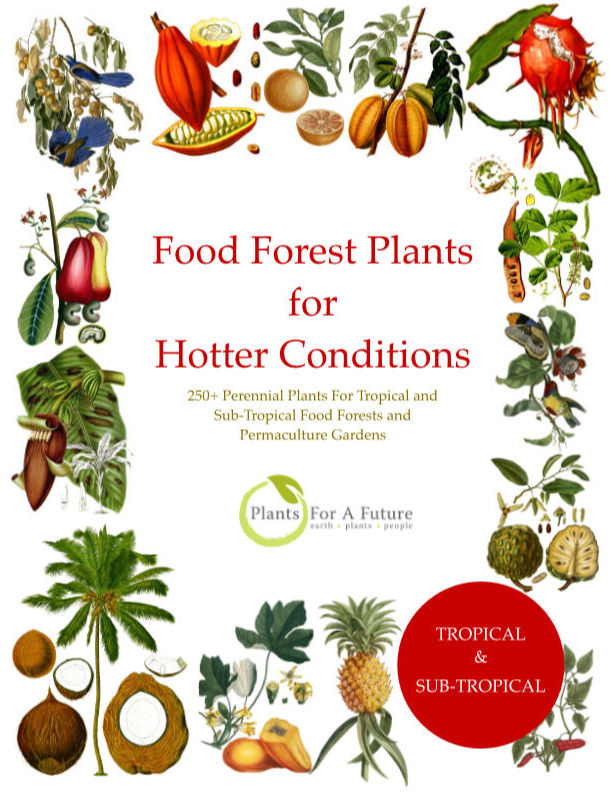
Edible Tropical Plants
Food Forest Plants for Hotter Conditions: 250+ Plants For Tropical Food Forests & Permaculture Gardens.
More
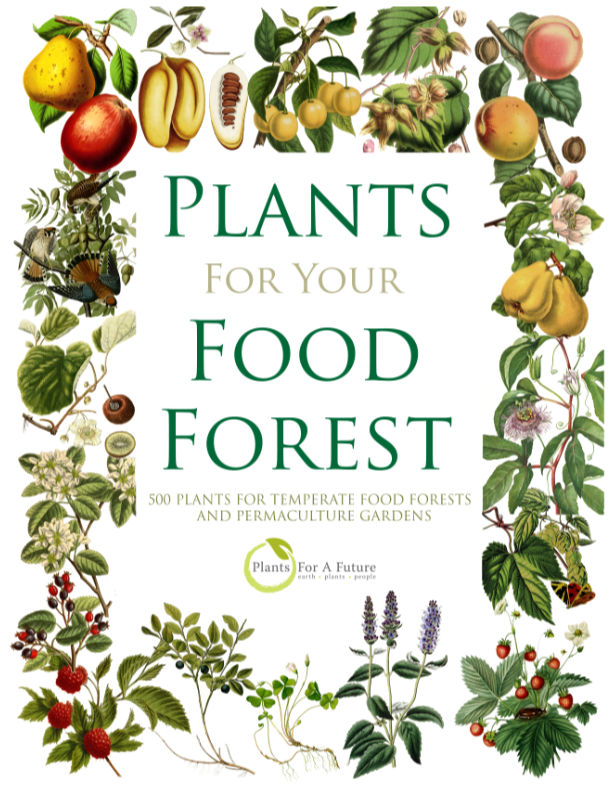
Edible Temperate Plants
Plants for Your Food Forest: 500 Plants for Temperate Food Forests & Permaculture Gardens.
More
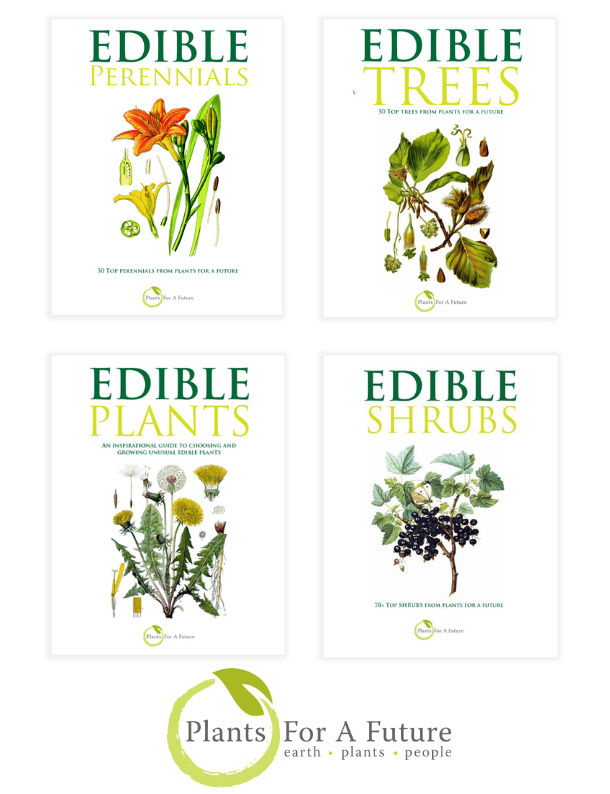
More Books
PFAF have eight books available in paperback and digital formats. Browse the shop for more information.
Shop Now
Other Uses
Cosmetic Dye Paper
Landscape Uses:Erosion control, Foundation, Ground cover, Massing, Rock garden, Seashore. ts in this genus are notably susceptible to honey fungus[200]. Special Features:
Not North American native, Attracts butterflies, Inconspicuous flowers or blooms. A purple to dull blue dye is obtained from the fruit[168]. A fibre obtained from the stems is used in making paper[189]. The stems are harvested in the summer after the fruit has been eaten, the leaves are removed and the stems are steamed until the fibres can be stripped. The fibres are cooked for 2 hours with lye and then hand beaten with mallets or ball milled for 3 hours. The paper is light brown in colour[189]. A decongestant face-mask made from the fruit is used cosmetically to soothe reddened skin[7].
Special Uses
Food Forest
References More on Other Uses
Cultivation details
Prefers a good deep well-drained loamy soil on the acid side[1, 34]. Dislikes very heavy soils[1, 200], light soils[4] and alkaline soils[200]. Prefers an open position but tolerates some shade[1]. Plants crop less well when grown in the shade of trees though they do well in the open on a north-facing slope[200]. Requires a position sheltered from strong winds[200]. Prefers a pH between 6 and 6.5[200]. Raspberries are frequently cultivated in temperate regions of the world, both in the garden and commercially, for their edible fruit. There are many named varieties able to supply fresh fruit from mid-summer to the autumn[1, 200]. High costs of picking the fruit means that little is actually sold fresh, most of the commercially cultivated crops either being used for preserves or grown for the 'Pick Your Own' trade. All the cultivars are self-fertile[200]. This species has biennial stems, it produces a number of new stems each year from the perennial rootstock, these stems fruit in their second year and then die[200]. It is best not to grow raspberries near blackberries or potatoes[18]. PlanFor polyculture design as well as the above-ground architecture (form - tree, shrub etc. and size shown above) information on the habit and root pattern is also useful and given here if available. The plant growth habit is a running thicket former forming a colony from shoots away from the crown spreading indefinitely [1-2]. The root pattern is suckering with new plants from underground runners away from the plant [1-2]. Heat zone: 9-1.
References Carbon Farming Information and Carbon Sequestration Information
Temperature Converter
Type a value in the Celsius field to convert the value to Fahrenheit:
Fahrenheit:
The PFAF Bookshop
Plants For A Future have a number of books available in paperback and digital form. Book titles include Edible Plants, Edible Perennials, Edible Trees,Edible Shrubs, Woodland Gardening, and Temperate Food Forest Plants. Our new book is Food Forest Plants For Hotter Conditions (Tropical and Sub-Tropical).
Shop Now
Plant Propagation
Seed - requires stratification and is best sown in early autumn in a cold frame. Stored seed requires one month stratification at about 3°c and is best sown as early as possible in the year. Prick out the seedlings when they are large enough to handle and grow on in a cold frame. Plant them out into their permanent positions in late spring of the following year. Cuttings of half-ripe wood, July/August in a frame[200]. Tip layering in July. Plant out in autumn. Division in early spring or just before leaf-fall in the autumn[200].
Other Names
If available other names are mentioned here
Native Plant Search
Search over 900 plants ideal for food forests and permaculture gardens. Filter to search native plants to your area. The plants selected are the plants in our book 'Plants For Your Food Forest: 500 Plants for Temperate Food Forests and Permaculture Gardens, as well as plants chosen for our forthcoming related books for Tropical/Hot Wet Climates and Mediterranean/Hot Dry Climates. Native Plant Search
Found In
Countries where the plant has been found are listed here if the information is available
Weed Potential
Right plant wrong place. We are currently updating this section.
Please note that a plant may be invasive in one area but may not in your area so it’s worth checking.
Conservation Status
IUCN Red List of Threatened Plants Status :

Growth: S = slow M = medium F = fast. Soil: L = light (sandy) M = medium H = heavy (clay). pH: A = acid N = neutral B = basic (alkaline). Shade: F = full shade S = semi-shade N = no shade. Moisture: D = dry M = Moist We = wet Wa = water.

Expert comment
Author
L.
Botanical References
1117200
Links / References
For a list of references used on this page please go here
Readers comment