 |
|
http://pl.wikipedia.org/wiki/Wikipedysta:Jakubhal |
 |
| http://commons.wikimedia.org/wiki/User:LlezErysimum capitatum |
Translate this page:
Summary
Bloom Color: Yellow. Main Bloom Time: Early spring, Late spring, Mid spring. Form: Oval.
Physical Characteristics

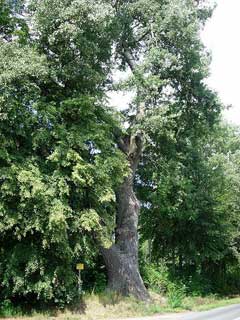
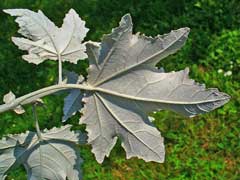
 Populus alba is a deciduous Tree growing to 20 m (65ft) by 12 m (39ft) at a fast rate.
See above for USDA hardiness. It is hardy to UK zone 3 and is not frost tender. It is in flower in March. The species is dioecious (individual flowers are either male or female, but only one sex is to be found on any one plant so both male and female plants must be grown if seed is required). and is pollinated by Wind. The plant is not self-fertile.
It is noted for attracting wildlife.
Suitable for: light (sandy), medium (loamy) and heavy (clay) soils, prefers well-drained soil and can grow in heavy clay soil. Suitable pH: mildly acid, neutral and basic (mildly alkaline) soils. It cannot grow in the shade. It prefers dry or moist soil. The plant can tolerate maritime exposure.
UK Hardiness Map
US Hardiness Map
Synonyms
Plant Habitats
Woodland Garden Canopy;
Edible Uses
Edible Parts: Inner bark Leaves
Edible Uses:
Leaves - rich in Vitamin C[179]. Inner bark - dried, ground into a powder and added to flour for making bread[2, 105]. A famine food, it is only used when all else fails[177].
References More on Edible Uses
Medicinal Uses
Plants For A Future can not take any responsibility for any adverse effects from the use of plants. Always seek advice from a professional before using a plant medicinally.
Alterative Anodyne Antiinflammatory Antiseptic Astringent Diuretic Febrifuge Tonic
Urinary Vitamin C
The stem bark is anodyne, anti-inflammatory, antiseptic, astringent, diuretic and tonic[14, 46, 61, 178, 218]. The bark contains salicylates, from which the proprietary medicine aspirin is derived[238]. It is used internally in the treatment of rheumatism, arthritis, gout, lower back pains, urinary complaints, digestive and liver disorders, debility, anorexia, also to reduce fevers and relieve the pain of menstrual cramps[14, 46, 61, 178, 213, 238]. Externally, the bark is used to treat chilblains, haemorrhoids, infected wounds and sprains[238]. The bark is harvested from side branches or coppiced trees and dried for later use[238]. The leaves are used in the treatment of caries of teeth and bones[218]. The twigs are depurative[218].
References More on Medicinal Uses
The Bookshop: Edible Plant Books
Our Latest books on Perennial Plants For Food Forests and Permaculture Gardens in paperback or digital formats.
Edible Tropical Plants
Food Forest Plants for Hotter Conditions: 250+ Plants For Tropical Food Forests & Permaculture Gardens.
More
Edible Temperate Plants
Plants for Your Food Forest: 500 Plants for Temperate Food Forests & Permaculture Gardens.
More
More Books
PFAF have eight books available in paperback and digital formats. Browse the shop for more information.
Shop Now
Other Uses
Dye Rooting hormone Shelterbelt Wood
An extract of the shoots can be used as a rooting hormone for all types of cuttings. It is extracted by soaking the chopped up shoots in cold water for a day[172]. A fairly wind resistant tree, it can be grown as part of a shelterbelt planting[200]. A yellow dye is obtained from the bark[100]. Wood - rather woolly in texture, without smell or taste, of low flammability, not durable, very resistant to abrasion, very light, soft, elastic. It is used for less good quality purposes such as making matches, packing materials etc[11, 13, 46, 61, 100, 115].
Special Uses
Attracts Wildlife Scented Plants
References More on Other Uses
Cultivation details
Landscape Uses:Erosion control, Aggressive surface roots possible, Specimen. An easily grown plant, it does well in a heavy cold damp soil[1]. Prefers a deep rich well-drained circumneutral soil, growing best in the south and east of Britain[11, 200]. Growth is much less on wet soils, on poor acid soils and on thin dry soils[11]. This species thrives on drier soils than other members of the genus[188]. It does not do well in exposed upland sites[11] but it is tolerant of maritime exposure, though it can be wind pruned in such a situation[11, 200]. Dislikes shade, it is intolerant of root or branch competition[200]. Tolerates both hot and cool summers[200]. A very ornamental tree, it is fast-growing but fairly short-lived[1, 11, 227]. There are several named varieties[188]. An important food plant for the caterpillars of many species of butterflies[30]. The leaf buds are resinous and exude an aromatic perfume in the spring[245]. Poplars have very extensive and aggressive root systems that can invade and damage drainage systems. Especially when grown on clay soils, they should not be planted within 12 metres of buildings since the root system can damage the building's foundations by drying out the soil[11]. Dioecious. Male and female plants must be grown if seed is required. Hybridizes freely with other members of this genus[200]. Special Features:
Not North American native, Invasive, Inconspicuous flowers or blooms.
References Carbon Farming Information and Carbon Sequestration Information
Temperature Converter
Type a value in the Celsius field to convert the value to Fahrenheit:
Fahrenheit:
The PFAF Bookshop
Plants For A Future have a number of books available in paperback and digital form. Book titles include Edible Plants, Edible Perennials, Edible Trees,Edible Shrubs, Woodland Gardening, and Temperate Food Forest Plants. Our new book is Food Forest Plants For Hotter Conditions (Tropical and Sub-Tropical).
Shop Now
Plant Propagation
Seed - must be sown as soon as it is ripe in spring[113]. Poplar seed has an extremely short period of viability and needs to be sown within a few days of ripening[200]. Surface sow or just lightly cover the seed in trays in a cold frame. Prick out the seedlings into individual pots when they are large enough to handle and grow them on in the cold frame. If sufficient growth is made, it might be possible to plant them out in late summer into their permanent positions, otherwise keep them in the cold frame until the following late spring and then plant them out. This species does not often produce viable seed in Britain[11]. Most poplar species hybridize freely with each other, so the seed may not come true unless it is collected from the wild in areas with no other poplar species growing[11]. Cuttings of mature wood of the current season's growth, 20 - 40cm long, November/December in a sheltered outdoor bed or direct into their permanent positions. Very easy. Suckers in early spring[78].
Other Names
If available other names are mentioned here
Native Plant Search
Search over 900 plants ideal for food forests and permaculture gardens. Filter to search native plants to your area. The plants selected are the plants in our book 'Plants For Your Food Forest: 500 Plants for Temperate Food Forests and Permaculture Gardens, as well as plants chosen for our forthcoming related books for Tropical/Hot Wet Climates and Mediterranean/Hot Dry Climates. Native Plant Search
Found In
Countries where the plant has been found are listed here if the information is available
Weed Potential
Right plant wrong place. We are currently updating this section.
Please note that a plant may be invasive in one area but may not in your area so it’s worth checking.
Conservation Status
IUCN Red List of Threatened Plants Status :

| Related Plants
|
| Latin Name | Common Name | Habit | Height | Hardiness | Growth | Soil | Shade | Moisture | Edible | Medicinal | Other |
| Populus angustifolia | Narrowleaf Cottonwood | Tree | 30.0 |
3-7
| F | LMH | N | M | 1 | 2 | 2 |
| Populus 'Balsam Spire' | Tacatricho 32 | Tree | 30.0 |
4-8
| F | LMH | N | M | 0 | 3 | 2 |
| Populus balsamifera | Balsam Poplar, Black cottonwood | Tree | 30.0 |
0-0
| F | LMH | N | M | 1 | 3 | 3 |
| Populus ciliata | Himalayan Poplar | Tree | 20.0 |
0-0
| F | LMH | N | M | 0 | 2 | 2 |
| Populus deltoides | Eastern Cottonwood, Plains cottonwood, Rio Grande cottonwood, Necklace Poplar | Tree | 30.0 |
3-9
| F | LMH | N | M | 2 | 2 | 4 |
| Populus deltoides monilifera | Plains Cottonwood | Tree | 30.0 |
0-0
| F | LMH | N | M | 1 | 2 | 3 |
| Populus deltoides wislizenii | Rio Grande Cottonwood | Tree | 30.0 |
0-0
| F | LMH | N | M | 2 | 1 | 3 |
| Populus euphratica | | Tree | 15.0 |
0-0
| F | LMH | N | MWe | 0 | 1 | 3 |
| Populus fremontii | Cottonwood, Fremont cottonwood, Fremont Poplar, Western Cottonwood | Tree | 25.0 |
2-9
| F | LMH | N | DM | 1 | 2 | 3 |
| Populus grandidentata | Canadian Aspen, Bigtooth aspen | Tree | 20.0 |
2-5
| F | LMH | N | M | 1 | 1 | 2 |
| Populus heterophylla | Swamp Cottonwood | Tree | 25.0 |
0-0
| F | LMH | N | M | 0 | 1 | 2 |
| Populus hybrids | Hybrid poplar | Tree | 50.0 |
2-10
| F | LMH | SN | DM | 3 | 3 | 4 |
| Populus maximowiczii | Doronoki, Japanese poplar | Tree | 30.0 |
4-8
| F | LMH | N | M | 0 | 1 | 2 |
| Populus nigra | Black Poplar, Lombardy poplar | Tree | 30.0 |
3-9
| F | LMH | N | M | 1 | 3 | 4 |
| Populus pseudosimonii | | Tree | 20.0 |
0-0
| | LMH | N | M | 1 | 1 | 2 |
| Populus sieboldii | Japanese Aspen | Tree | 20.0 |
4-8
| F | LMH | N | M | 1 | 1 | 2 |
| Populus simonii | Simon poplar, Chinese Poplar | Tree | 30.0 |
2-5
| F | LMH | N | M | 1 | 1 | 2 |
| Populus tremula | Aspen Poplar, European aspen, Aspen | Tree | 18.0 |
2-5
| F | LMH | SN | MWe | 1 | 2 | 3 |
| Populus tremuloides | American Aspen - Poplar, Quaking aspen | Tree | 20.0 |
2-5
| F | LMH | N | DM | 1 | 3 | 3 |
| Populus trichocarpa | Western Balsam Poplar, Black cottonwood | Tree | 40.0 |
4-8
| F | LMH | N | M | 1 | 3 | 4 |
| Populus x canadensis | Canadian Poplar, Carolina Poplar | Tree | 40.0 |
4-9
| F | LMH | N | M | 0 | 1 | 3 |
| Populus x canescens | Grey Poplar | Tree | 30.0 |
4-9
| F | LMH | N | M | 0 | 1 | 2 |
| Populus x jackii | Balm Of Gilead | Tree | 30.0 |
0-0
| F | LMH | N | M | 0 | 3 | 2 |
|
Growth: S = slow M = medium F = fast. Soil: L = light (sandy) M = medium H = heavy (clay). pH: A = acid N = neutral B = basic (alkaline). Shade: F = full shade S = semi-shade N = no shade. Moisture: D = dry M = Moist We = wet Wa = water.

Expert comment
Author
L.
Botanical References
11200
Links / References
For a list of references used on this page please go here
Readers comment
© 2010, Plants For A Future. Plants For A Future is a charitable company limited by guarantee, registered in England and Wales. Charity No. 1057719, Company No. 3204567.