 |
|
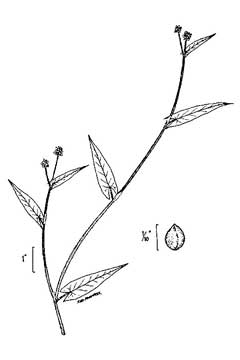
USDA-NRCS PLANTS Database / USDA NRCS. Wetland flora: Field office illustrated guide to plant species. USDA Natural Resources Conservation Service. |
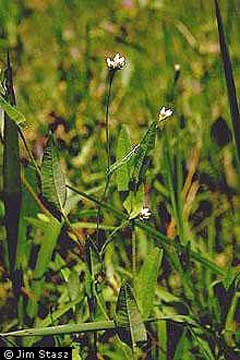 |
| Jim Stasz @ USDA-NRCS PLANTS Database |
Translate this page:
Summary
Physical Characteristics

 Polygonum sagittatum is a ANNUAL growing to 0.6 m (2ft). It is in flower from July to October, and the seeds ripen from August to October. The species is hermaphrodite (has both male and female organs) and is pollinated by Insects.
Suitable for: light (sandy), medium (loamy) and heavy (clay) soils. Suitable pH: mildly acid, neutral and basic (mildly alkaline) soils. It can grow in semi-shade (light woodland) or no shade. It prefers moist soil.
UK Hardiness Map
US Hardiness Map
Synonyms
Plant Habitats
Cultivated Beds;
Edible Uses
References More on Edible Uses
Medicinal Uses
Plants For A Future can not take any responsibility for any adverse effects from the use of plants. Always seek advice from a professional before using a plant medicinally.
Diuretic
The plant has been used with success in the treatment of nephritic colic, relieving the pains caused by gravel[4].
References More on Medicinal Uses
The Bookshop: Edible Plant Books
Our Latest books on Perennial Plants For Food Forests and Permaculture Gardens in paperback or digital formats.

Edible Tropical Plants
Food Forest Plants for Hotter Conditions: 250+ Plants For Tropical Food Forests & Permaculture Gardens.
More

Edible Temperate Plants
Plants for Your Food Forest: 500 Plants for Temperate Food Forests & Permaculture Gardens.
More

More Books
PFAF have eight books available in paperback and digital formats. Browse the shop for more information.
Shop Now
Other Uses
References More on Other Uses
Cultivation details
Succeeds in an ordinary garden soil[1] but prefers a moisture retentive not too fertile soil in sun or part shade[200]. Repays generous treatment[1]. Plants seem to be immune to the predations of rabbits[233].
References Carbon Farming Information and Carbon Sequestration Information
Temperature Converter
Type a value in the Celsius field to convert the value to Fahrenheit:
Fahrenheit:
The PFAF Bookshop
Plants For A Future have a number of books available in paperback and digital form. Book titles include Edible Plants, Edible Perennials, Edible Trees,Edible Shrubs, Woodland Gardening, and Temperate Food Forest Plants. Our new book is Food Forest Plants For Hotter Conditions (Tropical and Sub-Tropical).
Shop Now
Plant Propagation
Seed - sow spring in situ.
Other Names
If available other names are mentioned here
Native Plant Search
Search over 900 plants ideal for food forests and permaculture gardens. Filter to search native plants to your area. The plants selected are the plants in our book 'Plants For Your Food Forest: 500 Plants for Temperate Food Forests and Permaculture Gardens, as well as plants chosen for our forthcoming related books for Tropical/Hot Wet Climates and Mediterranean/Hot Dry Climates. Native Plant Search
Found In
Countries where the plant has been found are listed here if the information is available
Weed Potential
Right plant wrong place. We are currently updating this section.
Please note that a plant may be invasive in one area but may not in your area so it’s worth checking.
Conservation Status
IUCN Red List of Threatened Plants Status :

| Related Plants
|
| Latin Name | Common Name | Habit | Height | Hardiness | Growth | Soil | Shade | Moisture | Edible | Medicinal | Other |
| Polygonum alaskanum | Alaska Wild Rhubarb | Perennial | 1.8 |
-
| | LMH | SN | M | 2 | 1 | |
| Polygonum alpinum | Alpine Knotweed, Alaska wild rhubarb | Perennial | 1.0 |
4-8
| | LMH | SN | M | 2 | 1 | |
| Polygonum amphibium | Willow Grass, Water knotweed, Longroot smartweed, Water smartweed | Perennial | 0.3 |
4-8
| | LMH | SN | WeWa | 1 | 2 | 1 |
| Polygonum arenastrum | Small-Leaved Knotweed, Oval-leaf knotweed | Annual | 0.3 |
4-8
| | LMH | SN | M | 2 | 3 | 1 |
| Polygonum aviculare | Knotweed, Prostrate knotweed | Annual | 0.3 |
4-8
| | LMH | SN | M | 2 | 3 | 1 |
| Polygonum barbatum | Joint Weed | Perennial | 0.8 |
-
| | LMH | SN | M | 1 | 1 | |
| Polygonum bistorta | Bistort, Meadow bistort, Snakeweed | Perennial | 0.5 |
4-7
| F | LMH | SN | MWe | 3 | 3 | 2 |
| Polygonum bistortoides | American Bistort | Perennial | 0.5 |
4-8
| | LMH | SN | M | 3 | 1 | |
| Polygonum bungeanum | Bunge's smartweed | Annual | 0.8 |
0-0
| | LMH | SN | M | 1 | 0 | |
| Polygonum coccineum | Water Smartweed | Perennial | 0.5 |
4-8
| | LMH | SN | WeWa | 1 | 0 | |
| Polygonum conspicuum | | Perennial | 0.6 |
-
| | LMH | SN | M | 1 | 0 | |
| Polygonum convolvulus | Black Bindweed | Annual | 1.2 |
0-0
| | LMH | SN | M | 1 | 0 | 0 |
| Polygonum divaricatum | | Perennial | 1.0 |
-
| | LMH | SN | DM | 1 | 0 | |
| Polygonum douglasii | Knotweed, Douglas' knotweed, Austin knotweed, Engelmann's knotweed, Johnston's knotweed, Large kno | Annual | 0.3 |
0-0
| | LMH | SN | DM | 2 | 0 | |
| Polygonum dumetorum | Climbing false buckwheat | Annual | 1.8 |
0-0
| | LMH | SN | M | 1 | 1 | |
| Polygonum equisetiforme | | Perennial | 1.0 |
7-10
| | LMH | N | DM | 1 | 0 | 2 |
| Polygonum fugax | | Perennial | 0.0 |
-
| | LMH | SN | M | 3 | 0 | |
| Polygonum hydropiper | Smartweed, Marshpepper knotweed | Annual | 0.8 |
0-0
| | LMH | N | WeWa | 2 | 2 | 1 |
| Polygonum japonicum | Japanese Knotweed, Mexican Bamboo, Japanese Knotweed | Perennial | 3.0 |
4-10
| F | LMH | SN | M | 3 | 3 | 3 |
| Polygonum lapathifolium | Curlytop Knotweed | Annual | 0.8 |
4-8
| | LMH | SN | MWe | 1 | 1 | 1 |
| Polygonum limosum | | Perennial | 1.8 |
-
| | LMH | SN | M | 1 | 0 | |
| Polygonum longisetum | Oriental lady's thumb | Annual | 0.5 |
0-0
| | LMH | SN | MWe | 1 | 0 | |
| Polygonum maackianum | | Annual | 0.8 |
-
| | LMH | SN | MWe | 1 | 0 | |
| Polygonum manshuriense | Asian Bistort | Perennial | 0.8 |
-
| | LMH | SN | Mwe | 0 | 1 | |
| Polygonum microcephalum | | Perennial | 0.5 |
-
| | LMH | SN | M | 1 | 0 | |
| Polygonum minus | Pygmy smartweed | Annual | 0.3 |
0-0
| | LMH | SN | MWe | 1 | 0 | |
| Polygonum molle | | Perennial | 2.5 |
6-9
| F | LMH | SN | M | 2 | 1 | 2 |
| Polygonum multiflorum | He Shou Wu, Tuber fleeceflower | Perennial Climber | 4.5 |
6-9
| | LMH | SN | M | 2 | 3 | |
| Polygonum nepalense | Nepalese smartweed | Annual | 0.3 |
0-0
| | LMH | SN | MWe | 1 | 1 | 1 |
| Polygonum orientale | Prince's Feather, Kiss me over the garden gate | Annual | 1.5 |
0-0
| | LMH | SN | M | 2 | 2 | 0 |
|
|
Growth: S = slow M = medium F = fast. Soil: L = light (sandy) M = medium H = heavy (clay). pH: A = acid N = neutral B = basic (alkaline). Shade: F = full shade S = semi-shade N = no shade. Moisture: D = dry M = Moist We = wet Wa = water.

Expert comment
Author
L.
Botanical References
17235
Links / References
For a list of references used on this page please go here
Readers comment
| Add a comment |
|
If you have important information about this plant that may help other users please add a comment or link below. Only comments or links that are felt to be directly relevant to a plant will be included. If you think a comment/link or information contained on this page is inaccurate or misleading we would welcome your feedback at [email protected]. If you have questions about a plant please use the Forum on this website as we do not have the resources to answer questions ourselves.
* Please note: the comments by website users are not necessarily those held by PFAF and may give misleading or inaccurate information.
To leave a comment please Register or login here All comments need to be approved so will not appear immediately.
|
Subject : Polygonum sagittatum
|
|
|
|