Translate this page:
Summary
Bloom Color: Green. Main Bloom Time: Early summer, Late summer, Mid summer. Form: Irregular or sprawling.
Physical Characteristics

 Plantago major is a PERENNIAL growing to 0.1 m (0ft 4in) by 0.1 m (0ft 4in) at a medium rate.
See above for USDA hardiness. It is hardy to UK zone 5 and is not frost tender. It is in flower from May to September, and the seeds ripen from July to October. The species is hermaphrodite (has both male and female organs) and is pollinated by Wind. The plant is self-fertile.
It is noted for attracting wildlife.
Suitable for: light (sandy), medium (loamy) and heavy (clay) soils and prefers well-drained soil. Suitable pH: mildly acid, neutral and basic (mildly alkaline) soils. It cannot grow in the shade. It prefers moist soil. The plant can tolerate maritime exposure.
UK Hardiness Map
US Hardiness Map
Synonyms
Plantago borysthenica. Plantago dregeana. Plantago latifolia. Plantago sinuata.
Plant Habitats
Lawn; Meadow;
Edible Uses
Edible Parts: Leaves Root Seed
Edible Uses: Tea
Young leaves - raw or cooked[2, 5, 12, 56, 62, 183]. They are rather bitter and tedious to prepare because the fibrous strands need to be removed before use[9]. It is best not to use the leaf-stalk since this is even more fibrous than the leaf[183]. Many people blanch the leaves in boiling water before using them in salads in order to make them more tender[183]. A Chinese form has more palatable leaves - it contains about 2.7% protein, 0.4% fat, 2.2% ash[179]. Seed - raw or cooked[62, 172]. Very tedious to harvest[172]. The seed can be ground into a meal and mixed with flour[183]. It is very rich in vitamin B1[179]. The whole seeds can be boiled and used like sago[193]. The dried leaves make an acceptable tea[183]. Root[183]. No further details.
References More on Edible Uses
Medicinal Uses
Plants For A Future can not take any responsibility for any adverse effects from the use of plants. Always seek advice from a professional before using a plant medicinally.
Antidote Astringent Demulcent Deobstruent Depurative Diuretic Expectorant Haemostatic
Laxative Ophthalmic Poultice Refrigerant Vermifuge
Common plantain is a safe and effective treatment for bleeding, it quickly staunches blood flow and encourages the repair of damaged tissue[254]. The leaves are astringent, demulcent, deobstruent, depurative, diuretic, expectorant, haemostatic and refrigerant[4, 7, 9, 21, 147, 165, 172, 238]. Internally, they are used in the treatment of a wide range of complaints including diarrhoea, gastritis, peptic ulcers, irritable bowel syndrome, haemorrhage, haemorrhoids, cystitis, bronchitis, catarrh, sinusitis, asthma and hay fever[238, 254]. They are used externally in treating skin inflammations, malignant ulcers, cuts, stings etc[4]. The heated leaves are used as a wet dressing for wounds, swellings etc[213, 222]. The root is a remedy for the bite of rattlesnakes, it is used in equal portions with Marrubium vulgare[207]. The seeds are used in the treatment of parasitic worms[213]. Plantain seeds contain up to 30% mucilage which swells up in the gut, acting as a bulk laxative and soothing irritated membranes[238]. Sometimes the seed husks are used without the seeds[238]. A distilled water made from the plant makes an excellent eye lotion[7].
References More on Medicinal Uses
The Bookshop: Edible Plant Books
Our Latest books on Perennial Plants For Food Forests and Permaculture Gardens in paperback or digital formats.
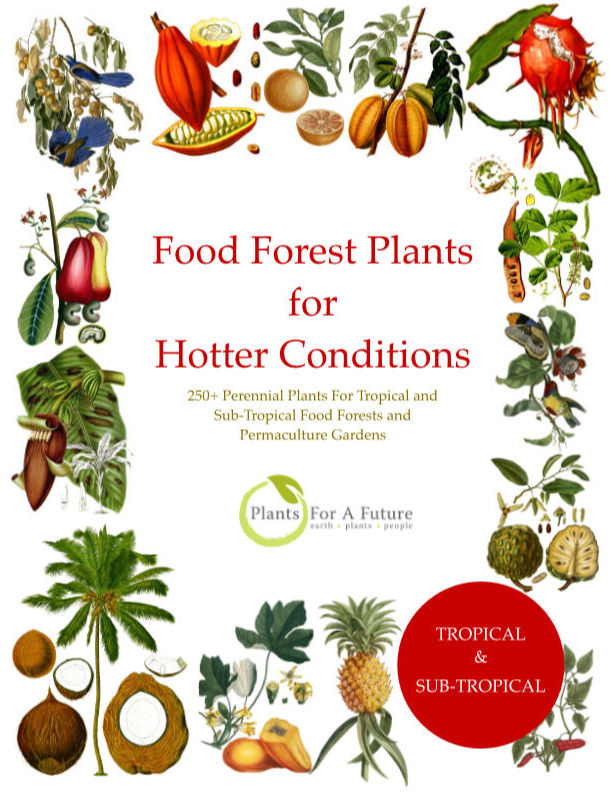
Edible Tropical Plants
Food Forest Plants for Hotter Conditions: 250+ Plants For Tropical Food Forests & Permaculture Gardens.
More
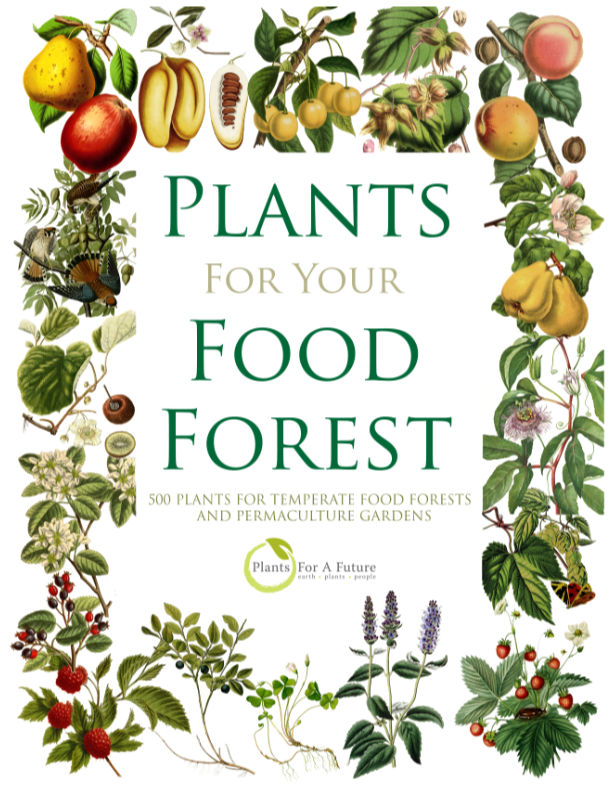
Edible Temperate Plants
Plants for Your Food Forest: 500 Plants for Temperate Food Forests & Permaculture Gardens.
More
More Books
PFAF have eight books available in paperback and digital formats. Browse the shop for more information.
Shop Now
Other Uses
Some named forms have been selected for their ornamental value[233]. An important food plant for the caterpillars of many species of butterflies[30]. Special Features: Edible, Naturalizing, Suitable for dried flowers. Dynamic accumulator.
Special Uses
Attracts Wildlife Dynamic accumulator Food Forest
References More on Other Uses
Cultivation details
Succeeds in any moderately fertile soil in a sunny position[200]. Although this species is a common garden weed, some named forms have been selected for their ornamental value[233].
References Carbon Farming Information and Carbon Sequestration Information
Temperature Converter
Type a value in the Celsius field to convert the value to Fahrenheit:
Fahrenheit:
The PFAF Bookshop
Plants For A Future have a number of books available in paperback and digital form. Book titles include Edible Plants, Edible Perennials, Edible Trees,Edible Shrubs, Woodland Gardening, and Temperate Food Forest Plants. Our new book is Food Forest Plants For Hotter Conditions (Tropical and Sub-Tropical).
Shop Now
Plant Propagation
Seed - sow spring in a cold frame. When they are large enough to handle, prick the seedlings out into individual pots and plant them out in early summer. A sowing can be made outdoors in situ in mid to late spring if you have enough seeds.
Other Names
If available other names are mentioned here
Common Plantain, Cart Track Plant, White Man's Foot Plantain, Plantain, Rat's Tails, Travellers Foot, Waybread, Cuckoo's Bread, Bolila ba lipoli, Broad-leafed plantain, Che qian, Cheuli, Daun sejumbok, Daun sendok, Ekur anjing, Ghuzbe, Gul, Isafghol, Karet, Kel-ba-an, Ki arut, Kopakopa, Llanten, Luhuriya, Ma de, Nido marto, Orecchie d'asino, Plantain, Pulung nyang, Sangka-buwah, Sangkubah, Teeleht, Tirafilo, Yempat, al-hamal al-kabeer, al-hazaza , bakayaprok, baltang, bartang, bokvica, breitwegerich, broad plantain, broad- plantain, broad-leaf plantain, broad-leaved plantain, broadleaf plantain, buckhorn plantain, buzchi, cart-track plant, charghoon, che qian cuo, chon baka zhalbyrak, common plantain, da che qian, folia plantaginis majoris, general plantain, grand plantain, great plantain, greater plantain, groblad, gros plantain, gula, khargholah, lahuriya, lantana-maior, large plantain, lisan abu al-a’meel, lisan al-hamal, llanten, llantén, llantén común, llantén major, llsan-ui-hamal, masasah, piantaggine, plantago major, plantain, plantain grand, plantain majeur, podorozhnik bol'shoy, podorožnik bol'šoj, ripple grass, rippleseed plantain, tanchagem, tanchagem-maior, warak saboun lisan al-kalb, waybread, wegerich, white-man's-foot, zanbul far, zanbul yarbooa, zupturoom, ženska bokvica.
Native Plant Search
Search over 900 plants ideal for food forests and permaculture gardens. Filter to search native plants to your area. The plants selected are the plants in our book 'Plants For Your Food Forest: 500 Plants for Temperate Food Forests and Permaculture Gardens, as well as plants chosen for our forthcoming related books for Tropical/Hot Wet Climates and Mediterranean/Hot Dry Climates. Native Plant Search
Found In
Countries where the plant has been found are listed here if the information is available
Africa, Asia, Australia, Balkans, Bosnia, Britain, Burma, Canada, Central America, China, Cuba, Denmark, East Africa, Ecuador, Estonia, Europe, France, Greece, Guiana, Guyana, Haiti, India, Indochina, Indonesia, Italy, Haiti, Laos, Lesotho, Madagascar, Mediterranean, Myanmar, New Zealand, Norfolk Island, North Africa, North America, Northeastern India, Pacific, Pakistan, Papua New Guinea, PNG, Peru, Puerto Rico, SE Asia, South Africa, Southern Africa, St Lucia, Suriname, Swaziland, Sweden, Tasmania, Tonga, USA, Venezuela, Vietnam, Virgin Islands, West Indies, Zambia, Zimbabwe,
Weed Potential
Right plant wrong place. We are currently updating this section.
Please note that a plant may be invasive in one area but may not in your area so it’s worth checking.
Conservation Status
IUCN Red List of Threatened Plants Status : Status: Least Concern

Growth: S = slow M = medium F = fast. Soil: L = light (sandy) M = medium H = heavy (clay). pH: A = acid N = neutral B = basic (alkaline). Shade: F = full shade S = semi-shade N = no shade. Moisture: D = dry M = Moist We = wet Wa = water.

Expert comment
Author
L.
Botanical References
17200
Links / References
For a list of references used on this page please go here
A special thanks to Ken Fern for some of the information used on this page.
Readers comment