Translate this page:
Summary
Bloom Color: Red. Main Bloom Time: Early summer, Late spring. Form: Upright or erect.
Physical Characteristics

 Phormium tenax is an evergreen Perennial growing to 3 m (9ft) by 2 m (6ft) at a fast rate.
See above for USDA hardiness. It is hardy to UK zone 8 and is not frost tender. It is in leaf all year, in flower from June to July. The species is hermaphrodite (has both male and female organs).
Suitable for: light (sandy), medium (loamy) and heavy (clay) soils. Suitable pH: mildly acid, neutral and basic (mildly alkaline) soils and can grow in saline soils.
It can grow in semi-shade (light woodland) or no shade. It prefers moist or wet soil. The plant can tolerate maritime exposure.
UK Hardiness Map
US Hardiness Map
Synonyms
Plant Habitats
Woodland Garden Sunny Edge; Bog Garden; Cultivated Beds;
Edible Uses
Edible Parts: Nectar
Edible Uses: Coffee Gum Gum
The roasted seed is used as a coffee substitute[153, 173]. An edible nectar is obtained from the flowers[173]. Very wholesome eating[183]. A long hollow grass-stalk or straw is used to suck it out of the flowers[183]. An edible gum is obtained from the base of the leaves[173].
References More on Edible Uses
Medicinal Uses
Plants For A Future can not take any responsibility for any adverse effects from the use of plants. Always seek advice from a professional before using a plant medicinally.
None known
References More on Medicinal Uses
The Bookshop: Edible Plant Books
Our Latest books on Perennial Plants For Food Forests and Permaculture Gardens in paperback or digital formats.
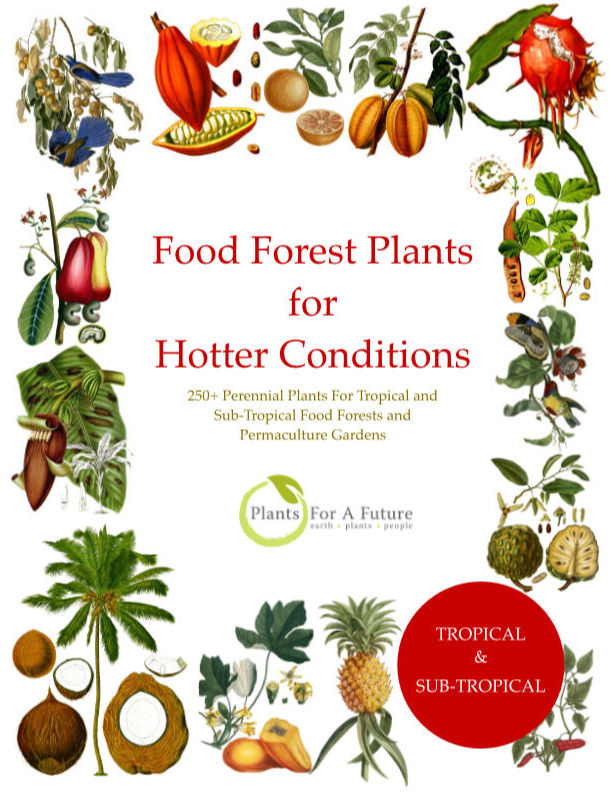
Edible Tropical Plants
Food Forest Plants for Hotter Conditions: 250+ Plants For Tropical Food Forests & Permaculture Gardens.
More
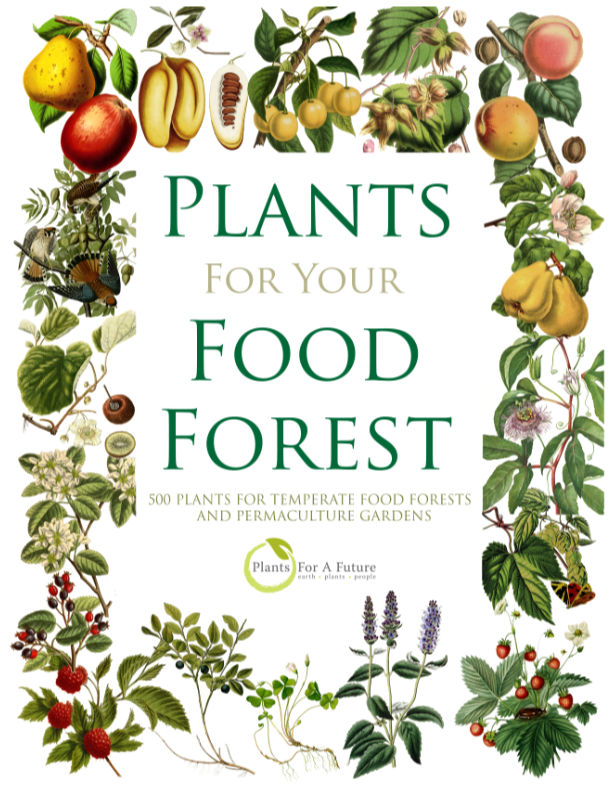
Edible Temperate Plants
Plants for Your Food Forest: 500 Plants for Temperate Food Forests & Permaculture Gardens.
More
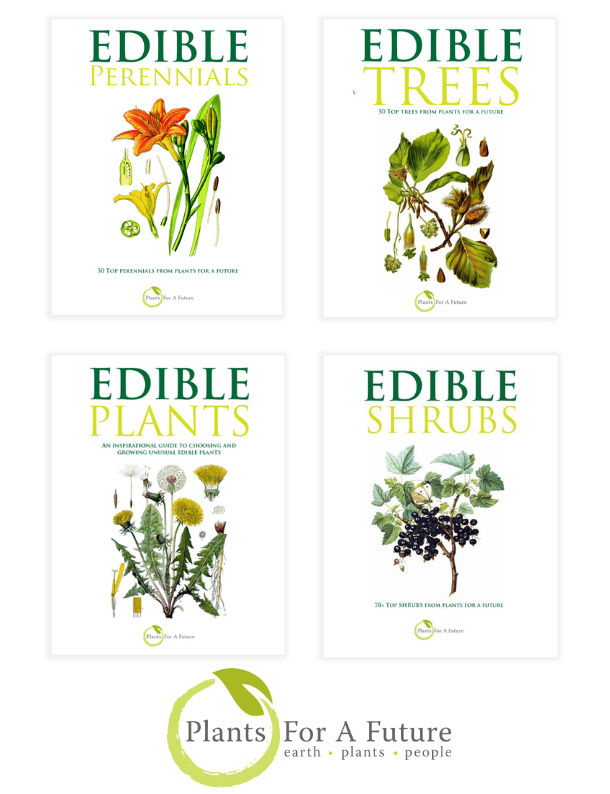
More Books
PFAF have eight books available in paperback and digital formats. Browse the shop for more information.
Shop Now
Other Uses
Adhesive Alcohol Basketry Dye Fibre Gum Gum Paper Tannin
A very high quality pliable fibre is obtained from the leaves[11, 57, 61, 128, 153]. It is used in the manufacture of ropes (they are not very strong[46]), twine, fine cloth etc. The fibre can also be used for making paper[189] The leaves are harvested in summer, they are scraped to remove the outer skin and are then soaked in water for 2 hours prior to cooking. The fibres are cooked for 24 hours with lye and then beaten in a ball mill for 4 hours. They make a cream paper[189]. The split leaves can be used to make nets, cloaks, sandals, straps etc[153]. They are also used in making paper and basket making[153, 169]. A strip of a leaf is an excellent emergency string substitute for tying up plants in the garden, it can be tied into a knot without breaking[128]. The leaf pulp, after the fibre has been removed, can be fermented to make alcohol[153]. A gum found in the leaves is used as a paper glue[173]. A brown dye is obtained from the flowers[168], it does not require a mordant[169]. A terra-cotta dye is obtained from the seedpods[168]. A mauve can also be obtained[168]. The flowers are rich in tannin[168].
Special Uses
Carbon Farming Food Forest
References More on Other Uses
Cultivation details
Industrial Crop: Fiber Management: Standard Minor Global Crop
Landscape Uses:Border, Container, Foundation, Massing, Specimen. Prefers a rich loamy soil[1] but is not too fussy, succeeding in peaty soils and in boggy moorland[11]. Tolerates light shade[1] but prefers full sun[200]. Plants can be grown in quite coarse grass, which can be cut annually in the autumn[233]. Prefers a sheltered position[42] but tolerates maritime exposure[75]. Plants tolerate occasional flooding with saline water[200]. Plants can withstand temperatures down to about -11°c[42], but they can be killed in very severe winters in Britain[11]. A polymorphic species[78], there are many named varieties grown in Britain[11, 200]. This species hybridizes readily with P. colensoi and there are many named forms that may be hybrids with that species[11]. This plant has been considered for commercial cultivation for its fibre, though there is some difficulty in mechanically extracting the fibres due to the presence of a gum in the leaves. An alkali has been successfully used to break down the gum but this weakens the fibre. The Maoris had selected many different cultivars for different uses[153]. Members of this genus are rarely if ever troubled by browsing deer or rabbits[233]. Special Features:
Attractive foliage, Not North American native, Attractive flowers or blooms.
Carbon Farming
-
Industrial Crop: Fiber
Clothing, rugs, sheets, blankets etc. Currently, almost none of our fiber are produced from perennial crops but could be!
-
Management: Standard
Plants grow to their standard height. Harvest fruit, seeds, or other products. Non-Destructive management systems.
-
Minor Global Crop
These crops are already grown or traded around the world, but on a smaller scale than the global perennial staple and industrial crops, The annual value of a minor global crop is under $1 billion US. Examples include shea, carob, Brazil nuts and fibers such as ramie and sisal.
References Carbon Farming Information and Carbon Sequestration Information
Temperature Converter
Type a value in the Celsius field to convert the value to Fahrenheit:
Fahrenheit:
The PFAF Bookshop
Plants For A Future have a number of books available in paperback and digital form. Book titles include Edible Plants, Edible Perennials, Edible Trees,Edible Shrubs, Woodland Gardening, and Temperate Food Forest Plants. Our new book is Food Forest Plants For Hotter Conditions (Tropical and Sub-Tropical).
Shop Now
Plant Propagation
The seed is best sown as soon as it is ripe in a cold frame. Sow stored seed in February in a cold frame. Germination is sometimes poor but should take place in 1 - 6 months at 15°c. The seedlings are very variable. When they are large enough to handle, prick the seedlings out into individual pots and grow them on in the greenhouse for at least their first winter. Plant them out into their permanent positions in late spring or early summer, after the last expected frosts. The seed remains viable for about 12 months in normal storage[1]. Division in spring as growth commences. Very easy, larger divisions can be planted out direct into their permanent positions. We have found that it is better to pot up the smaller divisions and grow them on in light shade in a cold frame until they are well established before planting them out in late spring or early summer.
Other Names
If available other names are mentioned here
Native Plant Search
Search over 900 plants ideal for food forests and permaculture gardens. Filter to search native plants to your area. The plants selected are the plants in our book 'Plants For Your Food Forest: 500 Plants for Temperate Food Forests and Permaculture Gardens, as well as plants chosen for our forthcoming related books for Tropical/Hot Wet Climates and Mediterranean/Hot Dry Climates. Native Plant Search
Found In
Countries where the plant has been found are listed here if the information is available
Weed Potential
Right plant wrong place. We are currently updating this section.
Please note that a plant may be invasive in one area but may not in your area so it’s worth checking.
Conservation Status
IUCN Red List of Threatened Plants Status :

Growth: S = slow M = medium F = fast. Soil: L = light (sandy) M = medium H = heavy (clay). pH: A = acid N = neutral B = basic (alkaline). Shade: F = full shade S = semi-shade N = no shade. Moisture: D = dry M = Moist We = wet Wa = water.

Expert comment
Author
J.R.Forst.&G.Forst.
Botanical References
1144200
Links / References
For a list of references used on this page please go here
Readers comment