 |
|
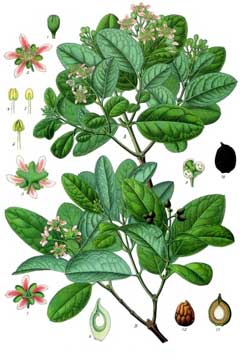
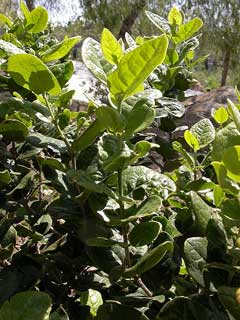
Peumus boldus |
 |
| http://commons.wikimedia.org/wiki/User:Simonjoan |
Translate this page:
Summary
Physical Characteristics

 Peumus boldus is an evergreen Tree growing to 6 m (19ft 8in) at a slow rate.
See above for USDA hardiness. It is hardy to UK zone 9. It is in leaf all year, in flower from August to September. The species is dioecious (individual flowers are either male or female, but only one sex is to be found on any one plant so both male and female plants must be grown if seed is required). and is pollinated by Insects. The plant is not self-fertile.
Suitable for: light (sandy) and medium (loamy) soils and prefers well-drained soil. Suitable pH: mildly acid and neutral soils. It can grow in semi-shade (light woodland) or no shade. It prefers dry or moist soil.
UK Hardiness Map
US Hardiness Map
Synonyms
Boldu boldus. Boldea fragrans. Boldea boldus. Boldu chilanum
Plant Habitats
Woodland Garden Sunny Edge; Dappled Shade;
Edible Uses
Edible Parts: Fruit
Edible Uses: Condiment
Fruit - raw or cooked[1, 2, 166]. Sweet and aromatic with an agreeable flavour[2, 183]. The fruit is up to 2cm in diameter[2]. The leaves and bark are used as a condiment[177].
References More on Edible Uses
Medicinal Uses
Plants For A Future can not take any responsibility for any adverse effects from the use of plants. Always seek advice from a professional before using a plant medicinally.
Analgesic Antiseptic Antispasmodic Bitter Cholagogue Diuretic Malaria Stimulant
Tonic Urinary
Boldu is a traditional remedy used by the Araucanian Indians of Chile as a tonic. The plant stimulates liver activity and bile flow and is chiefly valued as a remedy for gallstones and liver or gallbladder pain[254]. It is normally taken for only a few weeks at a time, either as an infusion or as a tincture[254]. It is often combined with other herbs such as Berberis vulgaris or Chionanthus virginicus in the treatment of gallstones[254]. The leaves are analgesic, antiseptic (urinary), bitter, cholagogue, diuretic, stimulant and tonic[4, 46, 165, 235]. They are considered a valuable cure for gonorrhoea in S. America[4]. The plant is taken internally in the treatment of liver disease (though the bark is more effective here), gallstones, urinary tract infections, intestinal parasites and rheumatism[238]. It has been used in the past as a substitute for quinine in the treatment of malaria[238]. The leaves are harvested during the growing season and are dried for later use[238]. Some caution is advised, the plant should not be used by pregnant women[254]. See also the notes above on toxicity. A volatile oil obtained from the plant destroys internal parasites[238]. Alkaloids contained in the bark are a stimulant for the liver[238]. The German Commission E Monographs, a therapeutic guide to herbal medicine, approve Peumus boldus for dyspeptic complaints (indigestion) (see [302] for critics of commission E).
References More on Medicinal Uses
The Bookshop: Edible Plant Books
Our Latest books on Perennial Plants For Food Forests and Permaculture Gardens in paperback or digital formats.
Edible Tropical Plants
Food Forest Plants for Hotter Conditions: 250+ Plants For Tropical Food Forests & Permaculture Gardens.
More
Edible Temperate Plants
Plants for Your Food Forest: 500 Plants for Temperate Food Forests & Permaculture Gardens.
More
More Books
PFAF have eight books available in paperback and digital formats. Browse the shop for more information.
Shop Now
Other Uses
Beads Charcoal Dye Essential Repellent Tannin
The bark is a source of tannin and is also used as a dye[1, 4, 238]. A deliciously fragrant essential oil is obtained from the leaves[245]. The dried and powdered leaves are scattered amongst clothes to sweeten them and repel insects[245]. The small fruits are dried and used as beads in necklaces[245]. When warmed by the body or the sun they release the scent of cinnamon[245]. The wood is used for making charcoal[4].
Special Uses
Scented Plants
References More on Other Uses
Cultivation details
Dislikes soils that are too moist[166]. Prefers a well-drained acid sandy soil in full sun[166, 200, 238]. Hardy in climatic zone 9 (tolerating occasional light frosts), this plant normally requires greenhouse protection in Britain but is capable of withstanding light frosts and might succeed outdoors in the mildest areas of the country, especially if grown against a sunny wall[166, 200]. One report says that the plant succeeds outdoors at Kew Gardens in London, where it often flowers all year round[245]. All parts of the plant are sweetly aromatic[245]. The leaves have a lemon-camphor aroma[238]. Dioecious, male and female plants must be grown if fruit and seed is required[238].
References Carbon Farming Information and Carbon Sequestration Information
Temperature Converter
Type a value in the Celsius field to convert the value to Fahrenheit:
Fahrenheit:
The PFAF Bookshop
Plants For A Future have a number of books available in paperback and digital form. Book titles include Edible Plants, Edible Perennials, Edible Trees,Edible Shrubs, Woodland Gardening, and Temperate Food Forest Plants. Our new book is Food Forest Plants For Hotter Conditions (Tropical and Sub-Tropical).
Shop Now
Plant Propagation
Seed - sow spring in a warm greenhouse. Prick out the seedlings into individual pots when they are large enough to handle and grow them on in the greenhouse for at least their first winter. Plant them out into their permanent positions in early summer and give them some protection from winter cold for at least their first winter or two outdoors. Cuttings of half-ripe wood, July/August in a frame[200]. Grow the cuttings on in the frame or greenhouse for at least their first winter.
Other Names
If available other names are mentioned here
Native Plant Search
Search over 900 plants ideal for food forests and permaculture gardens. Filter to search native plants to your area. The plants selected are the plants in our book 'Plants For Your Food Forest: 500 Plants for Temperate Food Forests and Permaculture Gardens, as well as plants chosen for our forthcoming related books for Tropical/Hot Wet Climates and Mediterranean/Hot Dry Climates. Native Plant Search
Found In
Countries where the plant has been found are listed here if the information is available
Weed Potential
Right plant wrong place. We are currently updating this section.
Please note that a plant may be invasive in one area but may not in your area so it’s worth checking.
Conservation Status
IUCN Red List of Threatened Plants Status :

Growth: S = slow M = medium F = fast. Soil: L = light (sandy) M = medium H = heavy (clay). pH: A = acid N = neutral B = basic (alkaline). Shade: F = full shade S = semi-shade N = no shade. Moisture: D = dry M = Moist We = wet Wa = water.
Expert comment
Author
Molina.
Botanical References
200
Links / References
For a list of references used on this page please go here
Readers comment