 |
|
http://commons.wikimedia.org/wiki/File:Koeh-102.jpg |
 |
| http://www.flickr.com/people/57846262@N00 |
Translate this page:
Summary
Physical Characteristics

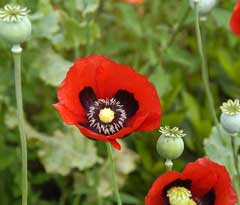
 Papaver somniferum is a ANNUAL growing to 0.6 m (2ft) by 0.2 m (0ft 8in).
See above for USDA hardiness. It is hardy to UK zone 7 and is not frost tender. It is in flower from July to August. The species is hermaphrodite (has both male and female organs) and is pollinated by Bees. The plant is self-fertile.
Suitable for: light (sandy), medium (loamy) and heavy (clay) soils and prefers well-drained soil. Suitable pH: mildly acid, neutral and basic (mildly alkaline) soils. It cannot grow in the shade. It prefers moist soil.
UK Hardiness Map
US Hardiness Map
Synonyms
Plant Habitats
Cultivated Beds;
Edible Uses
Edible Parts: Leaves Oil Seed
Edible Uses: Oil
Seed - raw or cooked[2, 14, 15]. Much used as a flavouring in cakes, bread, fruit salads etc[183], it imparts a very nice nutty flavour[K]. The crushed and sweetened seeds are used as a filling in crepes, strudels, pastries etc[183]. Highly nutritious, the seed contains about 22.7% protein, 48% fat, 9.8% carbohydrate, 7.1% ash[179]. It is also a good source of lecithin[269]. The seeds are rather small, but there are large numbers of them contained in capsules 3cm or more in diameter and so they are easy to harvest and utilize[K]. The seeds are perfectly safe to eat, containing very little if any of the narcotic principles[10, 65, 238]. However, although the seeds contain no narcotic alkaloids, analysis of the urine following their ingestion may produce similar results to the analysis of the urine of morphine or heroin addicts[269]. Edible young leaves - raw or cooked[183]. They must be used before the flower buds have formed[179]. In some countries they are eaten at the seedling stage[269]. One report says that the leaves do not contain any narcotic principles[179]. Some caution is advised, see notes at top of the page. A high quality edible drying oil is obtained from the seed. It has an almond flavour[238] and makes a good substitute for olive oil[21, 46, 57, 89, 183].
References More on Edible Uses
| Composition
|
| Figures in grams (g) or miligrams (mg) per 100g of food.
|
|
|
Seed (Fresh weight)
|
|
- 533 Calories per 100g
- Water : 6.8%
- Protein: 18g; Fat: 44.7g; Carbohydrate: 23.7g; Fibre: 6.3g; Ash: 6.8g;
- Minerals - Calcium: 1448mg; Phosphorus: 848mg; Iron: 9.4mg; Magnesium: 2.3mg; Sodium: 21mg; Potassium: 700mg; Zinc: 0mg;
- Vitamins - A: 0mg; Thiamine (B1): 0.95mg; Riboflavin (B2): 0.17mg; Niacin: 0.98mg; B6: 0mg; C: 0mg;
- Reference: [ 269]
- Notes:
|
|
Medicinal Uses
Plants For A Future can not take any responsibility for any adverse effects from the use of plants. Always seek advice from a professional before using a plant medicinally.
Anodyne Antispasmodic Antitussive Astringent Diaphoretic Dysentery Emmenagogue Expectorant
Homeopathy Hypnotic Narcotic Sedative
The opium poppy contains a wide range of alkaloids and has been a very valuable medicine, especially useful in bringing relief from pain. Its use (especially of the extracted alkaloids opium and morphine which it contains) can become addictive, however, and so it should be treated with extreme caution and only be used under the supervision of a qualified practitioner[244]. The dried juice (latex) from the unripe green seed vessels is a rich source of the active alkaloids, including morphine[232, 240]. It is extracted by making shallow incisions in the capsules as soon as the petals have fallen[4]. Care must be taken that the incisions do not penetrate to the interior of the seed capsules[4]. The latex exudes from the capsules and dries in contact with the air - it is then scraped off[4]. This latex is anodyne, antitussive, astringent, diaphoretic, emmenagogue, hypnotic, narcotic and sedative[4, 7, 13, 176, 192, 218]. As well as its pain-relieving properties, the latex has also been used as an antispasmodic and expectorant in treating certain kinds of coughs, whilst its astringent properties make it useful in the treatment of dysentery etc[4]. A homeopathic remedy is made from the dried latex[232]. This is used in the treatment of a variety of complaints, including constipation, fevers and insomnia[232].
References More on Medicinal Uses
The Bookshop: Edible Plant Books
Our Latest books on Perennial Plants For Food Forests and Permaculture Gardens in paperback or digital formats.
Edible Tropical Plants
Food Forest Plants for Hotter Conditions: 250+ Plants For Tropical Food Forests & Permaculture Gardens.
More
Edible Temperate Plants
Plants for Your Food Forest: 500 Plants for Temperate Food Forests & Permaculture Gardens.
More
More Books
PFAF have eight books available in paperback and digital formats. Browse the shop for more information.
Shop Now
Other Uses
Oil
The seed yields 44 - 50% of an edible drying oil[61]. Very good for lighting, it burns for longer than most oils[115]. The oil is also used in paints, soap making etc[46, 57].
Special Uses
References More on Other Uses
Cultivation details
Prefers a rich well-drained sandy loam in a sunny position[4, 200]. Requires a moist soil[14] but does not do well on wet clays[115]. Prefers a sandy loam or a chalky soil[115]. Plants often self-sow in British gardens. The opium poppy is a very ornamental plant that is often cultivated in the flower garden[1]. There are many named varieties, some of which have been developed for their edible uses[183]. The plant is widely grown, often illegally, in warm temperate and tropical climates for the substances contained in its sap. These are often used medicinally as pain killers, especially in the treatment of terminally ill patients suffering extreme pain, they are also used for their narcotic effects by some people. These substances are highly addictive and lead to a shortening of the life span if used with any frequency. In cool temperate zones the plant does not produce sufficient of the narcotic principles to make their extraction feasible[4] and cultivation of the plant is perfectly legal in Britain[K]. Plants have ripened their seeds as far north as latitude 69°n in Norway[141]. Members of this genus are rarely if ever troubled by browsing deer or rabbits[233].
References Carbon Farming Information and Carbon Sequestration Information
Temperature Converter
Type a value in the Celsius field to convert the value to Fahrenheit:
Fahrenheit:
The PFAF Bookshop
Plants For A Future have a number of books available in paperback and digital form. Book titles include Edible Plants, Edible Perennials, Edible Trees,Edible Shrubs, Woodland Gardening, and Temperate Food Forest Plants. Our new book is Food Forest Plants For Hotter Conditions (Tropical and Sub-Tropical).
Shop Now
Plant Propagation
Seed - sow spring or autumn in situ[200].
Other Names
If available other names are mentioned here
Native Plant Search
Search over 900 plants ideal for food forests and permaculture gardens. Filter to search native plants to your area. The plants selected are the plants in our book 'Plants For Your Food Forest: 500 Plants for Temperate Food Forests and Permaculture Gardens, as well as plants chosen for our forthcoming related books for Tropical/Hot Wet Climates and Mediterranean/Hot Dry Climates. Native Plant Search
Found In
Countries where the plant has been found are listed here if the information is available
Weed Potential
Right plant wrong place. We are currently updating this section.
Please note that a plant may be invasive in one area but may not in your area so it’s worth checking.
Conservation Status
IUCN Red List of Threatened Plants Status :

| Related Plants
|
| Latin Name | Common Name | Habit | Height | Hardiness | Growth | Soil | Shade | Moisture | Edible | Medicinal | Other |
| Argemone albiflora | White Prickly Poppy, Bluestem pricklypoppy | Annual | 1.5 |
6-9
| | L | N | DM | 0 | 1 | |
| Argemone mexicana | Prickly Poppy, Mexican pricklypoppy | Perennial | 0.6 |
7-10
| | L | N | DM | 1 | 3 | 2 |
| Chelidonium majus | Greater Celandine, Swallow Wort, Greater Celandine | Perennial | 0.5 |
5-8
| F | LMH | FSN | M | 1 | 3 | 2 |
| Corydalis ambigua | | Perennial | 0.2 |
5-9
| | LM | S | M | 1 | 3 | |
| Corydalis aurea | Scrambled Eggs | Annual/Biennial | 0.5 |
5-9
| | LM | S | M | 0 | 2 | |
| Corydalis cava | | Perennial | 0.2 |
5-9
| | LM | S | M | 0 | 3 | |
| Corydalis edulis | | Perennial | 0.0 |
-
| | LM | S | M | 1 | 0 | |
| Corydalis falconeri | | Perennial | 0.0 |
-
| | LM | S | M | 0 | 0 | 1 |
| Corydalis govaniana | | Perennial | 0.0 |
-
| | LM | SN | M | 0 | 2 | |
| Corydalis incisa | Incised fumewort | Annual/Biennial | 0.3 |
6-10
| | LM | S | M | 1 | 1 | 0 |
| Corydalis intermedia | | Perennial | 0.2 |
-
| | LM | S | M | 0 | 1 | |
| Corydalis juncea | | Perennial | 0.0 |
-
| | LM | SN | M | 1 | 0 | |
| Corydalis ochotensis | | Biennial | 1.0 |
-
| | LM | SN | M | 1 | 0 | |
| Corydalis pallida | | Biennial | 0.3 |
-
| | LM | SN | M | 1 | 0 | |
| Corydalis solida | Fumewort, Spring fumewort | Perennial | 0.2 |
5-9
| | LM | S | M | 1 | 3 | |
| Corydalis ternata | Three-Leaf Corydalis | Perennial | 0.2 |
-
| | LM | SN | M | 0 | 2 | |
| Corydalis vaginans | | Annual/Biennial | 0.0 |
4-8
| | LM | SN | M | 0 | 1 | |
| Corydalis yanhusuo | Yan Hu Suo | Perennial | 0.0 |
-
| | LM | SN | M | 0 | 3 | |
| Dicentra canadensis | Squirrel Corn | Perennial | 0.2 |
4-8
| | LM | FS | M | 1 | 2 | |
| Dicentra cucullaria | Dutchman's Breeches | Perennial | 0.1 |
5-9
| M | LM | FS | M | 0 | 2 | |
| Dicentra eximia | Dwarf bleeding heart, turkey-corn | Perennial | 0.4 |
3-9
| M | LMH | FS | M | 0 | 0 | 4 |
| Dicentra spectabilis | Bleeding Heart, Japanese Bleeding Heart, Common Bleeding Heart | Perennial | 0.6 |
3-9
| M | LM | SN | M | 1 | 0 | |
| Eschscholzia californica | Californian Poppy | Perennial | 0.3 |
6-11
| F | LMH | N | DM | 1 | 3 | 2 |
| Glaucium flavum | Horned Poppy, Yellow hornpoppy | Perennial | 0.6 |
6-9
| S | LMH | N | DM | 2 | 1 | 2 |
| Macleaya cordata | Plume Poppy | Perennial | 2.0 |
4-10
| F | LMH | SN | M | 0 | 1 | 1 |
| Meconopsis aculeata | | Perennial | 0.6 |
6-9
| | LMH | S | M | 1 | 2 | |
| Meconopsis grandis | Blue Poppy | Perennial | 1.0 |
4-8
| | LMH | S | M | 1 | 0 | |
| Meconopsis napaulensis | Himalayan Poppy | Perennial | 2.0 |
7-10
| | LMH | S | M | 1 | 1 | |
| Papaver argemone | Prickly Poppy, Long pricklyhead poppy | Annual | 0.4 |
7-10
| | LMH | N | M | 0 | 1 | |
| Papaver dubium | Long-Head Poppy, Blindeyes | Annual | 0.5 |
6-9
| | LMH | N | M | 0 | 1 | 0 |
|
|
Growth: S = slow M = medium F = fast. Soil: L = light (sandy) M = medium H = heavy (clay). pH: A = acid N = neutral B = basic (alkaline). Shade: F = full shade S = semi-shade N = no shade. Moisture: D = dry M = Moist We = wet Wa = water.

Expert comment
Author
L.
Botanical References
17200
Links / References
For a list of references used on this page please go here
Readers comment