 |
|
http://lt.wikipedia.org/wiki/Naudotojas:Algirdas |
 |
| http://commons.wikimedia.org/wiki/User:Doronenko |
Translate this page:
Summary
Physical Characteristics

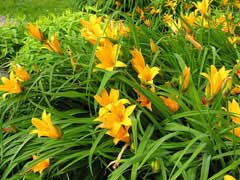
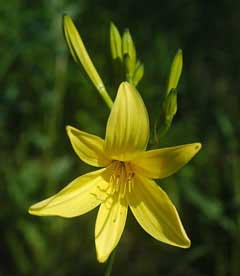
 Hemerocallis lilioasphodelus is a PERENNIAL growing to 0.6 m (2ft) by 1 m (3ft 3in).
See above for USDA hardiness. It is hardy to UK zone 4 and is not frost tender. It is in flower from May to July. The species is hermaphrodite (has both male and female organs) and is pollinated by Insects. The plant is self-fertile.
Suitable for: light (sandy), medium (loamy) and heavy (clay) soils and can grow in heavy clay soil. Suitable pH: mildly acid, neutral and basic (mildly alkaline) soils. It can grow in semi-shade (light woodland) or no shade. It prefers dry or moist soil.
UK Hardiness Map
US Hardiness Map
Synonyms
H. flava.
Plant Habitats
Woodland Garden Sunny Edge; Dappled Shade; Ground Cover; Meadow; Cultivated Beds;
Edible Uses
Edible Parts: Flowers Leaves Root Shoots
Edible Uses:
Leaves and young shoots - raw or cooked like asparagus or celery[85, 105, 183]. They must be consumed when very young or else they become fibrous[K]. Flower buds - raw or cooked. They taste somewhat like green beans[85, 105]. They contain about 43mg vitamin C per 100g, 983 IU vitamin A and 3.1% protein[205]. Flowers - raw or cooked[85, K]. They can be dried and used as a thickener in soups etc[183]. If the flowers are picked just as they start to wither they can be used as a condiment[85]. The flowers are a traditional food in China where they are steamed and then dried[266]. Root - cooked[85, 105]. They taste like a blend of sweet corn and salsify[183]. We have found them to be tender but fairly bland with a slight sweetness[K]. The swollen roots are quite small and are only really worthwhile using if the plant is being dug up for divisions or some other reason[K].
References More on Edible Uses
Medicinal Uses
Plants For A Future can not take any responsibility for any adverse effects from the use of plants. Always seek advice from a professional before using a plant medicinally.
Antidote Cancer Diuretic Vitamin C
The juice of the roots is an effective antidote in cases of arsenic poisoning[205]. The root also has a folk history of use in the treatment of cancer - extracts from the roots have shown antitumour activity[218]. A tea made from the boiled roots is used as a diuretic[205].
References More on Medicinal Uses
The Bookshop: Edible Plant Books
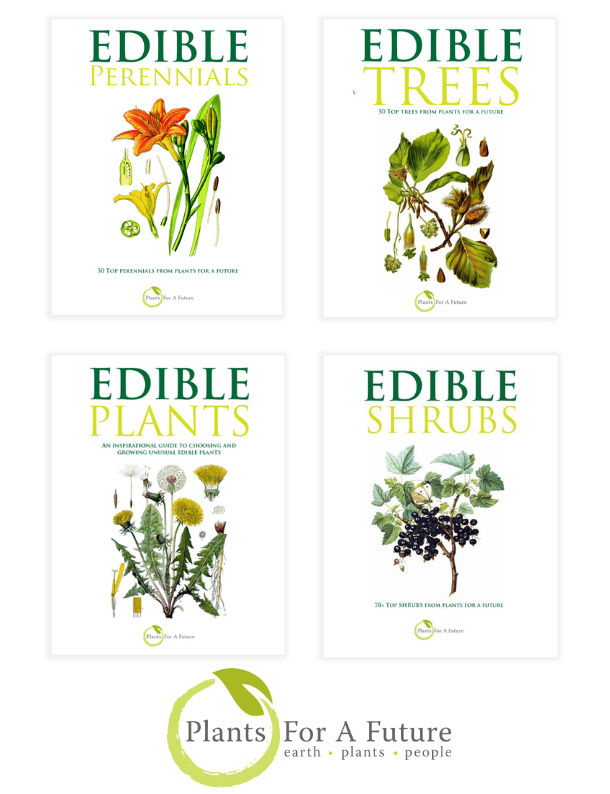
Our Latest books on Perennial Plants For Food Forests and Permaculture Gardens in paperback or digital formats.
Edible Tropical Plants
Food Forest Plants for Hotter Conditions: 250+ Plants For Tropical Food Forests & Permaculture Gardens.
More
Edible Temperate Plants
Plants for Your Food Forest: 500 Plants for Temperate Food Forests & Permaculture Gardens.
More
More Books
PFAF have eight books available in paperback and digital formats. Browse the shop for more information.
Shop Now
Other Uses
Weaving
The tough dried foliage is plaited into cord and used for making footwear[205]. Plants form a spreading clump and are suitable for ground cover when spaced about 45cm apart each way[208]. The dead leaves should be left on the ground in the winter to ensure effective cover[208].
Special Uses
Food Forest Ground cover Scented Plants
References More on Other Uses
Cultivation details
Succeeds in most soils[1], including dry ones, preferring a rich moist soil and a sunny position[111] but tolerating partial shade[88, 111]. Plants flower less freely in a shady position though the flowers can last longer in such a position[205]. Grows well in heavy clay soils. Succeeds in short grass if the soil is moist[1]. Prefers a pH between 6 and 7[200]. Plants are very cold-hardy, tolerating temperatures down to about -25°c[187]. A very vigorous plant, spreading by underground rhizomes[1]. The plant has a fibrous root system with occasional spindle-like swellings[205]. Cultivated as a food and medicinal plant in Japan[127]. Individual flowers are short-lived, they open at night and last for 20 - 76 hours. The plant produces a succession of blooms over a period of about 2 months[205]. The flowers are fragrant[205]. The flowers have a honeysuckle-like scent and this can pervade the air for a considerable distance when warmed by the summer sunshine[245]. Hybridizes freely with other members of this genus[200]. Plants take a year or two to become established after being moved[200]. Plants seem to be immune to the predations of rabbits[233]. The plants are very susceptible to slug and snail damage, the young growth in spring is especially at risk[200]. The plant is heat tolerant in zones 12 through 2. (Plant Hardiness Zones show how well plants withstand cold winter temperatures.
Plant Heat Zones show when plants would start suffering from the heat.
The Plant Heat Zone map is based on the number of "heat days" experienced in a given area where the temperature climbs to over 86 degrees F (30°C).
At this temperature, many plants begin to suffer physiological damage. Heat Zones range from 1 (no heat days) to 12 (210 or more heat days).
For example Heat Zone. 11-1 indicates that the plant is heat tolerant in zones 11 through 1.) For polyculture design as well as the above-ground architecture (form - tree, shrub etc. and size shown above) information on the habit and root pattern is also useful and given here if available. The plant growth habit is a clumper with limited spread [1-2]. The root pattern is rhizomatous with underground stems sending roots and shoots along their length [1-2]. The root pattern is tuberous with swollen potato-like roots [1-2].
References Carbon Farming Information and Carbon Sequestration Information
Temperature Converter
Type a value in the Celsius field to convert the value to Fahrenheit:
Fahrenheit:
The PFAF Bookshop
Plants For A Future have a number of books available in paperback and digital form. Book titles include Edible Plants, Edible Perennials, Edible Trees,Edible Shrubs, Woodland Gardening, and Temperate Food Forest Plants. Our new book is Food Forest Plants For Hotter Conditions (Tropical and Sub-Tropical).
Shop Now
Plant Propagation
Seed - sow in the middle of spring in a greenhouse. Germination is usually fairly rapid and good. Prick out the seedlings into individual pots when they are large enough to handle. Grow the plants on for their first winter in a greenhouse and plant out in late spring[K]. Division in spring or after flowering in late summer or autumn[200]. Division is very quick and easy, succeeding at almost any time of the year[K]. Larger clumps can be replanted direct into their permanent positions, though it is best to pot up smaller clumps and grow them on in a cold frame until they are rooting well. Plant them out in the spring.
Other Names
If available other names are mentioned here
Native Plant Search
Search over 900 plants ideal for food forests and permaculture gardens. Filter to search native plants to your area. The plants selected are the plants in our book 'Plants For Your Food Forest: 500 Plants for Temperate Food Forests and Permaculture Gardens, as well as plants chosen for our forthcoming related books for Tropical/Hot Wet Climates and Mediterranean/Hot Dry Climates. Native Plant Search
Found In
Countries where the plant has been found are listed here if the information is available
Weed Potential
Right plant wrong place. We are currently updating this section.
Please note that a plant may be invasive in one area but may not in your area so it’s worth checking.
Conservation Status
IUCN Red List of Threatened Plants Status :

Growth: S = slow M = medium F = fast. Soil: L = light (sandy) M = medium H = heavy (clay). pH: A = acid N = neutral B = basic (alkaline). Shade: F = full shade S = semi-shade N = no shade. Moisture: D = dry M = Moist We = wet Wa = water.

Expert comment
Author
L.
Botanical References
50200
Links / References
For a list of references used on this page please go here
Readers comment
© 2010, Plants For A Future. Plants For A Future is a charitable company limited by guarantee, registered in England and Wales. Charity No. 1057719, Company No. 3204567.