Translate this page:
Summary
Physical Characteristics

 Fagopyrum esculentum is a ANNUAL growing to 1.5 m (5ft) by 0.3 m (1ft in) at a fast rate.
It is frost tender. It is in flower from July to September, and the seeds ripen from August to October. The species is monoecious (individual flowers are either male or female, but both sexes can be found on the same plant) and is pollinated by Bees, flies.
It is noted for attracting wildlife.
Suitable for: light (sandy), medium (loamy) and heavy (clay) soils, prefers well-drained soil and can grow in heavy clay and nutritionally poor soils. Suitable pH: mildly acid, neutral and basic (mildly alkaline) soils and can grow in very acid soils.
It cannot grow in the shade. It prefers dry or moist soil and can tolerate drought.
UK Hardiness Map
US Hardiness Map
Synonyms
F. sagittatum. F. vulgare. Polygonum fagopyrum. - correct name?
Plant Habitats
Cultivated Beds;
Edible Uses
Edible Parts: Leaves Seed
Edible Uses: Rutin
Leaves - raw or cooked like spinach[4
, 183
, K
]. Not that wonderful raw, they improve somewhat with cooking[K
]. The leaves are rich in rutin[171
] (see below for more details) and so are a very healthy addition to the diet[K
].
Seed - raw or cooked. A nutty flavour, though it has a somewhat gritty texture that is not universally liked[K
]. It can be cooked like rice[299
]. The seed can be soaked overnight in warm water then sprouted for a few days and added to salads[183
]. It can also be ground into a powder and used as a cereal[2
, 4
, 9
], when it can be made into pancakes, noodles, bread etc or be used as a thickening agent in soups etc[46
, 183
]. It is popular for use in mixtures with wheat, barley or rye flour to improve the taste and nutritional value of bread and other foodstuffs. Up to 30% of buckwheat flour may be mixed in the wheat dough for baking bread[299
]. Due to the absence of gluten, buckwheat is suitable for the diet of people with coeliac disease[299
]. Rich in vitamin B6[160
].
Excellent beer can be brewed from the grain[244
].
Fresh leaves and inflorescences are used for the industrial extraction of rutin, which is applied to strengthen the inner lining of blood vessels (however, it is rather the related species Fagopyrum tataricum (L.) Gaertn., which is commonly grown for rutin production). Rutin is also industrially used as a natural pigment, antioxidant, stabilizer, food preserving and absorber of UV light.
References More on Edible Uses
Medicinal Uses
Plants For A Future can not take any responsibility for any adverse effects from the use of plants. Always seek advice from a professional before using a plant medicinally.
Acrid Astringent Eczema Galactogogue Vasodilator
Buckwheat is a bitter but pleasant tasting herb that is frequently used medicinally because the leaves are a good source of rutin[238]. Rutin is useful in the treatment of a wide range of circulatory problems, it dilates the blood vessels, reduces capillary permeability and lowers blood pressure[238, 254]. The leaves and shoots of flowering plants are acrid, astringent and vasodilator[4, 141, 165]. It is used internally in the treatment of high blood pressure, gout, varicose veins, chilblains, radiation damage etc[4, 141, 165]. It is best used in conjunction with vitamin C since this aids absorption[254]. Often combined with lime flowers (Tilia species), it is a specific treatment for haemorrhage into the retina[254]. The leaves and flowering stems are harvested as the plant begins to flower and are dried for later use[238]. They should be stored in the dark because the active ingredients rapidly degrade in the light[238]. Some caution should be exercised in the use of this herb because it has been known to cause light-sensitive dermatitis[238]. A poultice made from the seeds has been used for restoring the flow of milk in nursing mothers[4]. An infusion of the herb has been used in the treatment of erysipelas (an acute infectious skin disease)[4, 244]. A homeopathic remedy has been made from the leaves[9]. It is used in the treatment of eczema and liver disorders[9].
References More on Medicinal Uses
The Bookshop: Edible Plant Books
Our Latest books on Perennial Plants For Food Forests and Permaculture Gardens in paperback or digital formats.
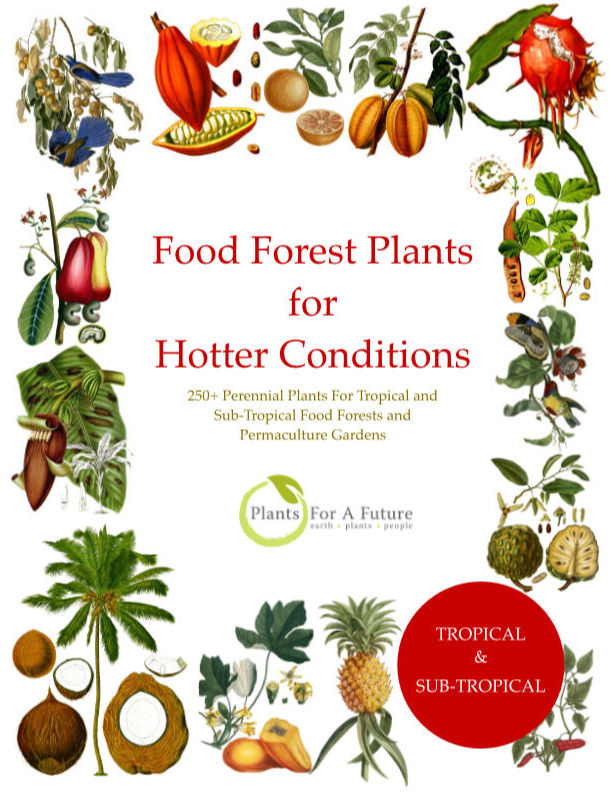
Edible Tropical Plants
Food Forest Plants for Hotter Conditions: 250+ Plants For Tropical Food Forests & Permaculture Gardens.
More
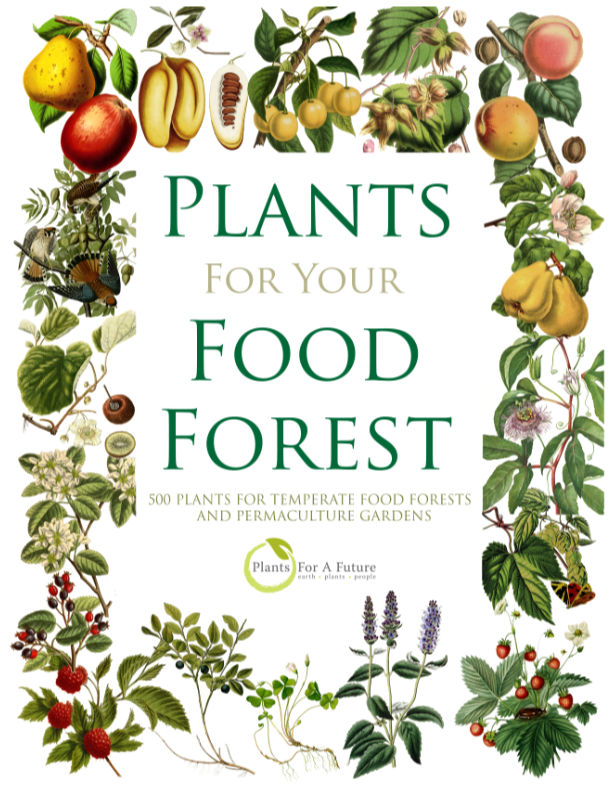
Edible Temperate Plants
Plants for Your Food Forest: 500 Plants for Temperate Food Forests & Permaculture Gardens.
More
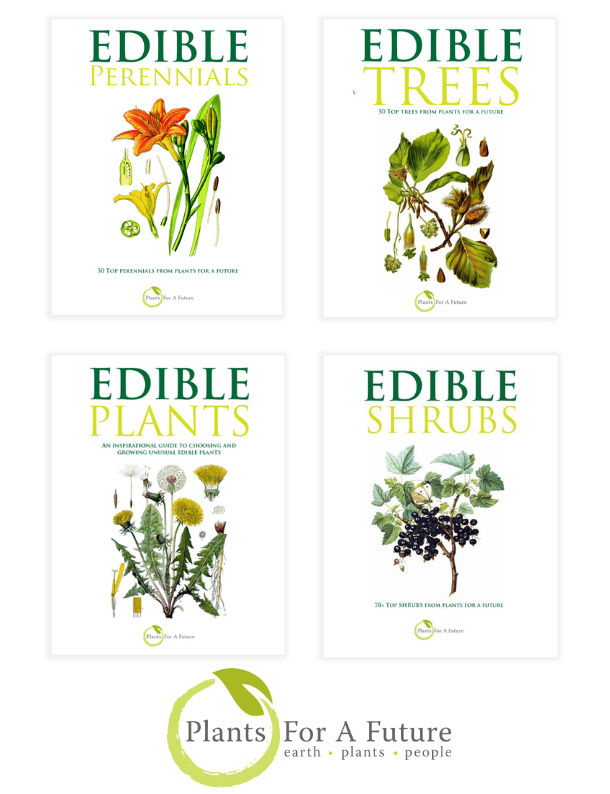
More Books
PFAF have eight books available in paperback and digital formats. Browse the shop for more information.
Shop Now
Other Uses
Dye Green manure Soil reclamation
A very good green manure plant, it can be used to reclaim badly degraded soils and subsoils[1, 18, 20, 201]. A blue dye is obtained from the stems[57, 106]. A brown dye is obtained from the flowers[4]. Livestock forage and feed: Buckwheat has historically been used as feed for cattle, pigs and chickens (Myers and Meinke, 1994). Green manure and cover crop:Buckwheat grows in the shortest time period of all cover crops (Bjorkman and Shail, 2010) flowering within 3 to 6 weeks and completely maturing within 11 to 12 weeks (Bjorkman et al., 2008). Weed suppressor: because buckwheat grows quickly, it is an excellent suppressor of weeds, and it has been used for this purpose in North America for several centuries. Cover crop: Buckwheat can also be grown as a cover crop to prevent erosion, improve soil aggregate stability, scavenge nutrients such as phosphorus and calcium, and mineralize rock phosphate (Clark, 2007; Bjorkman and Shail, 2010). Pollinator and beneficial insect habitat: Buckwheat is an excellent plant for bee pasture and insectary gardens(Mader et al., 2011; Lee-Mader et al., 2014). About one acre of buckwheat can provide enough forage for a hive of honey bees, producing about 150 pounds of honey in one season (Oplinger et al., 1989; Myers and Meinke, 1994). The flowers also attract beneficial insects such as parasitic wasps, minute pirate bugs, insidious flower bugs, tachinid flies, ladybeetles and hoverflies, which may prey on insect pests of neighboring crops (Clark, 2007; Bjorkman and Shail, 2010). Wildlife habitat:Buckwheat is sometimes an ingredient in birdseed mixes and planted with other crops for wildlife food plots(Oplinger et al., 1989). USDA.gov.
Special Uses
Attracts Wildlife Dynamic accumulator Food Forest Scented Plants
References More on Other Uses
Cultivation details
Fagopyrum esculentum is a plant of the temperate and subtropical zones, though it can also be grown at higher elevations, generally above 1,500 metres, in the tropics[299
]. It grows best in areas where annual daytime temperatures are within the range 17 - 27°c, but can tolerate 7 - 40°c[418
]. It is very sensitive to frost[299
]. It prefers a mean annual rainfall in the range 700 - 1,000mm, but tolerates 400 - 1,300mm[418
].
A very easily grown plant, it prefers dry sandy soils but succeeds in most conditions, including poor[57
, 141
, 171
], heavy[18
] or acid soils[141
] and even sub-soils[160
]. It prefers a pH in the range 5 - 6.5, tolerating 4.4 - 7.5[418
].
It prefers a cool moist climate, but it also succeeds in dry and arid regions[171
]. Hot drying temperatures and drying weather at blooming time blast the flowers and prevent seed formation[418
]. The plant has a poorly developed root system that makes it rather sensitive to drought[299
].
Fagopyrum esculentum is cultivated in many parts of the world for its edible seed. It is a prolific producer of seeds, and these are often spread by animal activity. It easily escapes from cultivation and can become established as a weed of cultivated and waste ground, though it is easy to control and does not usually become a pest.
Buckwheat is a fast-growing plant that can reach its full height within 4 - 6 weeks. Flower formation starts 20 days after emergence, the plant continuing to flower until complete senescence and death of the whole plant. After the onset of flowering, the leaves and stems continue to grow while the fruits develop; hence seed ripening is very uneven, making harvesting difficult. From the middle of the flowering period onwards, when the leaf area has reached its maximum, further growth of the vegetative parts is slow, and producing ripe seed becomes the main focus of the plant. The seed is ready for harvesting 70 - 130 days after emergence, depending on cultivar and ecological conditions[141
, 183
, 299
, 418
].
The seed is harvested when most of it (at least 75%) is mature, and most leaves have yellowed and dropped. The crop is harvested by mowing, after which the stems are bundled and put in heaps to dry. Farmers prefer to harvest early in the morning or late in the afternoon, or even at night, when the plants are slightly damp from dew, to reduce grain shattering[299
].
The average seed yield in the United States is 0.9 - 1 tonne per hectare; in Kenya, it is 1 tonne, and in Russia 1 - 1.3 tonnes; but up to 4 tonnes can be obtained[418
].
The seed ripens irregularly over a period of several weeks, so it is difficult to harvest[141
].
Plants have poor frost resistance, but they are disease and insect resistant[166
]. They inhibit the growth of winter wheat[18
, 20
, 201
].
There are some named varieties[183
].
The flowers have a pleasant sweet honey scent[245
] and are extremely attractive to bees and hoverflies[4
, 171
].
References Carbon Farming Information and Carbon Sequestration Information
Temperature Converter
Type a value in the Celsius field to convert the value to Fahrenheit:
Fahrenheit:
The PFAF Bookshop
Plants For A Future have a number of books available in paperback and digital form. Book titles include Edible Plants, Edible Perennials, Edible Trees,Edible Shrubs, Woodland Gardening, and Temperate Food Forest Plants. Our new book is Food Forest Plants For Hotter Conditions (Tropical and Sub-Tropical).
Shop Now
Plant Propagation
Seed - sow from the middle of spring to early summer in situ. The seed usually germinates in 5 days[115]. The earlier sowings are for a seed or leaf crop whilst the later sowings are used mainly for leaf crops or green manure.
Other Names
If available other names are mentioned here
Brank, Buchweizen, Chutia lofa, Daran, Dayat, Dhemsi sak, Doron, Fagopiro, Grano saraceno, Kotu, Kyoubaku, Memil, Notch-seeded buckwheat, Obul, Oogal, Phaphar, Phaphara, Phaphra, Qiao mai, Saracen, Sarrasin, Soba, Tian qiao mai, Titaphapur, Trigo-sarraceno, alforfón, blé noir, bouquette, bovete, buchweizen, buckwheat, buckwheat herb, common buckwheat, echter buchweizen, faggina, fagopiro, fagopyri herba, fagopyrum, fagopyrum esculentum, grano saraceno, grano saroceno, grano sarraceno, grano turco, grecicha kul'turnaja, grecicha posevnaja, heidekorn, japanese buckwheat, memil, qiao mai, renouée, sa, sarasin, sarrasin, serrasin,
Native Plant Search
Search over 900 plants ideal for food forests and permaculture gardens. Filter to search native plants to your area. The plants selected are the plants in our book 'Plants For Your Food Forest: 500 Plants for Temperate Food Forests and Permaculture Gardens, as well as plants chosen for our forthcoming related books for Tropical/Hot Wet Climates and Mediterranean/Hot Dry Climates. Native Plant Search
Found In
Countries where the plant has been found are listed here if the information is available
Africa, Asia, Australia, Belgium, Bhutan, Brazil, Burma, Canada, Central Africa, China, Congo, East Africa, England, Ethiopia, Europe, France, Germany, Greece, Himalayas, Hungary, India, Indochina, Indonesia, Iran, Iraq, Italy, Japan, Kazakhstan, Korea, Korea N, Laos, Manchuria, Mozambique, Myanmar, Nepal, Netherlands, North America, Northeastern India, Pacific, Pakistan, Papua New Guinea, PNG, Philippines, Poland, Reunion, Russia, SE Asia, Siberia, Sikkim, South Africa, Southern Africa, South America, Spain, Sri Lanka, Tajikistan, Tasmania, Thailand, Uganda, Ukraine, USA, Vietnam, Zambia, Zimbabwe,
Weed Potential
Right plant wrong place. We are currently updating this section.
Please note that a plant may be invasive in one area but may not in your area so it’s worth checking.
Conservation Status
IUCN Red List of Threatened Plants Status : This taxon has not yet been assessed

Growth: S = slow M = medium F = fast. Soil: L = light (sandy) M = medium H = heavy (clay). pH: A = acid N = neutral B = basic (alkaline). Shade: F = full shade S = semi-shade N = no shade. Moisture: D = dry M = Moist We = wet Wa = water.

Expert comment
Author
Moench.
Botanical References
17200266
Links / References
For a list of references used on this page please go here
A special thanks to Ken Fern for some of the information used on this page.
Readers comment
© 2010, Plants For A Future. Plants For A Future is a charitable company limited by guarantee, registered in England and Wales. Charity No. 1057719, Company No. 3204567.