 |
|
http://commons.wikimedia.org/wiki/User:Noodle_snacks |
 |
| http://flickr.com/photos/ccdoh1/ |
Translate this page:
Summary
Physical Characteristics

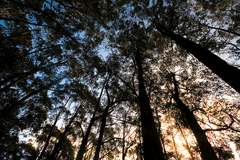
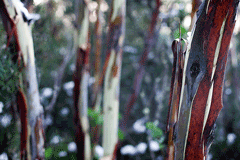
 Eucalyptus coccifera is an evergreen Tree growing to 15 m (49ft) by 6 m (19ft) at a fast rate.
See above for USDA hardiness. It is hardy to UK zone 8. It is in leaf all year, in flower from July to August. The species is hermaphrodite (has both male and female organs) and is pollinated by Bees.
It is noted for attracting wildlife.
Suitable for: light (sandy), medium (loamy) and heavy (clay) soils, prefers well-drained soil and can grow in nutritionally poor soil. Suitable pH: mildly acid, neutral and basic (mildly alkaline) soils. It cannot grow in the shade. It prefers dry moist or wet soil and can tolerate drought. The plant can tolerate maritime exposure.
UK Hardiness Map
US Hardiness Map
Synonyms
Plant Habitats
Woodland Garden Canopy; Secondary; Bog Garden;
Edible Uses
References More on Edible Uses
Medicinal Uses
Plants For A Future can not take any responsibility for any adverse effects from the use of plants. Always seek advice from a professional before using a plant medicinally.
None known
References More on Medicinal Uses
The Bookshop: Edible Plant Books
Our Latest books on Perennial Plants For Food Forests and Permaculture Gardens in paperback or digital formats.

Edible Tropical Plants
Food Forest Plants for Hotter Conditions: 250+ Plants For Tropical Food Forests & Permaculture Gardens.
More

Edible Temperate Plants
Plants for Your Food Forest: 500 Plants for Temperate Food Forests & Permaculture Gardens.
More

More Books
PFAF have eight books available in paperback and digital formats. Browse the shop for more information.
Shop Now
Other Uses
Dye Fuel
Olive-green and gold dyes are obtained from the leaves[168]. An excellent fuel, it is similar in quality to ash, Fraxinus excelsior[107].
Special Uses
Attracts Wildlife Scented Plants
References More on Other Uses
Cultivation details
Prefers a sunny position in a moderately fertile well-drained moisture retentive circum-neutral soil[200]. Tolerates poor soils, especially those low in mineral elements[200]. Tolerates dry soils and also drought once it is established. A very wind hardy tree[1, 49, 75], tolerating salt-laden winds[200]. Plants are very frost resistant[49, 77], tolerating long periods down to -10°c and short periods down to -16°c[200]. Eucalyptus species have not adopted a deciduous habit and continue to grow until it is too cold for them to do so. This makes them more susceptible to damage from sudden cold snaps. If temperature fluctuations are more gradual, as in a woodland for example, the plants have the opportunity to stop growing and become dormant, thus making them more cold resistant[200]. A deep mulch around the roots to prevent the soil from freezing also helps the trees to survive cold conditions. The members of this genus are remarkably adaptable however, there can be a dramatic increase in the hardiness of subsequent generations from the seed of survivors growing in temperate zones[200]. A very ornamental tree, it grows very well in Britain as far north as the west of Scotland[11]. The leaves are extremely aromatic[245]. Plants are shallow-rooting and, especially in windy areas, should be planted out into their permanent positions when small to ensure that they do not suffer from wind-rock[245]. They strongly resent root disturbance and should be container grown before planting out into their permanent position[11]. Plants are subject to 'silver leaf' disease[107]. Eucalyptus monocultures are an environmental disaster, they are voracious, allelopathic and encourage the worst possible attitudes to land use and conservation[200]. The flowers are rich in nectar and are a good bee crop[200].
References Carbon Farming Information and Carbon Sequestration Information
Temperature Converter
Type a value in the Celsius field to convert the value to Fahrenheit:
Fahrenheit:
The PFAF Bookshop
Plants For A Future have a number of books available in paperback and digital form. Book titles include Edible Plants, Edible Perennials, Edible Trees,Edible Shrubs, Woodland Gardening, and Temperate Food Forest Plants. Our new book is Food Forest Plants For Hotter Conditions (Tropical and Sub-Tropical).
Shop Now
Plant Propagation
Seed - surface sow February/March in a sunny position in a greenhouse[11, 78, 134]. Species that come from high altitudes appreciate 6 - 8 weeks cold stratification at 2°c[200]. Pot up the seedlings into individual pots as soon as the second set of seed leaves has developed, if left longer than this they might not move well. Plant out into their permanent positions in early summer and give them some protection from the cold in their first winter. The seed can also be sown in June, the young trees being planted in their final positions in late spring of the following year. The seed has a long viability[200].
Other Names
If available other names are mentioned here
Native Plant Search
Search over 900 plants ideal for food forests and permaculture gardens. Filter to search native plants to your area. The plants selected are the plants in our book 'Plants For Your Food Forest: 500 Plants for Temperate Food Forests and Permaculture Gardens, as well as plants chosen for our forthcoming related books for Tropical/Hot Wet Climates and Mediterranean/Hot Dry Climates. Native Plant Search
Found In
Countries where the plant has been found are listed here if the information is available
Weed Potential
Right plant wrong place. We are currently updating this section.
Please note that a plant may be invasive in one area but may not in your area so it’s worth checking.
Conservation Status
IUCN Red List of Threatened Plants Status :

| Related Plants
|
| Latin Name | Common Name | Habit | Height | Hardiness | Growth | Soil | Shade | Moisture | Edible | Medicinal | Other |
| Corymbia citriodora | Lemon-Scented Gum, blue spotted gum, lemon eucalyptus, eucalyptus citriodora. | Tree | 45.0 |
10-12
| F | LMH | N | M | 2 | 3 | 4 |
| Eucalyptus brassiana | Cape York red gum | Tree | 20.0 |
9-11
| F | LMH | N | DM | 0 | 0 | 4 |
| Eucalyptus caesia | Gungurru | Tree | 10.0 |
8-11
| F | LMH | N | DMWe | 2 | 0 | |
| Eucalyptus camaldulensis | Red River Gum, Murray Red Gum, River Red Eucalyptus | Tree | 30.0 |
8-12
| F | LMH | N | DMWe | 1 | 3 | 4 |
| Eucalyptus citriodora | Lemon-Scented Gum, Lemon Scented Eucalyptus | Tree | 45.0 |
9-11
| F | LMH | N | DMWe | 1 | 3 | 2 |
| Eucalyptus delegatensis | Alpine ash | Tree | 40.0 |
7-11
| F | LMH | N | M | 0 | 3 | 3 |
| Eucalyptus dumosa | Water Mallee | Tree | 7.0 |
9-11
| F | LMH | N | DMWe | 1 | 0 | 2 |
| Eucalyptus globulus | Tasmanian Blue Gum, Eurabbie, Blue Gum, Blue Eucalyptus | Tree | 55.0 |
9-11
| F | LMH | N | DMWe | 1 | 4 | 3 |
| Eucalyptus gomphocephala | Tuart. Tuart Gum | Tree | 40.0 |
9-11
| F | LMH | N | DM | 0 | 0 | 4 |
| Eucalyptus grandis | Flooded Gum, Gum, Rose Eucalyptus | Tree | 50.0 |
9-11
| F | LMH | SN | DM | 0 | 2 | 4 |
| Eucalyptus gummifera | Red Bloodwood | Tree | 15.0 |
9-11
| F | LMH | N | DMWe | 1 | 3 | 2 |
| Eucalyptus gunnii | Cider Gum | Tree | 30.0 |
7-10
| F | LMH | N | DMWe | 3 | 3 | 3 |
| Eucalyptus johnstonii | Yellow Gum, Johnston's gum | Tree | 60.0 |
7-10
| F | LMH | N | DMWe | 0 | 0 | 3 |
| Eucalyptus largiflorens | Black Box | Tree | 18.0 |
9-11
| S | LMH | N | DMWe | 1 | 0 | 3 |
| Eucalyptus leucoxylon | Yellow Gum, White ironbark, White Eucalyptus | Tree | 15.0 |
10-11
| F | LMH | N | DMWe | 1 | 0 | 3 |
| Eucalyptus macrorhyncha | Red Stringybark | Tree | 45.0 |
9-11
| F | LMH | N | DMWe | 1 | 3 | 3 |
| Eucalyptus melliodora | Yellow Box | Tree | 30.0 |
9-11
| F | LMH | N | DMWe | 0 | 0 | 3 |
| Eucalyptus microcorys | Tallow Wood, Australian tallowwood | Tree | 45.0 |
9-11
| F | LMH | N | DMWe | 0 | 0 | 3 |
| Eucalyptus microtheca | Coolabah, Coolibah, Flooded Box, Coolibah | Tree | 15.0 |
9-12
| F | LMH | N | M | 2 | 0 | 2 |
| Eucalyptus obliqua | Messmate | Tree | 60.0 |
8-12
| F | LMH | N | DMWe | 0 | 0 | 4 |
| Eucalyptus pauciflora | Cabbage Gum, Snow gum | Tree | 12.0 |
7-10
| F | LMH | N | DMWe | 0 | 0 | 3 |
| Eucalyptus pauciflora niphophila | Snow Gum | Tree | 6.0 |
6-9
| F | LMH | N | DMWe | 0 | 3 | 3 |
| Eucalyptus perriniana | Spinning Gum | Tree | 6.0 |
7-10
| F | LMH | N | DMWe | 0 | 0 | 2 |
| Eucalyptus piperita | Sydney Peppermint | Tree | 18.0 |
9-11
| F | LMH | N | DMWe | 0 | 2 | 3 |
| Eucalyptus polybractea | Blue Mallee | Tree | 6.0 |
-
| F | LMH | N | DMWe | 1 | 3 | 3 |
| Eucalyptus punctata | Grey Gum | Tree | 30.0 |
8-11
| F | LMH | N | DMWe | 1 | 0 | |
| Eucalyptus racemosa | Snappy Gum | Tree | 0.0 |
-
| F | LMH | N | DMWe | 0 | 3 | |
| Eucalyptus regnans | Mountain Ash | Tree | 75.0 |
8-11
| F | LMH | N | DMWe | 0 | 0 | 3 |
| Eucalyptus robusta | Swamp Mahogany, Eucalyptus Gum | Tree | 30.0 |
8-12
| F | LMH | SN | DM | 0 | 3 | 4 |
|
|
Growth: S = slow M = medium F = fast. Soil: L = light (sandy) M = medium H = heavy (clay). pH: A = acid N = neutral B = basic (alkaline). Shade: F = full shade S = semi-shade N = no shade. Moisture: D = dry M = Moist We = wet Wa = water.

Expert comment
Author
Hook.f.
Botanical References
Links / References
For a list of references used on this page please go here
Readers comment
© 2010, Plants For A Future. Plants For A Future is a charitable company limited by guarantee, registered in England and Wales. Charity No. 1057719, Company No. 3204567.