Translate this page:
Summary
Physical Characteristics

 Elaeagnus macrophylla is an evergreen Shrub growing to 3 m (9ft) by 3 m (9ft) at a medium rate.
See above for USDA hardiness. It is hardy to UK zone 7 and is not frost tender. It is in leaf all year, in flower from October to November. The species is hermaphrodite (has both male and female organs) and is pollinated by Bees.
It can fix Nitrogen.
Suitable for: light (sandy), medium (loamy) and heavy (clay) soils, prefers well-drained soil and can grow in nutritionally poor soil. Suitable pH: mildly acid, neutral and basic (mildly alkaline) soils. It can grow in full shade (deep woodland) semi-shade (light woodland) or no shade. It prefers dry or moist soil and can tolerate drought. The plant can tolerate maritime exposure.
UK Hardiness Map
US Hardiness Map
Synonyms
Plant Habitats
Woodland Garden Sunny Edge; Dappled Shade; Shady Edge; not Deep Shade; Hedge;
Edible Uses
Edible Parts: Fruit Seed
Edible Uses:
Fruit - raw or cooked[105, 177]. A very acceptable rich flavour when fully ripe, though it is somewhat astringent before then[K]. A potentially very valuable crop, ripening as it does in April and May[K]. We are not sure how reliable a crop it is though, some plants bear very heavy crops whilst others rarely bear fruit[K]. The fruit is up to 30mm long and contains a single large seed[K]. Seed - raw or cooked. A mild flavour, that has a hint of peanut, it can be eaten in quantity[K]. It can be eaten together with the fruit though the seed case is rather fibrous[K].
References More on Edible Uses
Medicinal Uses
Plants For A Future can not take any responsibility for any adverse effects from the use of plants. Always seek advice from a professional before using a plant medicinally.
Cancer
The fruit of many members of this genus is a very rich source of vitamins and minerals, especially vitamins A, C and E, flavanoids and other bio-active compounds. It is also a fairly good source of essential fatty acids, which is fairly unusual for a fruit. It is being investigated as a food that is capable of reducing the incidence of cancer and also as a means of halting or reversing the growth of cancers[214].
References More on Medicinal Uses
The Bookshop: Edible Plant Books
Our Latest books on Perennial Plants For Food Forests and Permaculture Gardens in paperback or digital formats.
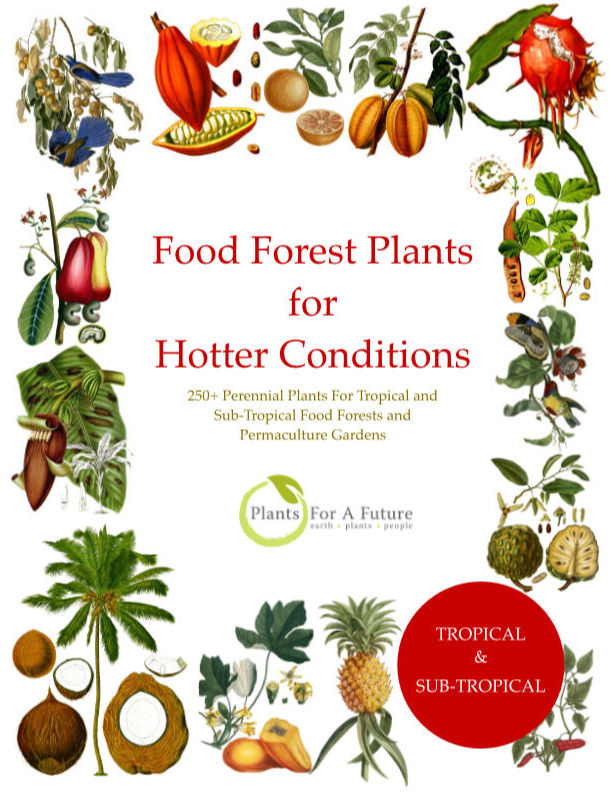
Edible Tropical Plants
Food Forest Plants for Hotter Conditions: 250+ Plants For Tropical Food Forests & Permaculture Gardens.
More
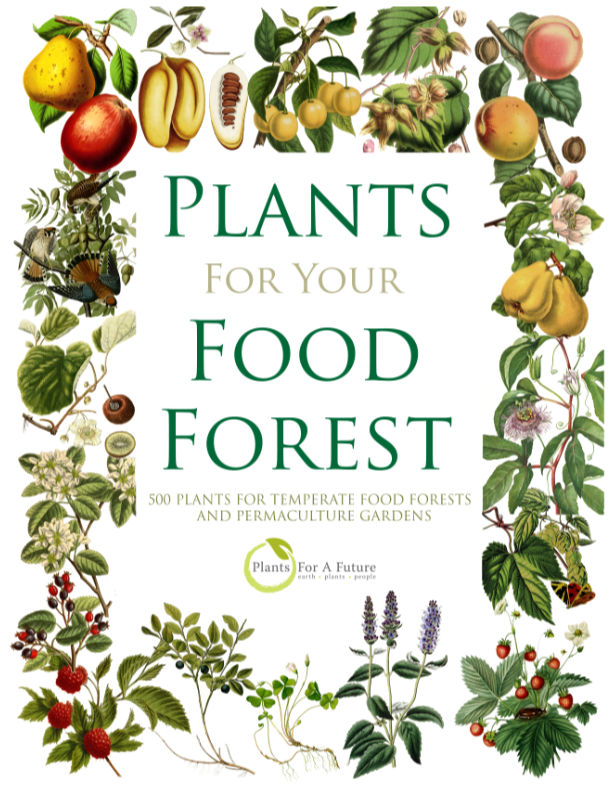
Edible Temperate Plants
Plants for Your Food Forest: 500 Plants for Temperate Food Forests & Permaculture Gardens.
More
More Books
PFAF have eight books available in paperback and digital formats. Browse the shop for more information.
Shop Now
Other Uses
Hedge Hedge
Plants can be grown as a hedge in exposed positions, they are very tolerant of maritime exposure[75, 200]. Reasonably fast-growing and providing a dense cover, it gives a very good protection from the wind[K]. Plants are very tolerant of regular trimming, they can also be cut back almost to the ground and will resprout from the base[K].
Special Uses
Hedge Hedge Nitrogen Fixer Scented Plants
References More on Other Uses
Cultivation details
Succeeds in most soils that are well-drained[11, 200]. Prefers a soil that is only moderately fertile, succeeding in poor soils and in dry soils[11, 200]. Succeeds in sun or shade[11, 200]. Plants are very tolerant of maritime exposure[75]. This species is hardy to about -15°c[184], succeeding in the warmer counties of Britain. This is a plant with a very big potential as a commercial fruit crop. The fruit ripens outdoors in Britain in April, a season where traditionally there is no fresh fruit available. The fruit is of a reasonable size, has a very nice flavour when fully ripe and also has a fairly large edible seed[K]. Some research needs to be carried out in order to find the conditions that are necessary to ensure good crops - some plants fruit very heavily whilst others have very light or no crops[K]. This is the second of the evergreen Elaeagnus species to ripen in the spring, about a week or 10 days later than E. cordifolia[K]. This species is notably resistant to honey fungus[88, 200]. Plants can succumb to wind-rock in very wet seasons[75]. Plants are sometimes damaged by voles[75]. This species has a symbiotic relationship with certain soil bacteria, these bacteria form nodules on the roots and fix atmospheric nitrogen. Some of this nitrogen is utilized by the growing plant but some can also be used by other plants growing nearby[200]. An excellent companion plant, when grown in orchards it can increase yields from the fruit trees by up to 10%. Allied to E. pungens and E. glabra[11]. The flowers are very aromatic[184], their aroma pervading the garden on calm days[K].
References Carbon Farming Information and Carbon Sequestration Information
Temperature Converter
Type a value in the Celsius field to convert the value to Fahrenheit:
Fahrenheit:
The PFAF Bookshop
Plants For A Future have a number of books available in paperback and digital form. Book titles include Edible Plants, Edible Perennials, Edible Trees,Edible Shrubs, Woodland Gardening, and Temperate Food Forest Plants. Our new book is Food Forest Plants For Hotter Conditions (Tropical and Sub-Tropical).
Shop Now
Plant Propagation
Seed - best sown as soon as it is ripe in a cold frame[78]. It should germinate freely within 4 weeks, though it may take 18 months[K]. Stored seed can be very slow to germinate, often taking more than 18 months. A warm stratification for 4 weeks followed by 12 weeks cold stratification can help[98]. The seed usually (eventually) germinates quite well[78]. Prick out the seedlings into individual pot as soon as they are large enough to handle and plant out when they are at least 15cm tall. Cuttings of half-ripe wood, 7 - 10cm with a heel, July/August in a frame. Good percentage[78]. It is best to take the cuttings in June[202]. Cuttings of mature wood of the current year's growth, 10 - 12cm with a heel, November in a frame. Leave for 12 months. Fair to good percentage[78]. Layering in September/October. Takes 12 months[78].
Other Names
If available other names are mentioned here
Native Plant Search
Search over 900 plants ideal for food forests and permaculture gardens. Filter to search native plants to your area. The plants selected are the plants in our book 'Plants For Your Food Forest: 500 Plants for Temperate Food Forests and Permaculture Gardens, as well as plants chosen for our forthcoming related books for Tropical/Hot Wet Climates and Mediterranean/Hot Dry Climates. Native Plant Search
Found In
Countries where the plant has been found are listed here if the information is available
Asia, Australia, China, Japan*, Korea, Taiwan,
Weed Potential
Right plant wrong place. We are currently updating this section.
Please note that a plant may be invasive in one area but may not in your area so it’s worth checking.
Conservation Status
IUCN Red List of Threatened Plants Status :

Growth: S = slow M = medium F = fast. Soil: L = light (sandy) M = medium H = heavy (clay). pH: A = acid N = neutral B = basic (alkaline). Shade: F = full shade S = semi-shade N = no shade. Moisture: D = dry M = Moist We = wet Wa = water.

Expert comment
Author
Thunb.
Botanical References
1158200
Links / References
For a list of references used on this page please go here
Readers comment
© 2010, Plants For A Future. Plants For A Future is a charitable company limited by guarantee, registered in England and Wales. Charity No. 1057719, Company No. 3204567.