Translate this page:
Summary
Bloom Color: White. Main Bloom Time: Early spring, Late spring, Mid spring. Form: Oval, Spreading or horizontal.
Physical Characteristics

 Elaeagnus angustifolia is a deciduous Shrub growing to 7 m (23ft) by 7 m (23ft) at a medium rate.
See above for USDA hardiness. It is hardy to UK zone 2 and is not frost tender. It is in flower in June, and the seeds ripen from September to October. The species is hermaphrodite (has both male and female organs) and is pollinated by Bees.
It can fix Nitrogen.
Suitable for: light (sandy), medium (loamy) and heavy (clay) soils, prefers well-drained soil and can grow in nutritionally poor soil. Suitable pH: mildly acid, neutral and basic (mildly alkaline) soils and can grow in very alkaline and saline soils.
It cannot grow in the shade. It prefers dry or moist soil and can tolerate drought. The plant can tolerate maritime exposure.
UK Hardiness Map
US Hardiness Map
Synonyms
E. argentea. non Pursh. E. hortensis.
Plant Habitats
Woodland Garden Sunny Edge; Dappled Shade; Hedge;
Edible Uses
Edible Parts: Fruit Seed
Edible Uses: Gum
Fruit - raw or cooked as a seasoning in soups[1, 2, 3, 100, 146, 74]. Dry, sweet and mealy[11, 145, 183]. The fruit can also be made into jellies or sherbets[183]. The fruit must be fully ripe before it can be enjoyed raw, if even slightly under-ripe it will be quite astringent[K]. The oval fruit is about 10mm long[200] and contains a single large seed[K]. Seed - raw or cooked. It can be eaten with the fruit though the seed case is rather fibrous[K].
References More on Edible Uses
Medicinal Uses
Plants For A Future can not take any responsibility for any adverse effects from the use of plants. Always seek advice from a professional before using a plant medicinally.
Cancer Febrifuge Pectoral
The oil from the seeds is used with syrup as an electuary in the treatment of catarrh and bronchial affections[240]. The juice of the flowers has been used in the treatment of malignant fevers[240]. The fruit of many members of this genus is a very rich source of vitamins and minerals, especially in vitamins A, C and E, flavanoids and other bio-active compounds. It is also a fairly good source of essential fatty acids, which is fairly unusual for a fruit. It is being investigated as a food that is capable of reducing the incidence of cancer and also as a means of halting or reversing the growth of cancers[214].
References More on Medicinal Uses
The Bookshop: Edible Plant Books
Our Latest books on Perennial Plants For Food Forests and Permaculture Gardens in paperback or digital formats.
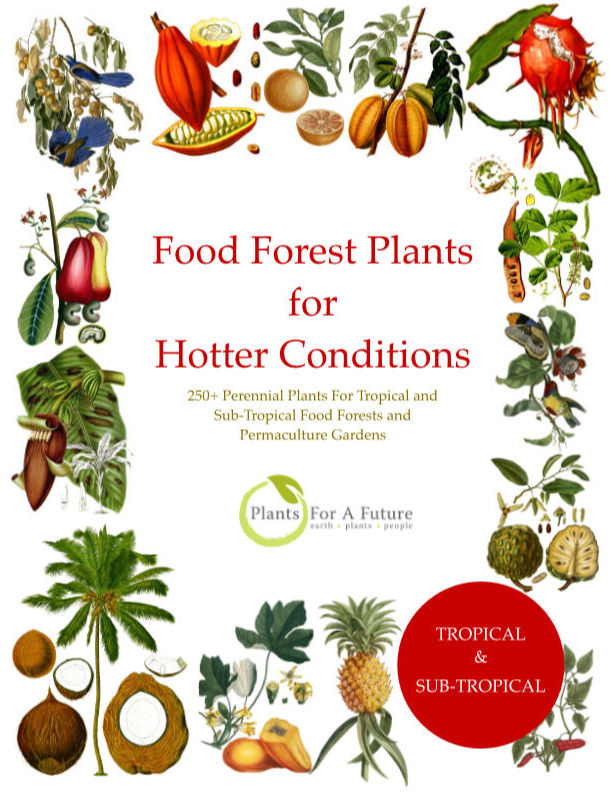
Edible Tropical Plants
Food Forest Plants for Hotter Conditions: 250+ Plants For Tropical Food Forests & Permaculture Gardens.
More
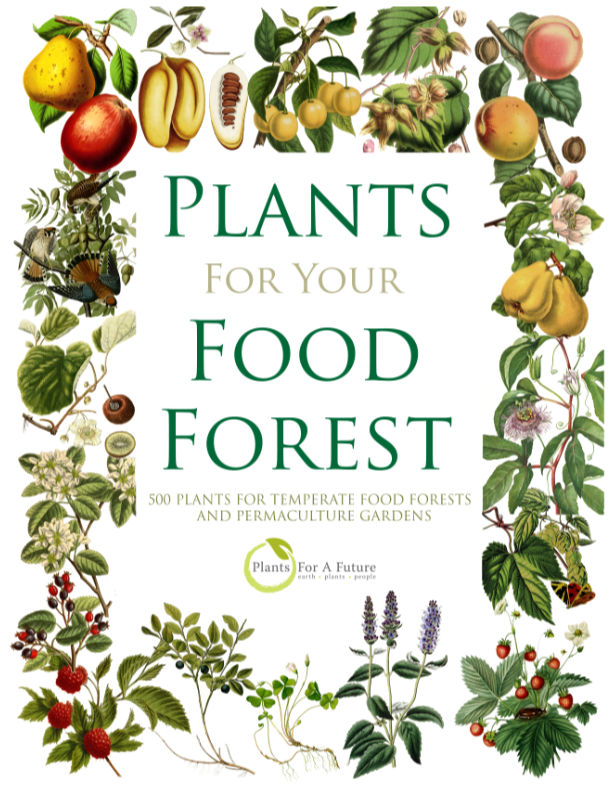
Edible Temperate Plants
Plants for Your Food Forest: 500 Plants for Temperate Food Forests & Permaculture Gardens.
More
More Books
PFAF have eight books available in paperback and digital formats. Browse the shop for more information.
Shop Now
Other Uses
Companion Essential Fodder Fuel Gum Hedge Hedge Wood
Plants can be grown as a hedge in exposed positions[29], tolerating maritime exposure[200]. It is fairly fast-growing and very tolerant of pruning, but is rather open in habit and does not form a dense screen[K]. Because the plant fixes atmospheric nitrogen, it makes a hedge that enriches the soil rather than depriving it of nutrients[K]. An essential oil obtained from the flowers is used in perfumery[74]. A gum from the plant is used in the textile industry in calico printing[74]. Wood - hard, fine-grained. Used for posts, beams, domestic items[74, 100], it is also much used for carving[245]. The wood is an excellent fuel[74, 146].
Special Uses
Carbon Farming Food Forest Hedge Hedge Nitrogen Fixer Scented Plants
References More on Other Uses
Cultivation details
Agroforestry Services: Nitrogen Agroforestry Services: Windbreak Fodder: Bank Industrial Crop: Biomass Management: Coppice Management: Coppice Management: Standard Minor Global Crop
Landscape Uses:Screen, Specimen. An easily grown plant, it succeeds in most soils that are well-drained[200], though it dislikes shallow chalk soils[98]. Prefers a light sandy soil that is only moderately fertile[11], succeeding in poor soils and dry soils[11, 200]. Requires a position in full sun, growing very well in hot dry positions[182]. Plants are very drought and wind resistant[1, 166, 200], they tolerate conditions of considerable salinity and alkalinity[227]. A very hardy plant, tolerating temperatures down to about -40°c[184]. However, plants prefer a continental climate[49] and are apt to be cut back in severe winters in Britain because the summer is often not warm enough to have fully ripened the wood[1]. A very variable species[214]. This species is often cultivated in N. Europe for its edible fruits, there are many named varieties and some of these are thornless[214]. This species has a symbiotic relationship with certain soil bacteria, these bacteria form nodules on the roots and fix atmospheric nitrogen. Some of this nitrogen is utilized by the growing plant but some can also be used by other plants growing nearby[160, 200]. An excellent companion plant, when grown in orchards it can increase yields from the fruit trees by up to 10%. Plants are very tolerant of pruning, they usually resprout freely even when cut right back to the ground. This species is notably resistant to honey fungus[88, 200]. The flowers are sweetly and heavily scented[184]. Special Features:
Attractive foliage, Not North American native, Invasive, Naturalizing, Fragrant flowers, Inconspicuous flowers or blooms. The plant is heat tolerant in zones 8 through 1. (Plant Hardiness Zones show how well plants withstand cold winter temperatures.
Plant Heat Zones show when plants would start suffering from the heat.
The Plant Heat Zone map is based on the number of "heat days" experienced in a given area where the temperature climbs to over 86 degrees F (30°C).
At this temperature, many plants begin to suffer physiological damage. Heat Zones range from 1 (no heat days) to 12 (210 or more heat days).
For example Heat Zone. 11-1 indicates that the plant is heat tolerant in zones 11 through 1.) In garden design, as well as the above-ground architecture of a plant, root structure considerations help in choosing plants that work together for their optimal soil requirements including nutrients and water. The root pattern is fleshy. Thick or swollen - fibrous or tap root [2-1].
Carbon Farming
-
Agroforestry Services: Nitrogen
Plants that contribute to nitrogen fixation include the legume family – Fabaceae.
-
Agroforestry Services: Windbreak
Linear plantings of trees and shrubs designed to enhance crop production, protect people and livestock and benefit soil and water conservation.
-
Fodder: Bank
Fodder banks are plantings of high-quality fodder species. Their goal is to maintain healthy productive animals. They can be utilized all year, but are designed to bridge the forage scarcity of annual dry seasons. Fodder bank plants are usually trees or shrubs, and often legumes. The relatively deep roots of these woody perennials allow them to reach soil nutrients and moisture not available to grasses and herbaceous plants.
-
Industrial Crop: Biomass
Three broad categories: bamboos, resprouting woody plants, and giant grasses. uses include: protein, materials (paper, building materials, fibers, biochar etc.), chemicals (biobased chemicals), energy - biofuels
-
Management: Coppice
Cut to the ground repeatedly - resprouting vigorously. Non-destructive management systems maintaining the soil organic carbon.
-
Management: Coppice
Cut to the ground repeatedly - resprouting vigorously. Non-destructive management systems maintaining the soil organic carbon.
-
Management: Standard
Plants grow to their standard height. Harvest fruit, seeds, or other products. Non-Destructive management systems.
-
Minor Global Crop
These crops are already grown or traded around the world, but on a smaller scale than the global perennial staple and industrial crops, The annual value of a minor global crop is under $1 billion US. Examples include shea, carob, Brazil nuts and fibers such as ramie and sisal.
References Carbon Farming Information and Carbon Sequestration Information
Temperature Converter
Type a value in the Celsius field to convert the value to Fahrenheit:
Fahrenheit:
The PFAF Bookshop
Plants For A Future have a number of books available in paperback and digital form. Book titles include Edible Plants, Edible Perennials, Edible Trees,Edible Shrubs, Woodland Gardening, and Temperate Food Forest Plants. Our new book is Food Forest Plants For Hotter Conditions (Tropical and Sub-Tropical).
Shop Now
Plant Propagation
Seed - best sown as soon as it is ripe in a cold frame[78]. It should germinate in late winter or early spring, though it may take 18 months[K]. Stored seed can be very slow to germinate, often taking more than 18 months. A warm stratification for 4 weeks followed by 12 weeks cold stratification can help[98]. The seed usually (eventually) germinates quite well[78]. Prick out the seedlings into individual pot as soon as they are large enough to handle and plant out when they are at least 15cm tall. Cuttings of half-ripe wood, 7 - 10cm with a heel, July/August in a frame. Difficult[113]. Cuttings of mature wood of the current year's growth, 10 - 12cm with a heel, October/November in a frame[200]. The cuttings are rather slow and difficult to root, leave them for 12 months[113]. Layering in September/October. Takes 12 months[78]. Root cuttings in the winter[200].
Other Names
If available other names are mentioned here
Chhiolik, Giwai, Igde, Olajbogyo, Olajfa, Oleaster, Sand jujube, Sarseng, Sersing, Shersing, Shiulik, Zinzeyd,
Native Plant Search
Search over 900 plants ideal for food forests and permaculture gardens. Filter to search native plants to your area. The plants selected are the plants in our book 'Plants For Your Food Forest: 500 Plants for Temperate Food Forests and Permaculture Gardens, as well as plants chosen for our forthcoming related books for Tropical/Hot Wet Climates and Mediterranean/Hot Dry Climates. Native Plant Search
Found In
Countries where the plant has been found are listed here if the information is available
Afghanistan, Africa, Albania, Algeria, Armenia, Asia, Australia, Austria, Azerbaijan, Belarus, Britain, Bulgaria, Canada, Caucasus, Central Asia, China, Cyprus, Czech Republic, Egypt, Europe, France, Georgia, Greece, Himalayas, Hungary, India, Iran, Iraq, Israel, Italy, Japan, Kazakhstan, Kyrgysztan, Libya, Mediterranean, Moldova, Mongolia, Nepal, Netherlands, North Africa, North America, Pakistan, Portugal, Romania, Russia, Slovakia, Spain, Syria, Tajikistan, Tibet, Turkey, Turkmenistan, USA, Uzbekistan, Yugoslavia,
Weed Potential
Right plant wrong place. We are currently updating this section.
Please note that a plant may be invasive in one area but may not in your area so it’s worth checking.
Conservation Status
IUCN Red List of Threatened Plants Status :

Growth: S = slow M = medium F = fast. Soil: L = light (sandy) M = medium H = heavy (clay). pH: A = acid N = neutral B = basic (alkaline). Shade: F = full shade S = semi-shade N = no shade. Moisture: D = dry M = Moist We = wet Wa = water.
Expert comment
Author
L.
Botanical References
1193200
Links / References
For a list of references used on this page please go here
Readers comment