Translate this page:
Summary
Physical Characteristics

 Cyperus esculentus is a PERENNIAL growing to 0.9 m (3ft) at a fast rate.
See above for USDA hardiness. It is hardy to UK zone 8. The species is hermaphrodite (has both male and female organs) and is pollinated by Wind.
Suitable for: light (sandy), medium (loamy) and heavy (clay) soils and can grow in heavy clay soil. Suitable pH: mildly acid, neutral and basic (mildly alkaline) soils. It cannot grow in the shade. It prefers moist or wet soil.
UK Hardiness Map
US Hardiness Map
Synonyms
Plant Habitats
Bog Garden; Cultivated Beds;
Edible Uses
Edible Parts: Leaves Oil Oil Root
Edible Uses: Coffee Oil Oil
Tuber - raw, cooked or dried and ground into a powder[2, 4, 55, 62, 85, 95, 183].They are also used in confectionery[183]. A delicious nut-like flavour[1, 61, 183] but rather chewy and with a tough skin[K]. They taste best when dried[27]. They can be cooked in barley water to give them a sweet flavour and then be used as a dessert nut[183]. A refreshing beverage is made by mixing the ground tubers with water, cinnamon, sugar, vanilla and ice[183]. The ground up tuber can also be made into a plant milk with water, wheat and sugar[183]. An edible oil is obtained from the tuber. It is considered to be a superior oil that compares favourably with olive oil[183]. The roasted tubers are a coffee substitute[2, 62, 183]. The base of the plant can be used in salads[183]. (This probably means the base of the leaf stems[K])
References More on Edible Uses
Medicinal Uses
Plants For A Future can not take any responsibility for any adverse effects from the use of plants. Always seek advice from a professional before using a plant medicinally.
Aphrodisiac Carminative Digestive Diuretic Dysentery Emmenagogue Stimulant Tonic
Tiger nuts are regarded as a digestive tonic, having a heating and drying effect on the digestive system and alleviating flatulence[254]. They also promote urine production and menstruation[254]. The tubers are said to be aphrodisiac, carminative, diuretic, emmenagogue, stimulant and tonic[240, 254]. In Ayurvedic medicine they are used in the treatment of flatulence, indigestion, colic, diarrhoea, dysentery, debility and excessive thirst[254].
References More on Medicinal Uses
The Bookshop: Edible Plant Books
Our Latest books on Perennial Plants For Food Forests and Permaculture Gardens in paperback or digital formats.

Edible Tropical Plants
Food Forest Plants for Hotter Conditions: 250+ Plants For Tropical Food Forests & Permaculture Gardens.
More

Edible Temperate Plants
Plants for Your Food Forest: 500 Plants for Temperate Food Forests & Permaculture Gardens.
More
More Books
PFAF have eight books available in paperback and digital formats. Browse the shop for more information.
Shop Now
Other Uses
Oil Oil Weaving
The tubers contain up to 30% of a non-drying oil, it is used in cooking and in making soap[57, 74, 117, 141]. It does not solidify at 0°c and stores well without going rancid[74]. The leaves can be used for weaving hats and matting etc[178]. The boiled nuts are used in the UK as a bait for carp.
Special Uses
References More on Other Uses
Cultivation details
Prefers a moist sandy loam[95, 117]. Plants are hardy to about -15°c[200]. The chufa, or tiger nut, is often cultivated for its edible tuber in warm temperate and tropical zones, there is a cultivated variety, var. sativus, that produces larger tubers[50]. We have had lots of problems with growing this cultivated form. Once the tubers come into growth then they normally grow vigorously, but the difficulty is getting them to come into growth. We harvest the tubers in the autumn and store them in moist sand, replanting them in the spring. However, they rarely come into new growth until mid to late summer which gives them too short a growing season to produce much of a crop[K]. We need to find a satisfactory way of storing the tubers and exciting them back into growth[K]. In warmer climates this plant is a serious weed of cultivation. It is much hardier than was once imagined and is becoming a weed in N. America where it is found as far north as Alaska[95]. The tubers are often formed a metre or more away from the plant, especially if it is growing in a heavy clay soil[159]. The tubers are extremely attractive to mice and require protection from them in the winter[K].
References Carbon Farming Information and Carbon Sequestration Information
Temperature Converter
Type a value in the Celsius field to convert the value to Fahrenheit:
Fahrenheit:
The PFAF Bookshop
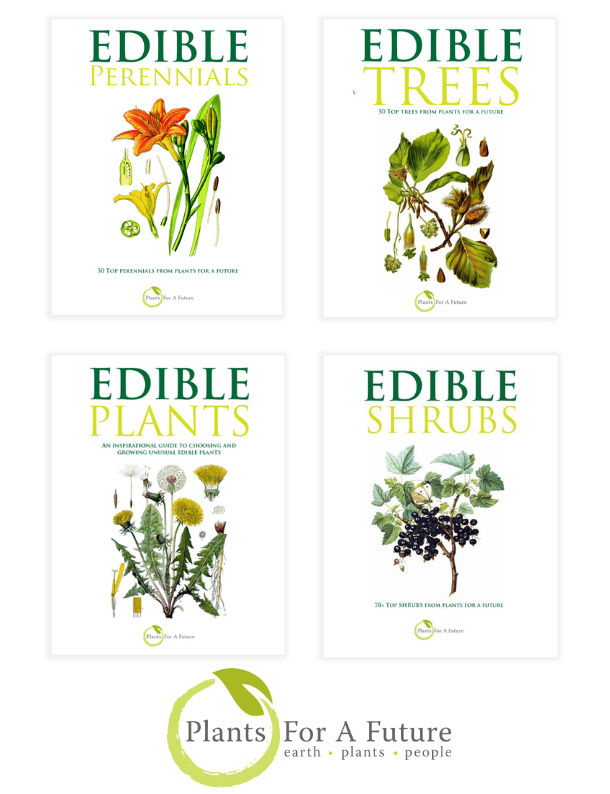
Plants For A Future have a number of books available in paperback and digital form. Book titles include Edible Plants, Edible Perennials, Edible Trees,Edible Shrubs, Woodland Gardening, and Temperate Food Forest Plants. Our new book is Food Forest Plants For Hotter Conditions (Tropical and Sub-Tropical).
Shop Now
Plant Propagation
Seed - surface sow in the spring and keep the compost moist[164]. The seed usually germinates in 2 - 6 weeks at 18°c[164]. Prick out the seedlings into individual pots as soon as they are large enough to handle. Grow on for their first winter in a greenhouse and plant them out in late spring after the last expected frosts. Division in spring or autumn. This is more a matter of harvesting the tubers and replanting them. If this is done in the autumn, then it is best to store the tubers in a cool frost-free place overwinter and plant them out in the spring.
Other Names
If available other names are mentioned here
Rush nut; tiger nut; yellow nut-grass; yellow nut-sedge; yellow sedge. Spanish: chufa comun; horchata; horchata de chufa. French: amande de terre; souchet comestible; souchet sucré; souchet tubéreux. Chinese: xiang fu zi. Portuguese: junquinha mansa. Angola: olonguesso. Argentina: chufa. Brazil: chufa; junquinho; tiririca; tiririca-amarela. Colombia: conquito. Cuba: chufa. Dominican Republic: coquillo; coquito. Germany: erdmandelgas; Essbaress zypergras. Iran: galee. Italy: cipero dolce; dolcichino; ulvia di padule; zigolo dolce; zizzola terrestri. Japan: syokuyo-gayatsuri. Mexico: cebollin; coquillo amarillo; cotufa; coyolillo; coyolito; peonia; tule; tulillo; zacate de agua. Netherlands: aard-amandel; knolcypergras. Peru: coco. Puerto Rico: chapas. South Africa: geeliuintjie. Thailand: haeo-thai.
Native Plant Search
Search over 900 plants ideal for food forests and permaculture gardens. Filter to search native plants to your area. The plants selected are the plants in our book 'Plants For Your Food Forest: 500 Plants for Temperate Food Forests and Permaculture Gardens, as well as plants chosen for our forthcoming related books for Tropical/Hot Wet Climates and Mediterranean/Hot Dry Climates. Native Plant Search
Found In
Countries where the plant has been found are listed here if the information is available
Afghanistan, Albania, Algeria, Angola, Argentina, Australia, New South Wales, Queensland, Austria, Azerbaijan, Bahamas, Belgium, Belize, Benin, Bolivia Botswana, Parana, Rio Grande do Sul, Santa Catarina, British Virgin Islands, Bulgaria, Burkina Faso, Burundi, Cambodia, Cameroon, British Columbia, Canada, New Brunswick, Nova Scotia, Ontario, Quebec, Cape Verde, Central African Republic, Chad, Chile, China, Shandong, Yunnan, Colombia, Comoros, Congo, CÙte d'Ivoire, Croatia, Cuba, Cyprus, Djibouti, Dominican Republic, Ecuador, Egypt, El Salvador, Equatorial Guinea, Eritrea, Ethiopia, France, Gabon, Gambia, Georgia (Republic of), Germany, Ghana, Greece, Guatemala, Guinea, Guinea-Bissau, Haiti, Honduras, Hungary, India, Indonesia, Iran, Iraq, Italy, Jamaica, Japan, Kenya, Liberia, Libya, Madagascar, Malawi, Mali, Mauritania, Mauritius, Mexico, Mozambique, Namibia, Nepal, Netherlands, New Zealand, Nicaragua, Niger, Nigeria, Pakistan, Panama, Papua New Guinea, Paraguay, Peru, Poland, Portugal, Romania, Rwanda, Saint Lucia, Senegal, Seychelles, Sierra Leone, Slovakia, Somalia, South Africa, Spain, Swaziland, Switzerland, Taiwan, Tanzania, Togo, Trinidad and Tobago, Tunisia, Turkey, Uganda, Ukraine, Uruguay, Alabama, Alaska, Arizona, Arkansas, California, Colorado, Connecticut, Delaware, District of Columbia, Florida, Georgia, Hawaii, Idaho, Illinois, Indiana, Iowa, Kansas, Kentucky, Louisiana, Maine, Maryland, Massachusetts, Michigan, Minnesota, Mississippi, Missouri, Nebraska, Nevada, New Hampshire, New Jersey, New Mexico, New York, North Carolina, North Dakota, Ohio, Oklahoma, Oregon, Pennsylvania, Rhode Island, South Carolina, South Dakota, Tennessee, Texas, Utah, Vermont, Virginia, Washington, West Virginia, Wisconsin, Venezuela, Vietnam, Yemen, Zambia, Zimbabwe.
Weed Potential
Right plant wrong place. We are currently updating this section.
Please note that a plant may be invasive in one area but may not in your area so it’s worth checking.
Listed in the USDA Plants-database as a noxious weed in California, Colorado, Hawaii, Oregon and Washington. C. esculentus behaves as a weed in almost all temperate, tropical and subtropical regions of the world. Once established, it is extremely difficult to eradicate because plants have a stratified and layered root system, with tubers and roots being interconnected [1d].
Conservation Status
IUCN Red List of Threatened Plants Status : Cyperus esculentus (Yellow Nutsedge):
Status: Least Concern

Growth: S = slow M = medium F = fast. Soil: L = light (sandy) M = medium H = heavy (clay). pH: A = acid N = neutral B = basic (alkaline). Shade: F = full shade S = semi-shade N = no shade. Moisture: D = dry M = Moist We = wet Wa = water.

Expert comment
Author
L.
Botanical References
50200
Links / References
For a list of references used on this page please go here
Readers comment