 |
|
http://commons.wikimedia.org/wiki/User:Llez |
 |
| http://commons.wikimedia.org/wiki/User:Zyance |
Translate this page:
Summary
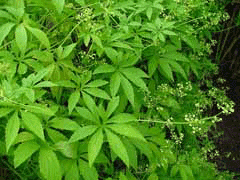
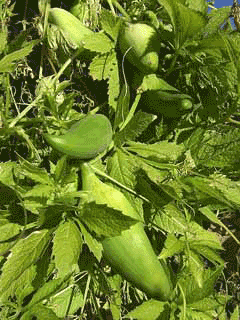
Acocha or Cyclanthera pedata is an herbaceous vine found in Central America. It usually grows up to 4.5 m and is commonly grown for its edible fruits. Young fruits are eaten raw while older fruits are cooked. The young shoots and leaves may also be eaten. Tea from seeds of acocha can be used as remedy for high blood pressure. Dried and powdered seeds are used in the treatment of intestinal parasites. Other plant parts can be used to treat gastrointestinal problems, hypertension, tonsillitis, circulatory problems, arteriosclerosis, and diabetes. The plant is grown from seed.
Physical Characteristics

 Cyclanthera pedata is a ANNUAL growing to 4.5 m (14ft 9in) at a fast rate.
See above for USDA hardiness. It is hardy to UK zone 10 and is frost tender. It is in flower from August to September. The species is monoecious (individual flowers are either male or female, but both sexes can be found on the same plant) and is pollinated by Insects.
It is noted for attracting wildlife.
Suitable for: light (sandy), medium (loamy) and heavy (clay) soils and prefers well-drained soil. Suitable pH: mildly acid, neutral and basic (mildly alkaline) soils. It can grow in semi-shade (light woodland) or no shade. It prefers moist soil. The plant is not wind tolerant.
UK Hardiness Map
US Hardiness Map
Synonyms
Plant Habitats
Cultivated Beds;
Edible Uses
Edible Parts: Fruit Leaves Shoots
Edible Uses:
Fruit. Young, immature fruits are eaten raw or cooked and have a similar taste to cucumbers though they are not crisp[ 183 , 193 ]. Older fruits are cooked, they can be stuffed in much the same way as marrows[ 183 , 196 ]. The fruit has a large cavity in which the seeds develop, and this can be filled with other foods to make kaywa dishes. This may have inspired the local Spanish name pepino de rellenar ("stuffing cucumber"). Mature fruit are cooked with oil and vinegar or added to soups and stews. The fruit is about 6 - 15cm long[ 196 ] and 6cm wide[ 200 ]. Leaves and tender young shoots - cooked and used as greens[ 183 , 284 ].
References More on Edible Uses
Medicinal Uses
Plants For A Future can not take any responsibility for any adverse effects from the use of plants. Always seek advice from a professional before using a plant medicinally.
Hypotensive
A tea made from the seeds is used in the treatment of high blood pressure[ 284 , 318 ]. The dried and powdered seeds are taken in 1 gram doses as a remedy for intestinal parasites[ 318 ]. This sort of treatment is usually followed by a laxative to make sure the parasites are removed from the body[ K ]. The seeds and/or the fruits are recommended for the treatment of gastrointestinal disorders[ 318 ]. The fruits are diuretic. They are boiled in milk and gargled as a treatment for tonsillitis[ 318 ]. The fruit juice is recommended as a treatment for conditions such as high blood-cholesterol levels, hypertension, tonsillitis, arteriosclerosis, circulatory problems and diabetes[ 318 ]. The fruits and/or the leaves are boiled in olive oil and used externally as a topical anti-inflammatory and analgesic[ 318 ]. The leaves are considered to be hypoglycaemic and are prepared in a decoction for treating diabetes[ 318 ]. Research conducted in Peru has shown that the plant can lower blood-cholesterol levels in humans with one trial showing an 18.3% reduction in 12 months and other trials showing even larger reductions[ 318 ].
References More on Medicinal Uses
The Bookshop: Edible Plant Books
Our Latest books on Perennial Plants For Food Forests and Permaculture Gardens in paperback or digital formats.
Edible Tropical Plants
Food Forest Plants for Hotter Conditions: 250+ Plants For Tropical Food Forests & Permaculture Gardens.
More
Edible Temperate Plants
Plants for Your Food Forest: 500 Plants for Temperate Food Forests & Permaculture Gardens.
More
More Books
PFAF have eight books available in paperback and digital formats. Browse the shop for more information.
Shop Now
Other Uses
The roots are used to clean the teeth[ 318 ].
Special Uses
References More on Other Uses
Cultivation details
It is a commercially cultivated vegetable. Achocha is a plant of the tropics, where it can be found at elevations up to 3,000 metres[ 196 , 299 ]. It can also be cultivated in the subtropics and in areas of the temperate zone that have a long, warm growing season of 4 months or more[ 196 ]. Requires a very warm, sunny and sheltered position in a rich well-drained soil[ 200 ]. The plant is considered to be a weed pest in Florida[ 318 ]. The first harvest of fruit can take place about 3 months after planting, and can then continue for several months[ 299 ]. There are many named forms[ 196 ].
References Carbon Farming Information and Carbon Sequestration Information
Temperature Converter
Type a value in the Celsius field to convert the value to Fahrenheit:
Fahrenheit:
The PFAF Bookshop
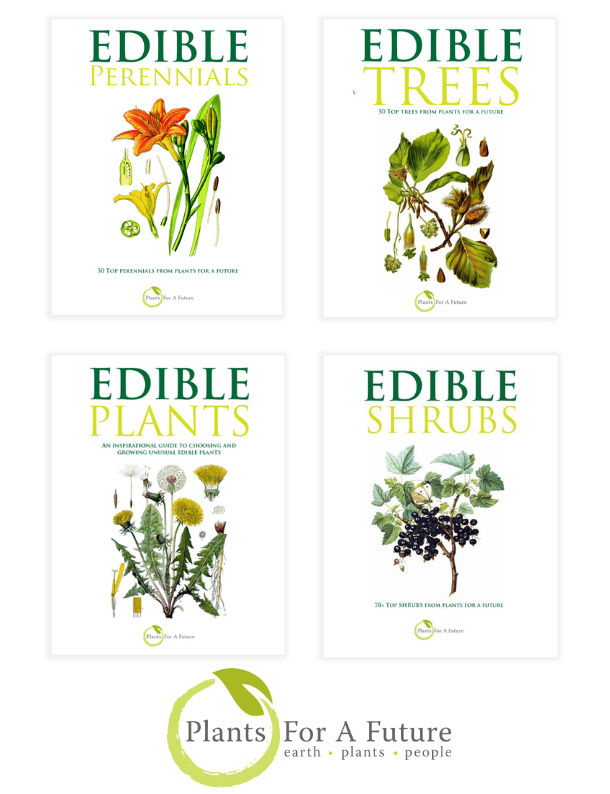
Plants For A Future have a number of books available in paperback and digital form. Book titles include Edible Plants, Edible Perennials, Edible Trees,Edible Shrubs, Woodland Gardening, and Temperate Food Forest Plants. Our new book is Food Forest Plants For Hotter Conditions (Tropical and Sub-Tropical).
Shop Now
Plant Propagation
Seed - sow mid spring in a rich compost in a warm greenhouse or warm sheltered spot. Put 2 or 3 seeds in a pot and thin the seedlings to the strongest plant. Plant out after the last expected frost and give the plants some protection such as a cloche until they are growing away well. A spacing of 90 cm is suitable. Plants should be staked.
Other Names
If available other names are mentioned here
Also known as: Achocha, Achokcha, achojcha, Achoqcha, achuqcha, Acochca, archucha Barela, Bottle gourd, Caigua, Caihua, Caygua, Cayua, kaywa, Korila, Lamthabi, Meetha karela, Patal, pinyin (Chinese) Pepino de rellenar, Prickle cyclanthera, Slipper gourd, Stuffing cucumber, lady's slipper, sparrow gourd, Calabash gourd.
Native Plant Search
Search over 900 plants ideal for food forests and permaculture gardens. Filter to search native plants to your area. The plants selected are the plants in our book 'Plants For Your Food Forest: 500 Plants for Temperate Food Forests and Permaculture Gardens, as well as plants chosen for our forthcoming related books for Tropical/Hot Wet Climates and Mediterranean/Hot Dry Climates. Native Plant Search
Found In
Countries where the plant has been found are listed here if the information is available
Africa, Andes, Argentina, Asia, Bhutan, Bolivia, Caribbean, Central America, China, Colombia, Costa Rica, East Africa, Ecuador, Guatemala, Himalayas, Honduras, India, Mexico, Nepal, North America, Northeastern India, Panama, Peru, Philippines, South America, Tibet.
Weed Potential
Right plant wrong place. We are currently updating this section.
Please note that a plant may be invasive in one area but may not in your area so it’s worth checking.
The plant is considered to be a weed pest in Florida, USA.
Conservation Status
IUCN Red List of Threatened Plants Status : This taxon has not yet been assessed.

Growth: S = slow M = medium F = fast. Soil: L = light (sandy) M = medium H = heavy (clay). pH: A = acid N = neutral B = basic (alkaline). Shade: F = full shade S = semi-shade N = no shade. Moisture: D = dry M = Moist We = wet Wa = water.

Expert comment
Author
(L.)Schrad.
Botanical References
200
Links / References
For a list of references used on this page please go here
Readers comment