Translate this page:
Summary
Jew’s Mallow or Corchorus olitorius is a tropical, annual herb that is upright, branching, and slightly woody. The leaves are shiny and have leaf stalks. The flowers are yellow and small and form into clusters in the axils of the leaves. The fruit are rigged capsules. The seeds are dull grey and with four faces and one long point. The leaves are used in the treatment of cystitis, gonorrhoea, and dysuria. The seeds are purgative. The stem is the main source of jute used in sack cloth, paper etc. The wood is very light and soft and is used in making sulphur matches. The leaves and young fruits are used as a vegetable. The leaves are dried and used for tea and as a soup thickener. The seeds are edible as well.
Physical Characteristics

 Corchorus olitorius is a ANNUAL/PERENNIAL growing to 3.5 m (11ft 6in) at a fast rate.
See above for USDA hardiness. It is hardy to UK zone 10. It is in flower from August to October, and the seeds ripen in October. The species is hermaphrodite (has both male and female organs) and is pollinated by Insects.
Suitable for: light (sandy), medium (loamy) and heavy (clay) soils and prefers well-drained soil. Suitable pH: mildly acid, neutral and basic (mildly alkaline) soils and can grow in very acid and very alkaline soils.
It cannot grow in the shade. It prefers moist soil.
UK Hardiness Map
US Hardiness Map
Synonyms
Plant Habitats
Cultivated Beds;
Edible Uses
Edible Parts: Leaves Seed Shoots
Edible Uses: Tea
Leaves - raw or cooked[1, 27, 46, 61]. Young leaves are added to salads whilst older leaves are cooked as a pot-herb[2, 183, 269]. The young leaves and stem tops are eaten cooked and are slimy unless fried. The leaves quickly become mucilaginous when cooked[298]. High in protein[183]. The dried leaves can be used as a thickener in soups[183]. Leaves and young shoots are normally harvested when about 20 - 30cm long[300]. Leaves can be sun dried, pounded to flour, then stored for a significant time.
References More on Edible Uses
Medicinal Uses
Plants For A Future can not take any responsibility for any adverse effects from the use of plants. Always seek advice from a professional before using a plant medicinally.
Demulcent Diuretic Febrifuge Tonic
The leaves are demulcent, diuretic, febrifuge and tonic[ 240 ]. They are used in the treatment of chronic cystitis, gonorrhoea and dysuria[ 240 ]. A cold infusion is said to restore the appetite and strength[ 269 ]. The seeds are purgative[ 240 ]. Injections of olitoriside, an extract from the plant, markedly improve cardiac insufficiencies and have no cumulative attributes; hence, it can serve as a substitute for strophanthin[ 269 ].
References More on Medicinal Uses
The Bookshop: Edible Plant Books
Our Latest books on Perennial Plants For Food Forests and Permaculture Gardens in paperback or digital formats.
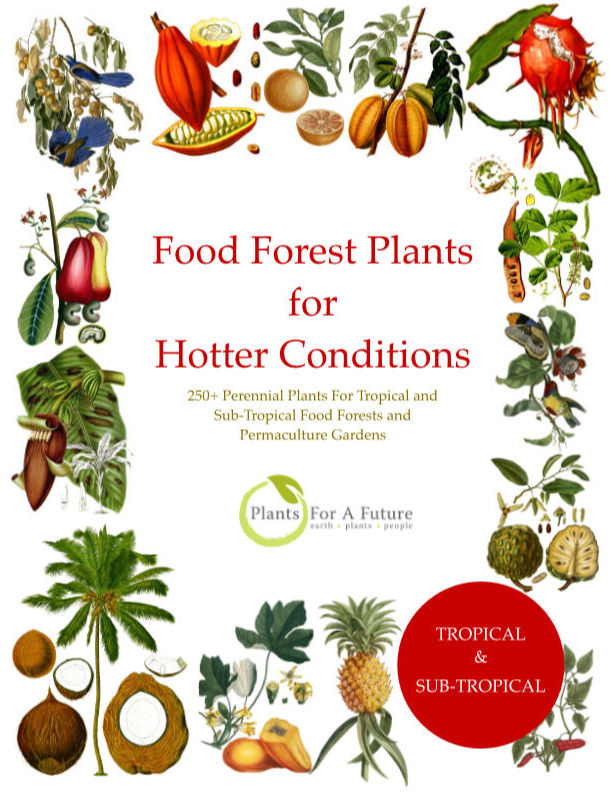
Edible Tropical Plants
Food Forest Plants for Hotter Conditions: 250+ Plants For Tropical Food Forests & Permaculture Gardens.
More
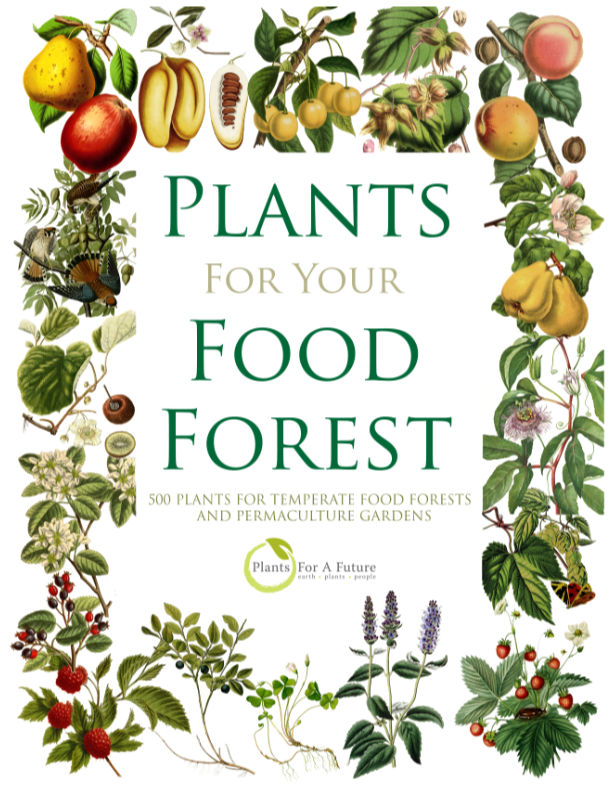
Edible Temperate Plants
Plants for Your Food Forest: 500 Plants for Temperate Food Forests & Permaculture Gardens.
More
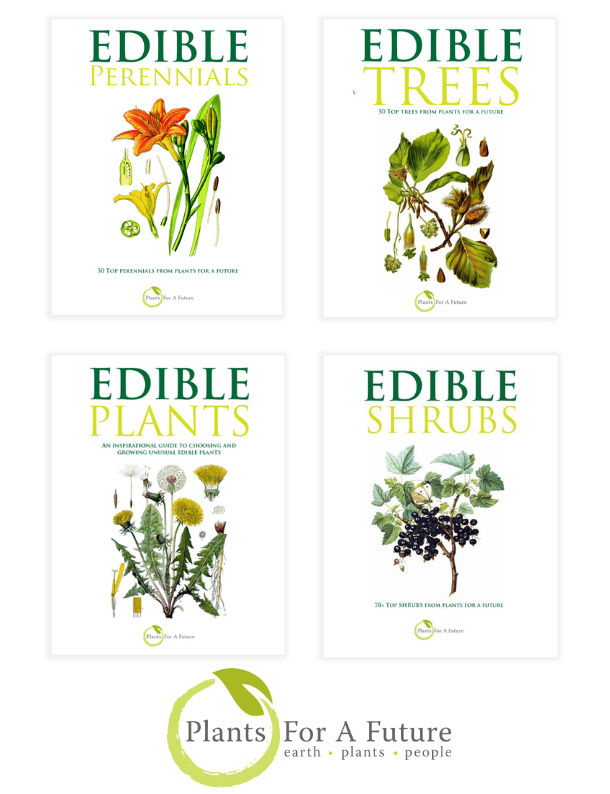
More Books
PFAF have eight books available in paperback and digital formats. Browse the shop for more information.
Shop Now
Other Uses
Fibre Wood
Other Uses: A fibre is obtained from the stems, it is the main source of jute[ 46 , 61 , 200 ] but is considered to be inferior to the fibre obtained from C. capsularis[ 61 ]. The fibre is somewhat coarse and is used mainly for sackcloth etc[ 57 ]. The stems are harvested when the plant is in flower and are then retted (allowed to begin to rot) so that the fibre can be extracted[ 171 ]. This species tends to branch making fibre extraction more difficult[ 114 ]. Growing the plants very close together will prevent some of the branching. If used in making paper, the fibres are cooked for 2 hours with lye and then ball milled for 4½ hours. The paper is grey/buff[ 189 ]. The very light and soft wood is used in making sulphur matches[ 158 ].
Special Uses
References More on Other Uses
Cultivation details
Plants grow well in the lowland tropics, up to an elevation of around 700 metres[ 300 ]. They are reported to tolerate an annual precipitation between 400 and 4290mm, an annual average temperature range of 16.8 to 27.5°c[ 269 ]. Prefers a very fertile, humus-rich, well-drained alluvial soil, though it is extremely tolerant of soil conditions[ 169 , 300 ]. It grows best in a hot humid climate[ 169 ]. Tolerates very wet conditions according to one report[ 57 ] whilst another says that it does not tolerate waterlogged soils[ 169 ]. Some cultivars are sensitive to excess water in the soil, especially when they are young[ 300 ]. Tolerates a pH in the range of 4.5 to 8.2[ 269 ]. There are two important cultivar-groups:- Olitorius Group. These are the forms mainly grown for their edible leaves. They are characterized by a plant height lower than 2 metres, often not more than 1 metre, and a more or less heavily branched plant habit. There are many named forms within this group[ 299 ]. Textilis Group. These are the forms mainly grown for their fibre. The plants are usually larger, up to 4 metres, perhaps even 5 metres tall, and only slightly branched at the top[ 299 ]. The first harvest, by cutting shoots 20 - 30cm long, may take place 4 - 6 weeks after transplanting, at a height of 10 - 20cm above the ground. This cutting stimulates the development of side shoots. Subsequently, every 2 - 3 weeks, a cutting may take place, with a total of 2 - 8 cuttings possible[ 299 ]. For a once-over harvest from a direct sown crop, the plants are uprooted or cut at ground level when they are 30 - 40cm tall, 3 - 5 weeks after emergence and before the development of fruits[ 299 ]. In Nigeria, a yield of 20 - 25kg from a 10 square metre bed (25 tonnes per hectare) may be expected from 3 - 9 cuttings of 'Amugbadu' during a period of 3 - 4 months. A yield of 38 tonnes per hectare was obtained from a well-fertilized field of cultivar 'Ewondo' in the Cameroon. Farmers however, usually obtain average yields of 5 - 15 tonnes[ 299 ]. The world average jute yield is about 1.9 tonnes of raw fibre per hectare, but yields of 5 tonnes have been obtained in Bangladesh with improved cultivars grown under optimal agronomic conditions[ 299 ]. Intercropped with Vigna, jute has yielded 3,270 kilos compared to 2290 kilos when monocropped[ 269 ]. A commercially cultivated vegetable and an important vegetable in arid areas. Part of the national dish of Egypt.
References Carbon Farming Information and Carbon Sequestration Information
Temperature Converter
Type a value in the Celsius field to convert the value to Fahrenheit:
Fahrenheit:
The PFAF Bookshop
Plants For A Future have a number of books available in paperback and digital form. Book titles include Edible Plants, Edible Perennials, Edible Trees,Edible Shrubs, Woodland Gardening, and Temperate Food Forest Plants. Our new book is Food Forest Plants For Hotter Conditions (Tropical and Sub-Tropical).
Shop Now
Plant Propagation
Seed - pre-soak for 24 hours in warm water and then sow in situ[ 300 ]. Seeds are often broadcast into fine seed beds at the beginning of the wet season. Mixing the small seeds with sand makes it easier to sow them evenly. Often seeds are slow to start growing. This can be overcome by soaking them in hot water. A spacing of 20-30 cm between plants is suitable.
Other Names
If available other names are mentioned here
Also known as: Jute, Bush Okra, Ahu hara, Amolate, An-kin-kiri, An-kirin-kirin, Atigo, Alilot, Awachuwaey, Bir narcha, Bogi, Bulukutu, Chilenzi, Daisee, Derere, Desipat, Enmomi, Eyo, Fetri, Filipino spinach, Foukou, Guse, Gusha, Gwisha, Idelele, Igogola, Jew's mallow, Jute mallow, Kaat thoothee, Kapilamoto, Kibwando, Krachaw, Krenkre, Krinkrin, Kudra, Larita, Ligusha, Long fruited Jute, Lusaka-saka, Lusakalusaka, Malafiya, Mangaraw, Melokhia, Mentchelfale, Mithapat, Mlenda mgunda, Morapat, Moroheia, Msakasaka, Mulugaya, Muomi pinpesi, N genge, N gengle, N'sore, Nalta jute, Nkuruma, Nyenje, Othigu-kal, Oyo, Parinta, Pasau, Philippine okra, Po krachao, Rau day, Saluyut, Sigli, Singli, Sobe, Sobo, Sore, Soren, Sorre, Spanish okra, Tossa jute, Tossa paat, Turgunnuwa, Unsore, Vaizahrui, West African sorrel, Yute.
Native Plant Search
Search over 900 plants ideal for food forests and permaculture gardens. Filter to search native plants to your area. The plants selected are the plants in our book 'Plants For Your Food Forest: 500 Plants for Temperate Food Forests and Permaculture Gardens, as well as plants chosen for our forthcoming related books for Tropical/Hot Wet Climates and Mediterranean/Hot Dry Climates. Native Plant Search
Found In
Countries where the plant has been found are listed here if the information is available
Africa, Angola, Arabia, Asia, Australia, Bangladesh, Benin, Botswana, Burkina Faso, Burundi, Cambodia, Cameroon, Cape Verde, Caribbean, Central Africa, Central African Republic, CAR, Chad, China, Congo, Côte d'Ivoire, Djibouti, East Africa, East Timor, Egypt, Equatorial-Guinea, Eritrea, Ethiopia, Fiji, France, Gabon, Gambia, Ghana, Guinea, Guinée, Guinea-Bissau, Haiti, India, Indochina, Indonesia, Israel, Ivory Coast, Japan, Kenya, Laos, Liberia, Madagascar, Malawi, Malaysia, Mali, Mauritania, Mauritius, Mozambique, Myanmar, Namibia, Nepal, Niger, Nigeria, North Africa, Northeastern India, Pacific, Pakistan, Papua New Guinea, PNG, Philippines, Reunion, Rwanda, Sao Tome and Principe, Saudi Arabia, SE Asia, Senegal, Sierra Leone, Solomon Islands, Somalia, South Africa, Southern Africa, South America, South Sudan, Sri Lanka, Sudan, Swaziland, Syria, Taiwan, Tanzania, Thailand, Timor-Leste, Togo, Uganda, USA, Vietnam, West Africa, Zambia, Zimbabwe.
Weed Potential
Right plant wrong place. We are currently updating this section.
Please note that a plant may be invasive in one area but may not in your area so it’s worth checking.
None Known
Conservation Status
IUCN Red List of Threatened Plants Status : This taxon has not yet been assessed

Growth: S = slow M = medium F = fast. Soil: L = light (sandy) M = medium H = heavy (clay). pH: A = acid N = neutral B = basic (alkaline). Shade: F = full shade S = semi-shade N = no shade. Moisture: D = dry M = Moist We = wet Wa = water.

Expert comment
Author
L.
Botanical References
200266
Links / References
For a list of references used on this page please go here
Readers comment