 |
|
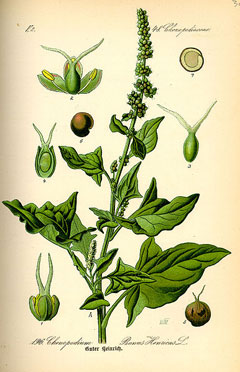
http://commons.wikimedia.org/wiki/File:Illustration_Chenopodium_bonus-henricus0.jpg |
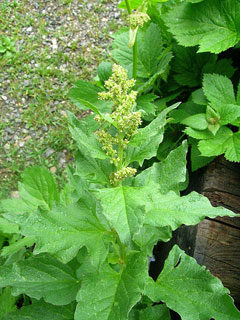 |
| http://commons.wikimedia.org/wiki/File:Chenopodium_bonus-henricus.JPG Chenopodium botrys |
Translate this page:
Summary
Physical Characteristics

 Chenopodium bonus-henricus is a PERENNIAL growing to 0.3 m (1ft) by 0.3 m (1ft in).
See above for USDA hardiness. It is hardy to UK zone 5 and is not frost tender. It is in flower from May to July, and the seeds ripen from June to August. The species is hermaphrodite (has both male and female organs) and is pollinated by Wind.
Suitable for: light (sandy), medium (loamy) and heavy (clay) soils. Suitable pH: mildly acid, neutral and basic (mildly alkaline) soils. It cannot grow in the shade. It prefers moist soil.
UK Hardiness Map
US Hardiness Map
Synonyms
C. esculentus.
Plant Habitats
Woodland Garden Sunny Edge; Dappled Shade;
Edible Uses
Edible Parts: Flowers Leaves Seed Shoots
Edible Uses:
Young leaves - raw or cooked[2, 5, 7, 9, 12, 33]. The leaves wilt quickly after picking and so they need to be used as soon after harvesting as possible[264]. They can be used as a potherb[4]. The leaves are best in spring and early summer, the older leaves become tough and bitter[200]. The raw leaves should only be eaten in small quantities, see the notes above on toxicity. Young leaves can be chopped and used as a small part of mixed salads, though we are not enamoured by their flavour[K]. The cooked leaves make an acceptable spinach substitute, but are best mixed with nicer leaves[K]. The leaves are a good source of iron[244]. Young flowering shoots - cooked[2, 27, 132, 264]. When grown on good soil, the shoots can be as thick as a pencil[4]. When about 12cm long, they are cut just under the ground, peeled and used like asparagus[183]. A very pleasant spring vegetable[K]. The plant is sometimes blanched by excluding the light in order to produce a longer and more succulent shoot, though this practice also reduces the quantity of vitamins in the shots[264, K]. Young flower buds - cooked[33, 183]. Considered to be a gourmet food[183], though they are rather small and harvesting any quantity takes quite a while[K]. Seed - ground and mixed with flour then used in making bread etc. The seed is small and fiddly but is easily harvested[K]. It should be soaked in water overnight and thoroughly rinsed before it is used in order to remove any saponins[K].
References More on Edible Uses
Medicinal Uses
Plants For A Future can not take any responsibility for any adverse effects from the use of plants. Always seek advice from a professional before using a plant medicinally.
Emollient Laxative Vermifuge
The herb is emollient, laxative and vermifuge[7, 154]. This remedy should not be used by people suffering from kidney complaints or rheumatism[7]. A poultice of the leaves has been used to cleanse and heal chronic sores, boils and abscesses[4, 7]. The seed is a gentle laxative that is suitable for children[7].
References More on Medicinal Uses
The Bookshop: Edible Plant Books
Our Latest books on Perennial Plants For Food Forests and Permaculture Gardens in paperback or digital formats.

Edible Tropical Plants
Food Forest Plants for Hotter Conditions: 250+ Plants For Tropical Food Forests & Permaculture Gardens.
More

Edible Temperate Plants
Plants for Your Food Forest: 500 Plants for Temperate Food Forests & Permaculture Gardens.
More

More Books
PFAF have eight books available in paperback and digital formats. Browse the shop for more information.
Shop Now
Other Uses
References More on Other Uses
Cultivation details
Historic Grain Crop Management: Standard Staple Crop: Balanced carb
Prefers a fertile humus rich soil in a sunny position[9, 16, 200]. The plant produces a better quality harvest in the summer if it is grown in light shade[264, K]. A very easily grown plant, it tolerates considerable neglect and succeeds in most soils and situations[16, 33, K]. Good King Henry was at one time frequently cultivated in the garden as a perennial vegetable, but it has fallen out of favour and is seldom grown at present[4, 46]. About thirty plants can produce a good supply of food for four people[264]. For polyculture design as well as the above-ground architecture (form - tree, shrub etc. and size shown above) information on the habit and root pattern is also useful and given here if available. The plant growth habit is a clumper with limited spread [1-2]. The root pattern is a tap root similar to a carrot going directly down [1-2].
Carbon Farming
-
Historic Grain Crop
These crops were once cultivated but have been abandoned. The reasons for abandonment may include colonization, genocide, market pressures, the arrival of superior crops from elsewhere, and so forth.
-
Management: Standard
Plants grow to their standard height. Harvest fruit, seeds, or other products. Non-Destructive management systems.
-
Staple Crop: Balanced carb
(0-15 percent protein, 0-15 percent oil, with at least one over 5 percent). The carbohydrates are from either starch or sugar. Annuals include maize, wheat, rice, and potato. Perennials include chestnuts, carob, perennial fruits, nuts, cereals, pseudocereals, woody pods, and acorns.
References Carbon Farming Information and Carbon Sequestration Information
Temperature Converter
Type a value in the Celsius field to convert the value to Fahrenheit:
Fahrenheit:
The PFAF Bookshop
Plants For A Future have a number of books available in paperback and digital form. Book titles include Edible Plants, Edible Perennials, Edible Trees,Edible Shrubs, Woodland Gardening, and Temperate Food Forest Plants. Our new book is Food Forest Plants For Hotter Conditions (Tropical and Sub-Tropical).
Shop Now
Plant Propagation
Seed - sow spring in a cold frame. Germination can be slow, but usually a high percentage will germinate[K]. These seeds germinate best at 20C. Cold stratification of up to 9 weeks at 4C prior to exposure at 20C will increase the germination rate. Prick out the seedlings into individual pots as soon as they are large enough to handle and plant out into their permanent positions in the summer. Division in spring[200]. Very easy, larger clumps can be replanted direct into their permanent positions, though it is best to pot up smaller clumps and grow them on in a cold frame until they are rooting well. Plant them out in the summer or following spring.
Other Names
If available other names are mentioned here
Native Plant Search
Search over 900 plants ideal for food forests and permaculture gardens. Filter to search native plants to your area. The plants selected are the plants in our book 'Plants For Your Food Forest: 500 Plants for Temperate Food Forests and Permaculture Gardens, as well as plants chosen for our forthcoming related books for Tropical/Hot Wet Climates and Mediterranean/Hot Dry Climates. Native Plant Search
Found In
Countries where the plant has been found are listed here if the information is available
Weed Potential
Right plant wrong place. We are currently updating this section.
Please note that a plant may be invasive in one area but may not in your area so it’s worth checking.
Conservation Status
IUCN Red List of Threatened Plants Status :

| Related Plants
|
| Latin Name | Common Name | Habit | Height | Hardiness | Growth | Soil | Shade | Moisture | Edible | Medicinal | Other |
| Chenopodium acuminatum | | Annual | 0.6 |
-
| | LMH | N | M | 2 | 0 | 1 |
| Chenopodium album | Fat Hen, Lambsquarters | Annual | 0.9 |
0-0
| | LMH | N | M | 3 | 2 | 1 |
| Chenopodium ambrosioides | Mexican Tea | Annual/Perennial | 1.0 |
7-10
| | LMH | N | M | 2 | 3 | 3 |
| Chenopodium ambrosioides anthelminticum | Wormseed | Annual/Perennial | 1.0 |
7-10
| | LMH | N | M | 2 | 3 | 2 |
| Chenopodium auricomum | Queensland Bluebush | Annual | 1.8 |
-
| | LMH | N | M | 2 | 0 | 1 |
| Chenopodium berlandieri | Southern Huauzontle, Pitseed goosefoot, Nuttall's goosefoot, Bush's goosefoot, Zschack's goosefoot | Annual | 1.2 |
0-0
| | LMH | N | M | 2 | 0 | 1 |
| Chenopodium botrys | Jerusalem Oak, Jerusalem oak goosefoot | Annual | 0.6 |
0-0
| | LMH | N | M | 2 | 2 | 2 |
| Chenopodium bushianum | Bush's goosefoot | Annual | 0.6 |
0-0
| | LMH | N | M | 2 | 0 | 1 |
| Chenopodium californicum | California Goosefoot | Annual | 0.6 |
-
| | LMH | N | DM | 2 | 1 | 2 |
| Chenopodium canihua | | Annual | 0.0 |
-
| | LMH | N | M | 2 | 0 | 1 |
| Chenopodium capitatum | Strawberry Blite, Blite goosefoot | Annual | 0.6 |
4-8
| | LMH | N | M | 3 | 1 | 1 |
| Chenopodium cristatum | Crested Goosefoot | Annual | 0.6 |
-
| | LMH | N | M | 2 | 1 | 1 |
| Chenopodium ficifolium | Fig-Leaved Goosefoot | Annual | 0.9 |
4-8
| | LMH | N | M | 2 | 0 | 1 |
| Chenopodium foliosum | Leafy goosefoot | Annual | 0.6 |
4-8
| | LMH | N | M | 3 | 0 | 1 |
| Chenopodium fremontii | Goosefoot, Fremont's goosefoot, Pringle's goosefoot | Annual | 0.6 |
0-0
| | LMH | N | M | 2 | 0 | 1 |
| Chenopodium giganteum | Tree Spinach | Annual | 2.4 |
4-8
| | LMH | N | M | 3 | 0 | 2 |
| Chenopodium glaucum | Oak-Leaved Goosefoot | Annual | 0.3 |
-
| | LMH | N | M | 2 | 0 | 1 |
| Chenopodium graveolens | Foetid Goosefoot | Annual | 0.9 |
-
| | LMH | N | M | 2 | 1 | 1 |
| Chenopodium hybridum | | Annual | 1.5 |
-
| | LMH | N | M | 2 | 1 | 1 |
| Chenopodium incanum | Mealy Goosefoot | Annual | 0.5 |
-
| | LMH | N | M | 2 | 0 | 1 |
| Chenopodium leptophyllum | Narrow Leaved Goosefoot | Annual | 0.6 |
0-0
| | LMH | N | M | 2 | 0 | 1 |
| Chenopodium murale | Nettleleaf Goosefoot | Annual | 0.6 |
0-0
| | LMH | N | M | 2 | 0 | 1 |
| Chenopodium nuttalliae | Huauzontle, Nuttall's goosefoot | Annual | 0.6 |
0-0
| | LMH | N | M | 4 | 0 | 1 |
| Chenopodium opulifolium | Seaport goosefoot | Annual | 0.8 |
0-0
| | LMH | SN | M | 2 | 0 | 1 |
| Chenopodium overi | Over's goosefoot | Annual | 0.8 |
0-0
| | LMH | N | M | 2 | 0 | 1 |
| Chenopodium pallidicaule | Cañihua | Annual | 0.6 |
-
| | LMH | N | DM | 3 | 0 | 1 |
| Chenopodium polyspermum | All-Seed, Manyseed goosefoot | Annual | 0.9 |
0-0
| | LMH | N | M | 2 | 0 | 1 |
| Chenopodium pratericola | Desert Goosefoot | Annual | 1.0 |
-
| | LMH | N | M | 2 | 0 | 1 |
| Chenopodium quinoa | Quinoa, Goosefoot, Pigweed, Inca Wheat | Annual | 1.5 |
10-12
| F | LMH | N | M | 5 | 0 | 2 |
|
|
Growth: S = slow M = medium F = fast. Soil: L = light (sandy) M = medium H = heavy (clay). pH: A = acid N = neutral B = basic (alkaline). Shade: F = full shade S = semi-shade N = no shade. Moisture: D = dry M = Moist We = wet Wa = water.

Expert comment
Author
L.
Botanical References
17200
Links / References
For a list of references used on this page please go here
Readers comment