 |
|
USDA-NRCS PLANTS Database |
 |
| http://www.flickr.com/photos/28340342@N08/ |
Translate this page:
Summary
Bloom Color: Yellow.
Main Bloom Time: Early spring, Late spring, Mid spring. Form: Oval.
Physical Characteristics

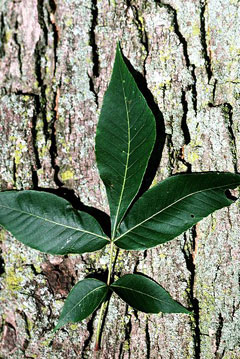
 Carya glabra is a deciduous Tree growing to 30 m (98ft) by 20 m (65ft) at a slow rate.
See above for USDA hardiness. It is hardy to UK zone 4. It is in leaf from June to October, in flower from April to May, and the seeds ripen in October. The species is monoecious (individual flowers are either male or female, but both sexes can be found on the same plant) and is pollinated by Wind. The plant is self-fertile.
Suitable for: light (sandy), medium (loamy) and heavy (clay) soils. Suitable pH: mildly acid, neutral and basic (mildly alkaline) soils. It cannot grow in the shade. It prefers dry or moist soil.
UK Hardiness Map
US Hardiness Map
Synonyms
C. porcina. Juglans glabra.
Plant Habitats
Woodland Garden Canopy;
Edible Uses
Edible Parts: Sap Seed
Edible Uses:
Seed - raw or cooked[61, 101, 161]. Very variable in quality, some are sweet and pleasant whilst others are bitter and astringent[1, 2, 11, 46, 63, 183]. In general it is inferior to other hickories[117, 159]. The nut is rather small[K], has a very thick shell and contains very little edible matter[82, 226]. The seed ripens in late autumn and, when stored in its shell in a cool place, will keep for at least 6 months[K]. Sap - tapped in spring and used as a refreshing drink. Sweet[101].
References More on Edible Uses
Medicinal Uses
Plants For A Future can not take any responsibility for any adverse effects from the use of plants. Always seek advice from a professional before using a plant medicinally.
None known
References More on Medicinal Uses
The Bookshop: Edible Plant Books
Our Latest books on Perennial Plants For Food Forests and Permaculture Gardens in paperback or digital formats.
Edible Tropical Plants
Food Forest Plants for Hotter Conditions: 250+ Plants For Tropical Food Forests & Permaculture Gardens.
More
Edible Temperate Plants
Plants for Your Food Forest: 500 Plants for Temperate Food Forests & Permaculture Gardens.
More
More Books
PFAF have eight books available in paperback and digital formats. Browse the shop for more information.
Shop Now
Other Uses
Fuel Wood
Wood - hard, strong, tough, very flexible. It weighs 51lb per cubic foot[235]. An excellent timber, it is used for tool handles, agricultural implements etc[46, 61, 82]. A very good fuel, burning well and giving off a lot of heat[46, 61, 82].
Special Uses
References More on Other Uses
Cultivation details
Landscape Uses:Firewood, Pest tolerant, Aggressive surface roots possible. Prefers a deep moisture-retentive loam in a sunny sheltered position, requiring a good summer for best development[1, 63, 137, 200]. Succeeds in drier soils than most members of this genus[200]. Slow growing[200]. Sometimes cultivated for its edible seed, there are some named varieties[63]. Trees take 25 - 30 years before they commence bearing seeds and peak production does not begin until they are about 80 years old[229]. Trees thrive in Britain, often bearing fruit[11]. Trees are planted for timber in Germany[50]. Plants are strongly tap-rooted and should be planted in their permanent positions as soon as possible[1, 137]. Sowing in situ would be the best method so long as the seed could be protected from mice[1, 200]. Trees are late coming into leaf (usually late May to June) and lose their leaves early in the autumn (usually in October)[137]. During this time they cast a heavy shade. These factors combine to make the trees eminently suitable for a mixed woodland planting with shrubs and other trees beneath them[137]. Plants in this genus are notably resistant to honey fungus[200]. Most species in this genus have quite a wide range of distribution and, in order to find trees more suited to this country, seed from the most appropriate provenances should be sought[137]. Most trees growing in Britain at present tend to only produce good seed after hot summers[137]. Trees are self-fertile but larger crops of better quality seeds are produced if cross-pollination takes place[229]. Special Features:North American native, Attracts butterflies, Inconspicuous flowers or blooms.
References Carbon Farming Information and Carbon Sequestration Information
Temperature Converter
Type a value in the Celsius field to convert the value to Fahrenheit:
Fahrenheit:
The PFAF Bookshop
Plants For A Future have a number of books available in paperback and digital form. Book titles include Edible Plants, Edible Perennials, Edible Trees,Edible Shrubs, Woodland Gardening, and Temperate Food Forest Plants. Our new book is Food Forest Plants For Hotter Conditions (Tropical and Sub-Tropical).
Shop Now
Plant Propagation
Seed - requires a period of cold stratification - seed given 3 months cold stratification had a 91% germination rate[113]. Best sown in a cold frame as soon as it is ripe[78]. Stored seed should be kept moist (but not wet) prior to sowing and should be sown in a cold frame as soon as possible[78]. Where possible, sow 1 or 2 seeds only in each deep pot and thin to the best seedling. If you need to transplant the seedlings, then do this as soon as they are large enough to handle, once more using deep pots to accommodate the tap root. Put the plants into their permanent positions as soon as possible, preferably in their first summer, and give some protection from the cold for at least the first winter. Seed can also be sown in situ so long as protection is given from mice etc and the seed is given some protection from cold[200] (a plastic bottle with the top and bottom removed and a wire mesh top fitted to keep the mice out is ideal)
Other Names
If available other names are mentioned here
Native Plant Search
Search over 900 plants ideal for food forests and permaculture gardens. Filter to search native plants to your area. The plants selected are the plants in our book 'Plants For Your Food Forest: 500 Plants for Temperate Food Forests and Permaculture Gardens, as well as plants chosen for our forthcoming related books for Tropical/Hot Wet Climates and Mediterranean/Hot Dry Climates. Native Plant Search
Found In
Countries where the plant has been found are listed here if the information is available
Weed Potential
Right plant wrong place. We are currently updating this section.
Please note that a plant may be invasive in one area but may not in your area so it’s worth checking.
Conservation Status
IUCN Red List of Threatened Plants Status :

Growth: S = slow M = medium F = fast. Soil: L = light (sandy) M = medium H = heavy (clay). pH: A = acid N = neutral B = basic (alkaline). Shade: F = full shade S = semi-shade N = no shade. Moisture: D = dry M = Moist We = wet Wa = water.

Expert comment
Author
(Mill.)Sweet.
Botanical References
1143200
Links / References
For a list of references used on this page please go here
Readers comment
| Add a comment |
|
If you have important information about this plant that may help other users please add a comment or link below. Only comments or links that are felt to be directly relevant to a plant will be included. If you think a comment/link or information contained on this page is inaccurate or misleading we would welcome your feedback at [email protected]. If you have questions about a plant please use the Forum on this website as we do not have the resources to answer questions ourselves.
* Please note: the comments by website users are not necessarily those held by PFAF and may give misleading or inaccurate information.
To leave a comment please Register or login here All comments need to be approved so will not appear immediately.
|
|