 |
|
http://commons.wikimedia.org/wiki/User:Griensteidl |
 |
| http://foto.andreas-trepte.de/ |
Translate this page:
Summary
Physical Characteristics

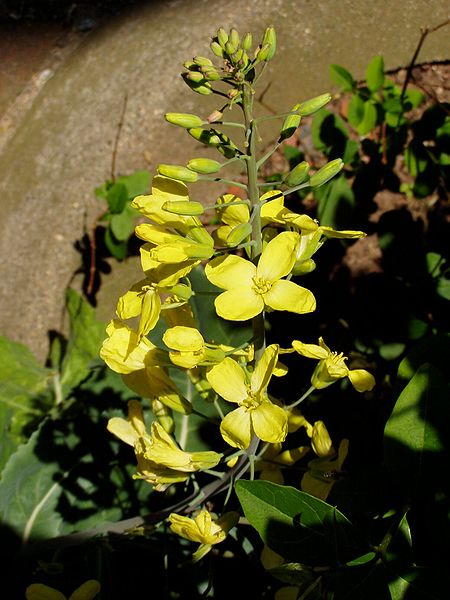
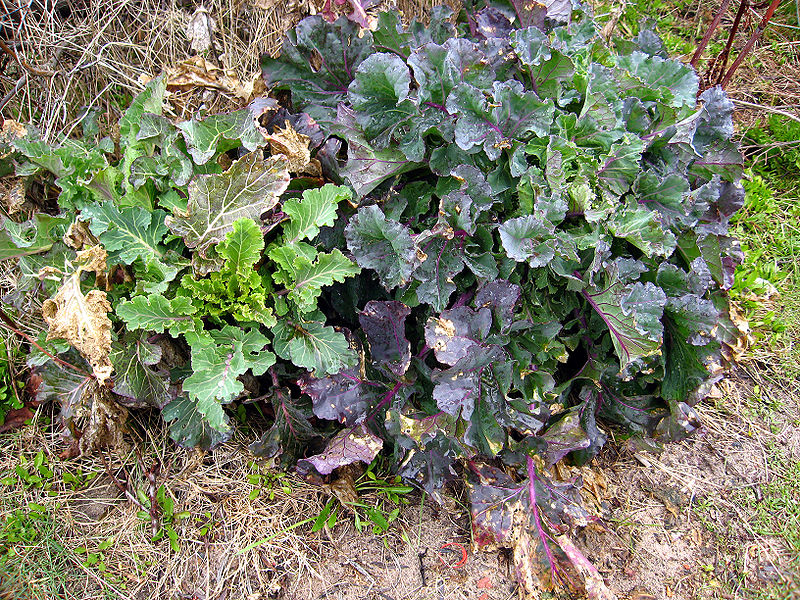
 Brassica oleracea is a BIENNIAL/PERENNIAL growing to 1.2 m (4ft).
See above for USDA hardiness. It is hardy to UK zone 7 and is not frost tender. It is in flower from May to August, and the seeds ripen from July to September. The species is hermaphrodite (has both male and female organs) and is pollinated by Bees. The plant is self-fertile.
Suitable for: light (sandy), medium (loamy) and heavy (clay) soils and prefers well-drained soil. Suitable pH: mildly acid, neutral and basic (mildly alkaline) soils. It can grow in semi-shade (light woodland) or no shade. It prefers moist soil. The plant can tolerate maritime exposure.
UK Hardiness Map
US Hardiness Map
Synonyms
B. sylvestris.
Plant Habitats
Woodland Garden Sunny Edge; Cultivated Beds;
Edible Uses
Edible Parts: Leaves
Edible Uses:
Leaves - raw or cooked[5]. Slightly bitter raw, they can be cooked in one or more changes of water[183]. We find that the slight bitterness actually enhances the flavour, and this is one of our favourite cooked leaves. The plant can usually be harvested all year round, though there will be little to pick in very cold winters[K].
References More on Edible Uses
| Composition
|
| Figures in grams (g) or miligrams (mg) per 100g of food.
|
|
|
Leaves (Dry weight)
|
|
- 320 Calories per 100g
- Water : 0%
- Protein: 23.5g; Fat: 2.5g; Carbohydrate: 62.5g; Fibre: 13g; Ash: 10.5g;
- Minerals - Calcium: 430mg; Phosphorus: 450mg; Iron: 10.5mg; Magnesium: 0mg; Sodium: 80mg; Potassium: 3100mg; Zinc: 0mg;
- Vitamins - A: 15000mg; Thiamine (B1): 0.6mg; Riboflavin (B2): 0.7mg; Niacin: 4.5mg; B6: 0mg; C: 670mg;
- Reference: [ 218]
- Notes: The figures given here are the median of a range that was given in the reference.
|
|
Medicinal Uses
Plants For A Future can not take any responsibility for any adverse effects from the use of plants. Always seek advice from a professional before using a plant medicinally.
Anthelmintic Cardiotonic Diuretic Laxative Stomachic
The leaves are cardiotonic and stomachic[240]. They have been used in the treatment of gout and rheumatism[240]. The leaves can be used as a poultice to cleanse infected wounds - the mid-rib is removed and the leaf ironed then placed on the affected area whilst still hot[254]. The poultice should not be left on too long or it an cause blisters[254]. The seeds are anthelmintic, diuretic, laxative and stomachic[240].
References More on Medicinal Uses
The Bookshop: Edible Plant Books
Our Latest books on Perennial Plants For Food Forests and Permaculture Gardens in paperback or digital formats.

Edible Tropical Plants
Food Forest Plants for Hotter Conditions: 250+ Plants For Tropical Food Forests & Permaculture Gardens.
More

Edible Temperate Plants
Plants for Your Food Forest: 500 Plants for Temperate Food Forests & Permaculture Gardens.
More

More Books
PFAF have eight books available in paperback and digital formats. Browse the shop for more information.
Shop Now
Other Uses
References More on Other Uses
Cultivation details
Management: Standard Minor Global Crop Staple Crop: Protein
An easily grown plant, it succeeds in full sun in any reasonable soil, though it prefers a well-drained fertile preferably alkaline soil[200]. It does well in heavy clay soils. It is often found wild by the coast and tolerates considerable maritime exposure. The true wild cabbage is a short-lived perennial, though we have seen specimens 5 years old or more[K]. This species has long been cultivated for its edible leaves, stems etc and a wide diversity of forms have been developed, including cabbages, cauliflowers, broccolis and Brussels sprouts[5]. Most of these forms are biennial in cultivation, though there are also some perennial forms. These different forms are detailed below and have each been given their own entry in the database. We have chosen the most up to date classification we can find, as treated in 'World Economic Plants'. B. oleracea alboglabra. Chinese kales are fast-growing plants with tender edible leaves. Although perennials[200], they are usually grown as annuals and are eaten as a summer and autumn crop whilst still young. B. oleracea botrytis. Cauliflowers are grown mainly for their edible swollen inflorescence. Different cultivars can be used to provide crops all year round. B. oleracea botrytis aparagoides. A short-lived perennial form of cauliflower producing a small cauliflower head in the spring followed by a number of broccoli-like flowering shoots. B. oleracea capitata. These are the cultivated cabbages, grown for their edible leaves that usually form a compact head. Reasonably winter hardy, different cultivars can be used to provide edible plants all year round. B. oleracea costata. Couve tronchuda is a tall-growing form of cabbage. It is less hardy than most other forms of this genus. B. oleracea gemmifera. Brussels sprouts form large edible axillary buds 5cm or more long. They are mainly used as late autumn to spring crops. B. oleracea gongylodes. Kohl rabi produces an edible swollen stem 8cm or more in diameter. It is reasonably cold hardy and provides crops from mid summer to the winter. B. oleracea italica. The calabreses and sprouting broccolis, grown mainly for their edible flowering shoots. Calabrese is the less hardy and is used mainly as an autumn and early winter crop. The sprouting broccolis are very winter hardy and are grown outdoors through the winter to provide a spring to early summer crop. B. oleracea medullosa. Marrowstem kales have edible leaves and stems. B. oleracea palmifolia. The Jersey kale produces a very tall stem which has been used as a walking stick. B. oleracea ramosa. The thousand-headed and perennial kales are very cold hardy. Their flavour is stronger than most of the other cultivated forms and they are mainly used as a winter crop. This form is very close to the wild species and has the most potential for developing perennial cultivars. B. oleracea subauda. The savoy cabbages form large heads like the cultivated cabbages (B. oleracea capitata). They have a stronger flavour, crinkly leaves and are generally more cold-hardy so can provide a winter crop in areas with quite severe winters. B. oleracea sabellica. The curly kales have attractively curled leaves. These are quite cold-tolerant plants and are mainly used to provide edible leaves in winter and spring. B. oleracea viridis. Collards are a cold-hardy non-heading form of cabbage, used mainly to provide green leaves in the spring. The plant is heat tolerant in zones 6 through 1. (Plant Hardiness Zones show how well plants withstand cold winter temperatures.
Plant Heat Zones show when plants would start suffering from the heat.
The Plant Heat Zone map is based on the number of "heat days" experienced in a given area where the temperature climbs to over 86 degrees F (30°C).
At this temperature, many plants begin to suffer physiological damage. Heat Zones range from 1 (no heat days) to 12 (210 or more heat days).
For example Heat Zone. 11-1 indicates that the plant is heat tolerant in zones 11 through 1.) For polyculture design as well as the above-ground architecture (form - tree, shrub etc. and size shown above) information on the habit and root pattern is also useful and given here if available. The plant growth habit is a clumper with limited spread [1-2]. The root pattern is flat with shallow roots forming a plate near the soil surface [1-2].
Carbon Farming
-
Management: Standard
Plants grow to their standard height. Harvest fruit, seeds, or other products. Non-Destructive management systems.
-
Minor Global Crop
These crops are already grown or traded around the world, but on a smaller scale than the global perennial staple and industrial crops, The annual value of a minor global crop is under $1 billion US. Examples include shea, carob, Brazil nuts and fibers such as ramie and sisal.
-
Staple Crop: Protein
(16+ percent protein, 0-15 percent oil). Annuals include beans, chickpeas, lentils, cowpeas, and pigeon peas. Perennials include perennial beans, nuts, leaf protein concentrates, and edible milks.
References Carbon Farming Information and Carbon Sequestration Information
Temperature Converter
Type a value in the Celsius field to convert the value to Fahrenheit:
Fahrenheit:
The PFAF Bookshop
Plants For A Future have a number of books available in paperback and digital form. Book titles include Edible Plants, Edible Perennials, Edible Trees,Edible Shrubs, Woodland Gardening, and Temperate Food Forest Plants. Our new book is Food Forest Plants For Hotter Conditions (Tropical and Sub-Tropical).
Shop Now
Plant Propagation
Seed - sow April in situ. Seedlings transplant very well and so, if you sow the seed too thickly, it is a simple matter to move some of the plants to give them more space. Cuttings root very easily at almost any time in the growing season[K]. Use shoots about 8cm long of the current year's growth and place them in individual pots in the cuttings frame[K].
Other Names
If available other names are mentioned here
Native Plant Search
Search over 900 plants ideal for food forests and permaculture gardens. Filter to search native plants to your area. The plants selected are the plants in our book 'Plants For Your Food Forest: 500 Plants for Temperate Food Forests and Permaculture Gardens, as well as plants chosen for our forthcoming related books for Tropical/Hot Wet Climates and Mediterranean/Hot Dry Climates. Native Plant Search
Found In
Countries where the plant has been found are listed here if the information is available
Weed Potential
Right plant wrong place. We are currently updating this section.
Please note that a plant may be invasive in one area but may not in your area so it’s worth checking.
Conservation Status
IUCN Red List of Threatened Plants Status :

| Related Plants
|
| Latin Name | Common Name | Habit | Height | Hardiness | Growth | Soil | Shade | Moisture | Edible | Medicinal | Other |
| Alliaria petiolata | Garlic Mustard | Biennial | 1.0 |
5-8
| | LMH | FS | MWe | 3 | 2 | 1 |
| Arabidopsis thaliana | Thale Cress, Mouseear cress | Annual/Biennial | 0.5 |
0-0
| | LMH | SN | DM | 0 | 1 | 1 |
| Arabis alpina | Alpine Rock Cress, Alpine rockcress | Perennial | 0.2 |
4-8
| | LM | SN | M | 2 | 0 | |
| Arabis caucasica | Rock Cress, Wall Rockcress | Perennial | 0.2 |
4-9
| M | LMH | SN | DM | 2 | 0 | 3 |
| Arabis hirsuta | Hairy rockcress, Mountain rockcress, Creamflower rockcress | Biennial/Perennial | 0.6 |
4-8
| | LMH | SN | DM | 1 | 0 | |
| Arabis lyrata | Rock Cress, Kamchatka rockcress, Lyrate rockcress | Biennial/Perennial | 0.3 |
4-8
| | LMH | SN | DM | 1 | 0 | |
| Arabis pendula | | Biennial | 0.9 |
-
| | LMH | FSN | M | 1 | 0 | |
| Arabis sagittata | | Biennial/Perennial | 0.6 |
-
| | LMH | SN | DM | 1 | 0 | |
| Arabis serrata | | Perennial | 0.3 |
6-9
| | LMH | SN | M | 1 | 0 | |
| Armoracia rusticana | Horseradish, Red Cole | Perennial | 0.7 |
4-9
| F | LMH | SN | M | 3 | 3 | 2 |
| Aubrieta deltoidea | Aubretia, Lilacbush, False Rockcress | Perennial | 0.2 |
4-9
| M | LM | SN | DM | 0 | 0 | 3 |
| Aurinia saxatilis | Golden Alyssum, Basket of gold | Perennial | 0.3 |
4-10
| M | LMH | N | DM | 0 | 0 | 3 |
| Barbarea australis | | Biennial/Perennial | 0.5 |
-
| | LMH | SN | M | 2 | 1 | |
| Barbarea orthoceras | American Yellowrocket | Perennial | 0.5 |
0-0
| | LMH | SN | M | 2 | 0 | 0 |
| Barbarea verna | Land Cress, Early yellowrocket | Biennial | 0.3 |
5-9
| | LMH | FSN | M | 3 | 0 | |
| Barbarea vulgaris | Yellow Rocket, Garden yellowrocket | Perennial | 0.4 |
5-9
| | LMH | SN | M | 3 | 1 | 0 |
| Brassica balearica | | Perennial | 0.0 |
-
| | LMH | N | M | 1 | 0 | |
| Brassica carinata | Abyssinian Cabbage | Annual | 1.0 |
9-12
| F | LMH | SN | M | 4 | 2 | 3 |
| Brassica cretica | Mustard | Perennial | 1.0 |
0-0
| | LMH | N | M | 2 | 0 | |
| Brassica elongata | Elongated mustard | Biennial/Perennial | 0.9 |
0-0
| | LMH | SN | M | 2 | 0 | 2 |
| Brassica juncea | Brown Mustard | Annual | 0.8 |
6-9
| | LMH | SN | M | 4 | 2 | 2 |
| Brassica juncea crispifolia | Curled Mustard | Annual | 0.3 |
6-9
| F | LMH | SN | M | 4 | 2 | 2 |
| Brassica juncea foliosa | Leaf Mustard | Annual | 0.3 |
6-9
| F | LMH | SN | M | 4 | 2 | 2 |
| Brassica juncea integrifolia crispifolia | Curled Mustard | Annual | 0.3 |
6-10
| F | LMH | SN | M | 4 | 2 | 2 |
| Brassica juncea integrifolia rugosa | Head Mustard | Annual | 0.6 |
6-10
| F | LMH | SN | M | 4 | 2 | 2 |
| Brassica juncea integrifolia strumata | Large Petiole Mustard | Annual | 0.8 |
6-10
| F | LMH | SN | M | 4 | 2 | 2 |
| Brassica juncea integrifolia subintegrifolia | Leaf Mustard | Annual | 0.3 |
6-10
| F | LMH | SN | M | 4 | 2 | 2 |
| Brassica juncea multiceps | Green In The Snow | Annual | 0.4 |
6-9
| F | LMH | SN | M | 4 | 2 | 2 |
| Brassica juncea napiformis | Root Mustard | Annual | 0.8 |
6-9
| | LMH | SN | M | 4 | 2 | 2 |
| Brassica juncea rugosa | Head Mustard | Annual | 0.6 |
6-9
| | LMH | SN | M | 4 | 2 | 2 |
|
|
Growth: S = slow M = medium F = fast. Soil: L = light (sandy) M = medium H = heavy (clay). pH: A = acid N = neutral B = basic (alkaline). Shade: F = full shade S = semi-shade N = no shade. Moisture: D = dry M = Moist We = wet Wa = water.

Expert comment
Author
L.
Botanical References
17
Links / References
For a list of references used on this page please go here
Readers comment
© 2010, Plants For A Future. Plants For A Future is a charitable company limited by guarantee, registered in England and Wales. Charity No. 1057719, Company No. 3204567.