 |
|
http://commons.wikimedia.org/wiki/User:Sten |
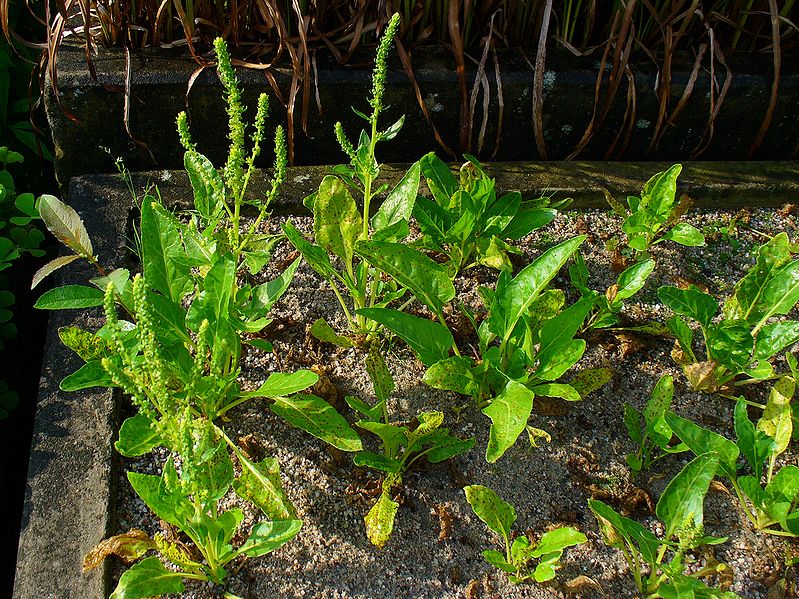 |
| http://commons.wikimedia.org/wiki/File:Beta_vulgaris_maritima_001.JPG |
Translate this page:
Summary
Physical Characteristics

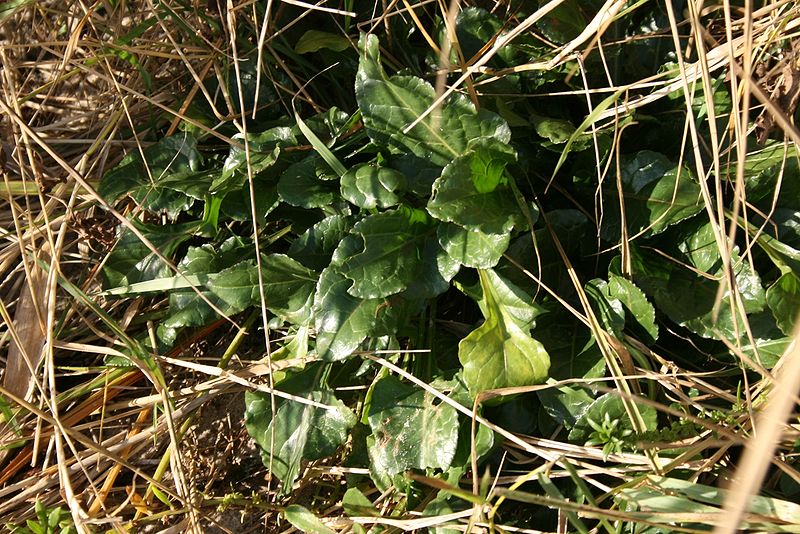
 Beta vulgaris maritima is a ANNUAL/PERENNIAL growing to 1.2 m (4ft).
See above for USDA hardiness. It is hardy to UK zone 5 and is not frost tender. It is in flower from July to September. The species is hermaphrodite (has both male and female organs) and is pollinated by Wind.
Suitable for: light (sandy), medium (loamy) and heavy (clay) soils and prefers well-drained soil. Suitable pH: mildly acid, neutral and basic (mildly alkaline) soils and can grow in very alkaline and saline soils.
It cannot grow in the shade. It prefers moist soil.
UK Hardiness Map
US Hardiness Map
Synonyms
B. maritima.
Plant Habitats
Cultivated Beds;
Edible Uses
Edible Parts: Leaves
Edible Uses:
Young leaves - raw or cooked[5, 12, 16, 21]. A delicious spinach substitute in the spring, the leaves become less pleasant as the season progresses, developing a distinct bitterness in hot weather[K]. Some people dislike the raw leaves since they can leave an unpleasant taste in the mouth[K].
References More on Edible Uses
Medicinal Uses
Plants For A Future can not take any responsibility for any adverse effects from the use of plants. Always seek advice from a professional before using a plant medicinally.
Antitumor Emmenagogue
Although little used in modern herbalism, beet has a long history of folk use, especially in the treatment of tumours[269]. A decoction prepared from the seed has been used as a remedy for tumours of the intestines. The seed, boiled in water, is said to cure genital tumours[269]. The juice or other parts of the plant is said to help in the treatment of tumours, leukaemia and other forms of cancer such as cancer of the breast, oesophagus, glands, head, intestines, leg, lip, lung, prostate, rectum, spleen, stomach, and uterus[269]. Some figure that betacyanin and anthocyanin are important in the exchange of substances of cancer cells; others note two main components of the amines, choline and its oxidation product betaine, whose absence produces tumours in mice[269]. The juice has been applied to ulcers[269]. A decoction is used as a purgative by those who suffer from haemorrhoids in South Africa[269]. Leaves and roots used as an emmenagogue[269]. Plant effective in the treatment of feline ascariasis[269]. In the old days, beet juice was recommended as a remedy for anaemia and yellow jaundice, and, put into the nostrils to purge the head, clear ringing ears, and alleviate toothache[269]. Beet juice in vinegar was said to rid the scalp of dandruff as scurf, and was recommended to prevent falling hair[269]. Juice of the white beet was said to clear obstructions of the liver and spleen[269]. Culpepper (1653) recommended it for treating headache and vertigo as well as all affections of the brain[269].
References More on Medicinal Uses
The Bookshop: Edible Plant Books
Our Latest books on Perennial Plants For Food Forests and Permaculture Gardens in paperback or digital formats.

Edible Tropical Plants
Food Forest Plants for Hotter Conditions: 250+ Plants For Tropical Food Forests & Permaculture Gardens.
More

Edible Temperate Plants
Plants for Your Food Forest: 500 Plants for Temperate Food Forests & Permaculture Gardens.
More

More Books
PFAF have eight books available in paperback and digital formats. Browse the shop for more information.
Shop Now
Other Uses
References More on Other Uses
Cultivation details
Beets grow well in a variety of soils, growing best in a deep, friable well-drained soil abundant with organic matter, but doing poorly on clay. They prefer an open position and a light well-drained soil[52]. The optimum pH is 6.0 - 6.8, but neutral and alkaline soils are tolerated in some areas. Some salinity may be tolerated after the seedling stage. Beets are notable for their tolerance to manganese toxicity. Beet is reported to tolerate an annual precipitation of 23 to 315cm, an average annual temperature range of 5.0 to 26.6°C and a pH of 4.2 to 8.2[269]. This is the wild beetroot of coastal areas. The cultivated beetroot, sugar beet, seakale beet and Swiss chard have all been developed from this species by means of selective breeding[1, 5]. For polyculture design as well as the above-ground architecture (form - tree, shrub etc. and size shown above) information on the habit and root pattern is also useful and given here if available. The plant growth habit is a clumper with limited spread [1-2]. The root pattern is a tap root similar to a carrot going directly down [1-2].
References Carbon Farming Information and Carbon Sequestration Information
Temperature Converter
Type a value in the Celsius field to convert the value to Fahrenheit:
Fahrenheit:
The PFAF Bookshop
Plants For A Future have a number of books available in paperback and digital form. Book titles include Edible Plants, Edible Perennials, Edible Trees,Edible Shrubs, Woodland Gardening, and Temperate Food Forest Plants. Our new book is Food Forest Plants For Hotter Conditions (Tropical and Sub-Tropical).
Shop Now
Plant Propagation
Seed - sow March to May in situ.
Other Names
If available other names are mentioned here
Native Plant Search
Search over 900 plants ideal for food forests and permaculture gardens. Filter to search native plants to your area. The plants selected are the plants in our book 'Plants For Your Food Forest: 500 Plants for Temperate Food Forests and Permaculture Gardens, as well as plants chosen for our forthcoming related books for Tropical/Hot Wet Climates and Mediterranean/Hot Dry Climates. Native Plant Search
Found In
Countries where the plant has been found are listed here if the information is available
Weed Potential
Right plant wrong place. We are currently updating this section.
Please note that a plant may be invasive in one area but may not in your area so it’s worth checking.
Conservation Status
IUCN Red List of Threatened Plants Status :

Growth: S = slow M = medium F = fast. Soil: L = light (sandy) M = medium H = heavy (clay). pH: A = acid N = neutral B = basic (alkaline). Shade: F = full shade S = semi-shade N = no shade. Moisture: D = dry M = Moist We = wet Wa = water.

Expert comment
Author
(L.)Arcangeli.
Botanical References
17200
Links / References
For a list of references used on this page please go here
Readers comment
© 2010, Plants For A Future. Plants For A Future is a charitable company limited by guarantee, registered in England and Wales. Charity No. 1057719, Company No. 3204567.