 |
|
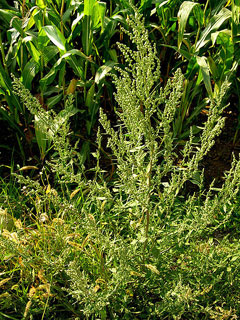
http://commons.wikimedia.org/wiki/File:UitstaandeMeldeSorinnesDSCN4516.JPG |
 |
|
Translate this page:
Summary
Physical Characteristics

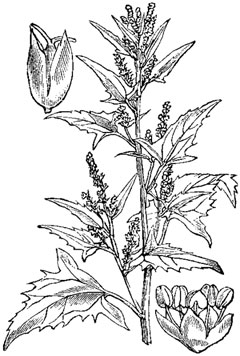
 Atriplex patula is a ANNUAL growing to 0.8 m (2ft 7in). It is in flower from July to September, and the seeds ripen from August to October. The species is monoecious (individual flowers are either male or female, but both sexes can be found on the same plant) and is pollinated by Wind, insects. The plant is self-fertile.
Suitable for: light (sandy) and medium (loamy) soils, prefers well-drained soil and can grow in heavy clay soil. Suitable pH: mildly acid, neutral and basic (mildly alkaline) soils and can grow in very alkaline and saline soils.
It cannot grow in the shade. It prefers moist soil.
UK Hardiness Map
US Hardiness Map
Synonyms
Plant Habitats
Cultivated Beds;
Edible Uses
Edible Parts: Leaves Seed
Edible Uses:
Young leaves - raw or cooked as a spinach substitute[5, 85, 95, 153, 183]. A fairly bland flavour, a few leaves of stronger-flavoured plants can be added to enhance the taste[9]. Seed - ground and mixed with cornmeal or used to thicken soups etc[183]. Small and very fiddly to harvest and use[9].
References More on Edible Uses
Medicinal Uses
Plants For A Future can not take any responsibility for any adverse effects from the use of plants. Always seek advice from a professional before using a plant medicinally.
Laxative
The seeds, harvested when just ripe, are said to be as efficacious as ipecacuanha as a laxative[4].
References More on Medicinal Uses
The Bookshop: Edible Plant Books
Our Latest books on Perennial Plants For Food Forests and Permaculture Gardens in paperback or digital formats.
Edible Tropical Plants
Food Forest Plants for Hotter Conditions: 250+ Plants For Tropical Food Forests & Permaculture Gardens.
More
Edible Temperate Plants
Plants for Your Food Forest: 500 Plants for Temperate Food Forests & Permaculture Gardens.
More
More Books
PFAF have eight books available in paperback and digital formats. Browse the shop for more information.
Shop Now
Other Uses
References More on Other Uses
Cultivation details
Succeeds in full sun in any well-drained but not too fertile soil[200]. Prefers a rich soil. Tolerates saline and very alkaline soils[200].
References Carbon Farming Information and Carbon Sequestration Information
Temperature Converter
Type a value in the Celsius field to convert the value to Fahrenheit:
Fahrenheit:
The PFAF Bookshop
Plants For A Future have a number of books available in paperback and digital form. Book titles include Edible Plants, Edible Perennials, Edible Trees,Edible Shrubs, Woodland Gardening, and Temperate Food Forest Plants. Our new book is Food Forest Plants For Hotter Conditions (Tropical and Sub-Tropical).
Shop Now
Plant Propagation
Seed - sow April/May in situ[134]. Germination is usually rapid.
Other Names
If available other names are mentioned here
Native Plant Search
Search over 900 plants ideal for food forests and permaculture gardens. Filter to search native plants to your area. The plants selected are the plants in our book 'Plants For Your Food Forest: 500 Plants for Temperate Food Forests and Permaculture Gardens, as well as plants chosen for our forthcoming related books for Tropical/Hot Wet Climates and Mediterranean/Hot Dry Climates. Native Plant Search
Found In
Countries where the plant has been found are listed here if the information is available
Weed Potential
Right plant wrong place. We are currently updating this section.
Please note that a plant may be invasive in one area but may not in your area so it’s worth checking.
Conservation Status
IUCN Red List of Threatened Plants Status :

| Related Plants
|
| Latin Name | Common Name | Habit | Height | Hardiness | Growth | Soil | Shade | Moisture | Edible | Medicinal | Other |
| Atriplex argentea | Silvery Orach, Silverscale saltbush, Stalked saltbush | Annual | 0.5 |
0-0
| | LM | N | M | 2 | 2 | 2 |
| Atriplex argentea expansa | Silverscale Saltbush | Annual | 0.6 |
-
| | LM | N | M | 2 | 0 | |
| Atriplex californica | California Orach, California saltbush | Perennial | 0.1 |
7-10
| | LM | N | DM | 3 | 0 | |
| Atriplex canescens | Grey Sage Brush, Fourwing saltbush | Shrub | 1.8 |
6-9
| | LM | N | DM | 4 | 1 | 3 |
| Atriplex carnosa | Thickleaf Orach | Annual | 0.9 |
-
| | LM | N | DM | 2 | 0 | |
| Atriplex confertifolia | Shadscale, Shadscale saltbush | Shrub | 1.8 |
6-9
| | LM | N | DM | 4 | 1 | 0 |
| Atriplex coronata | Crownscale | Annual | 0.4 |
-
| | LM | N | DM | 2 | 0 | |
| Atriplex dimorphostegia | | Annual | 0.2 |
-
| | LM | N | DM | 2 | 0 | |
| Atriplex elegans | Wheelscale Saltbush | Annual | 0.2 |
0-0
| | LM | N | DM | 2 | 0 | 0 |
| Atriplex glabriuscula | Scotland orache, Maritime saltbush, Frankton's saltbush, Northeastern saltbush | Annual | 0.3 |
0-0
| | LM | N | DM | 2 | 0 | |
| Atriplex gmelinii | Gmelin's saltbush | Annual | 0.5 |
0-0
| | LM | N | DM | 2 | 0 | |
| Atriplex halimus | Sea Orach, Saltbush | Shrub | 2.0 |
7-10
| M | LM | N | DM | 5 | 1 | 3 |
| Atriplex hastata | Hastate Orach | Annual | 0.8 |
0-0
| | LM | N | DM | 3 | 0 | 2 |
| Atriplex hortensis | Orach, Garden orache | Annual | 1.8 |
5-9
| F | LM | N | M | 4 | 2 | 3 |
| Atriplex lapathifolia | | Annual | 0.9 |
-
| | LM | N | DM | 3 | 0 | |
| Atriplex lentiformis | Quail Bush, Big saltbush, Quailbush, | Shrub | 3.0 |
7-10
| | LM | N | DM | 3 | 1 | 2 |
| Atriplex maximowicziana | Maximowicz's saltbush | Perennial | 0.8 |
0-0
| | LM | N | DM | 2 | 0 | |
| Atriplex mucronata | | Annual | 0.4 |
-
| | LMH | N | DM | 2 | 0 | |
| Atriplex nummularia | Giant Saltbush, Bluegreen saltbush | Shrub | 3.5 |
7-10
| | LM | N | DM | 3 | 2 | 3 |
| Atriplex nuttallii | Nuttall's Saltbush | Shrub | 0.9 |
5-9
| | LM | N | DM | 4 | 0 | 0 |
| Atriplex powellii | Powell's Saltweed | Annual | 1.5 |
-
| | LM | N | DM | 2 | 0 | |
| Atriplex saccaria | Sack Saltbush | Annual | 0.3 |
-
| | LM | N | DM | 2 | 0 | |
| Atriplex semibaccata | Australian Saltbush. Australian saltbush, Creeping saltbush | Shrub | 0.5 |
9-11
| F | LMH | N | DM | 2 | 0 | 3 |
| Atriplex serenana | Bractscale, Davidson's bractscale | Annual | 3.0 |
7-10
| | LM | N | DM | 2 | 0 | |
| Atriplex subcordata | | Annual | 0.5 |
-
| | LM | N | DM | 2 | 0 | |
| Atriplex tatarica | Tatarian orache | Annual | 1.5 |
0-0
| | LM | N | DM | 2 | 0 | |
| Atriplex truncata | Wedgescale Saltbush | Annual | 0.9 |
7-10
| | LM | N | DM | 2 | 0 | 4 |
|
Growth: S = slow M = medium F = fast. Soil: L = light (sandy) M = medium H = heavy (clay). pH: A = acid N = neutral B = basic (alkaline). Shade: F = full shade S = semi-shade N = no shade. Moisture: D = dry M = Moist We = wet Wa = water.

Expert comment
Author
L.
Botanical References
17
Links / References
For a list of references used on this page please go here
Readers comment