 |
|
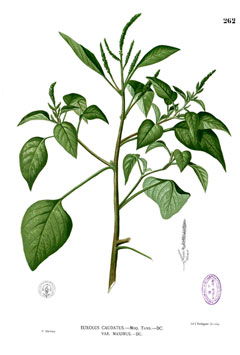
http://upload.wikimedia.org/wikipedia/commons/9/9f/Amaranthus_viridis_Blanco2.262.png |
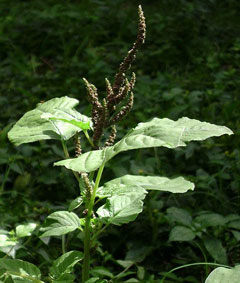 |
| http://commons.wikimedia.org/wiki/User:Tau?olunga |
Translate this page:
Summary
An excellent substitute for spinach. Leaves, the leafy stems and flower clusters are cooked and have a mild flavour. The seed is cooked whole. Common names include: African spinach; callaloo; green amaranth; rough pigweed; wild amaranth. Spanish: bledo blanco (Argentina); bledo manso (Colombia); bledo verde (Colombia); caruru (Argentina); chichimeca (Argentina); citaco (Argentina). French: amarante verte.
Physical Characteristics

 Amaranthus viridis is a ANNUAL growing to 0.5 m (1ft 8in).
See above for USDA hardiness. It is hardy to UK zone 9 and is frost tender. It is in leaf from April to October, in flower from July to September, and the seeds ripen from August to October. The species is monoecious (individual flowers are either male or female, but both sexes can be found on the same plant) and is pollinated by Wind. The plant is self-fertile.
Suitable for: light (sandy), medium (loamy) and heavy (clay) soils and prefers well-drained soil. Suitable pH: mildly acid, neutral and basic (mildly alkaline) soils. It cannot grow in the shade. It prefers moist soil.
UK Hardiness Map
US Hardiness Map
Synonyms
A. gracilis.
Plant Habitats
Cultivated Beds;
Edible Uses
Edible Parts: Leaves Seed
Edible Uses:
Leaves - cooked as a spinach[46, 61, 144, 177, 183]. A mild flavour[K]. The leafy stems and flower clusters are similarly used[183]. On a zero moisture basis, 100g of leaves contains 283 calories, 34.2g protein, 5.3g fat, 44.1g carbohydrate, 6.6g fibre, 16.4g ash, 2243mg calcium, 500mg phosphorus, 27mg iron, 336mg sodium, 2910mg potassium, 50mg vitamin A, 0.07mg thiamine, 2.43mg riboflavin, 11.8mg niacin and 790mg ascorbic acid[218]. Seed - cooked. Very small, about 1mm in diameter[266], but it is easy to harvest and very nutritious[K]. The seed can be cooked whole, and becomes very gelatinous like this, but it is rather difficult to crush all of the small seeds in the mouth and thus some of the seed will pass right through the digestive system without being assimilated[K]. The seed contains 14 - 16% protein and 4.7 - 7% fat[218]. The nutty edible seeds can be eaten as snacks or used in biscuits. A porridge can be made by boiling the seeds in water. In northeastern Indian it is known as Cheng-kruk and eaten traditionally as a vegetable. In South India it is known as Kuppacheera. It is also a common vegetable in Bengali cuisine and is called "note shak.
References More on Edible Uses
| Composition
|
| Figures in grams (g) or miligrams (mg) per 100g of food.
|
|
|
Leaves (Dry weight)
|
|
- 283 Calories per 100g
- Water : 0%
- Protein: 34.2g; Fat: 5.3g; Carbohydrate: 44.1g; Fibre: 6.6g; Ash: 16.4g;
- Minerals - Calcium: 2243mg; Phosphorus: 500mg; Iron: 27mg; Magnesium: 0mg; Sodium: 336mg; Potassium: 2910mg; Zinc: 0mg;
- Vitamins - A: 50mg; Thiamine (B1): 0.07mg; Riboflavin (B2): 2.43mg; Niacin: 11.8mg; B6: 0mg; C: 790mg;
- Reference: [ ]
- Notes:
|
|
Medicinal Uses
Plants For A Future can not take any responsibility for any adverse effects from the use of plants. Always seek advice from a professional before using a plant medicinally.
Astringent Dysentery Vermifuge
A decoction of the entire plant is used to stop dysentery and inflammation[218]. The plant is emollient and vermifuge[218, 240]. The root juice is used to treat inflammation during urination[272]. It is also taken to treat constipation[272].
References More on Medicinal Uses
The Bookshop: Edible Plant Books
Our Latest books on Perennial Plants For Food Forests and Permaculture Gardens in paperback or digital formats.
Edible Tropical Plants
Food Forest Plants for Hotter Conditions: 250+ Plants For Tropical Food Forests & Permaculture Gardens.
More
Edible Temperate Plants
Plants for Your Food Forest: 500 Plants for Temperate Food Forests & Permaculture Gardens.
More
More Books
PFAF have eight books available in paperback and digital formats. Browse the shop for more information.
Shop Now
Other Uses
References More on Other Uses
Cultivation details
Prefers a well-drained fertile soil in a sunny position[200]. Requires a hot sheltered position if it is to do well[K]. Plants should not be given inorganic fertilizers, see notes above on toxicity. Cultivated as a food plant in the tropics[46]. Should this plant be called A. caudatus. L. 'Viridis'[200]? Most if not all members of this genus photosynthesize by a more efficient method than most plants. Called the 'C4 carbon-fixation pathway', this process is particularly efficient at high temperatures, in bright sunlight and under dry conditions[196].
References Carbon Farming Information and Carbon Sequestration Information
Temperature Converter
Type a value in the Celsius field to convert the value to Fahrenheit:
Fahrenheit:
The PFAF Bookshop
Plants For A Future have a number of books available in paperback and digital form. Book titles include Edible Plants, Edible Perennials, Edible Trees,Edible Shrubs, Woodland Gardening, and Temperate Food Forest Plants. Our new book is Food Forest Plants For Hotter Conditions (Tropical and Sub-Tropical).
Shop Now
Plant Propagation
Seed - sow late spring in situ. An earlier sowing can be made in a greenhouse and the plants put out after the last expected frosts. Germination is usually rapid and good if the soil is warm[133]. A drop in temperature overnight aids germination[133]. Cuttings of growing plants root easily[206].
Other Names
If available other names are mentioned here
Native Plant Search
Search over 900 plants ideal for food forests and permaculture gardens. Filter to search native plants to your area. The plants selected are the plants in our book 'Plants For Your Food Forest: 500 Plants for Temperate Food Forests and Permaculture Gardens, as well as plants chosen for our forthcoming related books for Tropical/Hot Wet Climates and Mediterranean/Hot Dry Climates. Native Plant Search
Found In
Countries where the plant has been found are listed here if the information is available
Weed Potential
Right plant wrong place. We are currently updating this section.
Please note that a plant may be invasive in one area but may not in your area so it’s worth checking.
A very common weed that can be a serious in virtually any crop. Found in all warm regions of the world and one of the most common weeds in the tropics, subtropics and warm temperate regions.
Conservation Status
IUCN Red List of Threatened Plants Status : Least Concern.

| Related Plants
|
| Latin Name | Common Name | Habit | Height | Hardiness | Growth | Soil | Shade | Moisture | Edible | Medicinal | Other |
| Amaranthus albus | Prostrate Pigweed | Annual | 0.7 |
8-10
| | LMH | N | M | 2 | 0 | 1 |
| Amaranthus bidentata | | Annual | 0.9 |
-
| | LMH | N | M | 2 | 1 | 1 |
| Amaranthus blitoides | Mat Amaranth | Annual | 0.2 |
6-10
| | LMH | N | M | 2 | 0 | 1 |
| Amaranthus blitum | Slender Amaranth, Purple amaranth | Annual | 1.0 |
4-8
| | LMH | N | M | 4 | 2 | 2 |
| Amaranthus campestris | | Annual | 0.0 |
-
| | LMH | N | M | 2 | 1 | 1 |
| Amaranthus caudatus | Love Lies Bleeding | Annual | 2.0 |
4-8
| | LMH | N | DM | 4 | 1 | 2 |
| Amaranthus cruentus | Purple Amaranth, Red amaranth | Annual | 2.0 |
3-11
| | LMH | N | M | 4 | 2 | 2 |
| Amaranthus diacanthus | | Annual | 0.0 |
-
| | LMH | N | M | 2 | 0 | 1 |
| Amaranthus dubius | Spleen Amaranth | Annual | 1.0 |
-
| | LMH | N | M | 2 | 0 | 1 |
| Amaranthus frumentaceus | | Annual | 0.0 |
-
| | LMH | N | M | 2 | 0 | 1 |
| Amaranthus graecizans | Spreading Pigweed, Mediterranean amaranth | Annual | 0.5 |
0-0
| | LMH | N | M | 2 | 0 | 1 |
| Amaranthus hybridus | Rough Pigweed, Slim amaranth | Annual | 2.0 |
6-12
| | LMH | N | M | 4 | 1 | 1 |
| Amaranthus hypochondriacus | Prince's Feather, Prince-of-wales feather | Annual/Perennial | 1.2 |
3-10
| | LMH | N | M | 4 | 3 | 2 |
| Amaranthus mangostanus | | Annual | 1.5 |
-
| | LMH | N | M | 2 | 0 | 1 |
| Amaranthus mitchellii | Boggabri Weed | Annual | 0.5 |
-
| | LMH | N | M | 2 | 0 | 1 |
| Amaranthus pallidiflorus | | Annual | 1.0 |
-
| | LMH | N | M | 2 | 0 | 1 |
| Amaranthus palmeri | Careless Weed | Annual | 0.9 |
7-12
| | LMH | N | M | 2 | 0 | 1 |
| Amaranthus polygamus | | Annual | 0.0 |
-
| | LMH | N | M | 2 | 1 | 1 |
| Amaranthus polystachyus | | Annual | 0.0 |
-
| | LMH | N | M | 2 | 0 | 1 |
| Amaranthus powellii | Powell's Amaranth | Annual | 1.8 |
6-11
| | LMH | N | M | 2 | 0 | 1 |
| Amaranthus quitensis | Ataco | Annual | 1.0 |
-
| | LMH | N | M | 2 | 0 | 1 |
| Amaranthus retroflexus | Pigweed, Redroot amaranth, Wild Beet | Annual | 0.9 |
3-11
| | LMH | N | M | 3 | 2 | 2 |
| Amaranthus spinosus | Spiny Amaranth | Annual | 0.6 |
4-11
| | LMH | N | M | 2 | 3 | 1 |
| Amaranthus standleyanus | Indehiscent Pigweed | Annual | 0.7 |
-
| | LMH | N | M | 2 | 0 | 1 |
| Amaranthus tenuifolius | | Annual | 0.0 |
-
| | LMH | N | M | 2 | 0 | 1 |
| Amaranthus thunbergii | Thunberg's Pigweed, Thunberg's amaranthus | Annual | 0.5 |
0-0
| | LMH | N | M | 2 | 0 | 1 |
| Amaranthus torreyi | Torrey's amaranthus | Annual | 0.8 |
0-0
| | LMH | N | M | 2 | 0 | 1 |
| Amaranthus tricolor | Chinese Spinach, Joseph's-coat, Fountain Plant, Tampala , Summer Poinsettia | Annual | 1.0 |
3-11
| M | LMH | N | M | 3 | 1 | 2 |
|
Growth: S = slow M = medium F = fast. Soil: L = light (sandy) M = medium H = heavy (clay). pH: A = acid N = neutral B = basic (alkaline). Shade: F = full shade S = semi-shade N = no shade. Moisture: D = dry M = Moist We = wet Wa = water.

Expert comment
Author
L.
Botanical References
58266
Links / References
For a list of references used on this page please go here
Readers comment
| Add a comment |
|
If you have important information about this plant that may help other users please add a comment or link below. Only comments or links that are felt to be directly relevant to a plant will be included. If you think a comment/link or information contained on this page is inaccurate or misleading we would welcome your feedback at [email protected]. If you have questions about a plant please use the Forum on this website as we do not have the resources to answer questions ourselves.
* Please note: the comments by website users are not necessarily those held by PFAF and may give misleading or inaccurate information.
To leave a comment please Register or login here All comments need to be approved so will not appear immediately.
|
Subject : Amaranthus viridis
|
|
|
|