 |
|
|
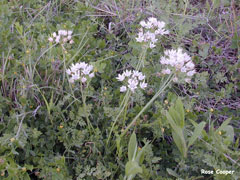 |
| Rose Cooper http://uvalde.tamu.edu/ |
Translate this page:
Summary
Physical Characteristics

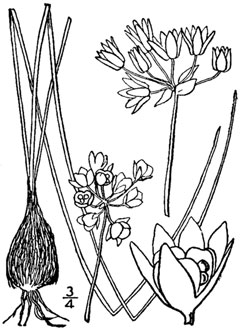
 Allium drummondii is a BULB growing to 0.3 m (1ft).
See above for USDA hardiness. It is hardy to UK zone 7. It is in flower from April to June. The species is hermaphrodite (has both male and female organs) and is pollinated by Bees, insects.
Suitable for: light (sandy) and medium (loamy) soils and prefers well-drained soil. Suitable pH: mildly acid, neutral and basic (mildly alkaline) soils. It cannot grow in the shade. It prefers moist soil.
UK Hardiness Map
US Hardiness Map
Synonyms
A. nuttallii
Plant Habitats
Cultivated Beds;
Edible Uses
Edible Parts: Flowers Leaves Root
Edible Uses:
Bulb - raw or cooked[161, 177, 257]. Used mainly as a condiment[177], the bulb is also eaten as a vegetable[183]. The bulb is rather small, up to 25mm tall and 15mm in diameter[235]. Leaves - raw or cooked. Flowers - raw. Used as a garnish on salads.
References More on Edible Uses
Medicinal Uses
Plants For A Future can not take any responsibility for any adverse effects from the use of plants. Always seek advice from a professional before using a plant medicinally.
Although no specific mention of medicinal uses has been seen for this species, members of this genus are in general very healthy additions to the diet. They contain sulphur compounds (which give them their onion flavour) and when added to the diet on a regular basis they help reduce blood cholesterol levels, act as a tonic to the digestive system and also tonify the circulatory system[K].
References More on Medicinal Uses
The Bookshop: Edible Plant Books
Our Latest books on Perennial Plants For Food Forests and Permaculture Gardens in paperback or digital formats.
Edible Tropical Plants
Food Forest Plants for Hotter Conditions: 250+ Plants For Tropical Food Forests & Permaculture Gardens.
More
Edible Temperate Plants
Plants for Your Food Forest: 500 Plants for Temperate Food Forests & Permaculture Gardens.
More
More Books
PFAF have eight books available in paperback and digital formats. Browse the shop for more information.
Shop Now
Other Uses
Repellent
The juice of the plant is used as a moth repellent. The whole plant is said to repel insects and moles[20].
Special Uses
References More on Other Uses
Cultivation details
Prefers a sunny position in a light well-drained soil[1]. Succeeds in the rock garden, though in cold wet areas it is best grown in a bulb frame or cold greenhouse[203]. The bulbs should be planted fairly deeply[1]. Most members of this genus are intolerant of competition from other growing plants[203]. The plants are much liked by grazing animals and have become rare or absent on pasture land[203]. Grows well with most plants, especially roses, carrots, beet and chamomile, but it inhibits the growth of legumes[18, 20, 54]. This plant is a bad companion for alfalfa, each species negatively affecting the other[201]. Members of this genus are rarely if ever troubled by browsing deer[233].
References Carbon Farming Information and Carbon Sequestration Information
Temperature Converter
Type a value in the Celsius field to convert the value to Fahrenheit:
Fahrenheit:
The PFAF Bookshop
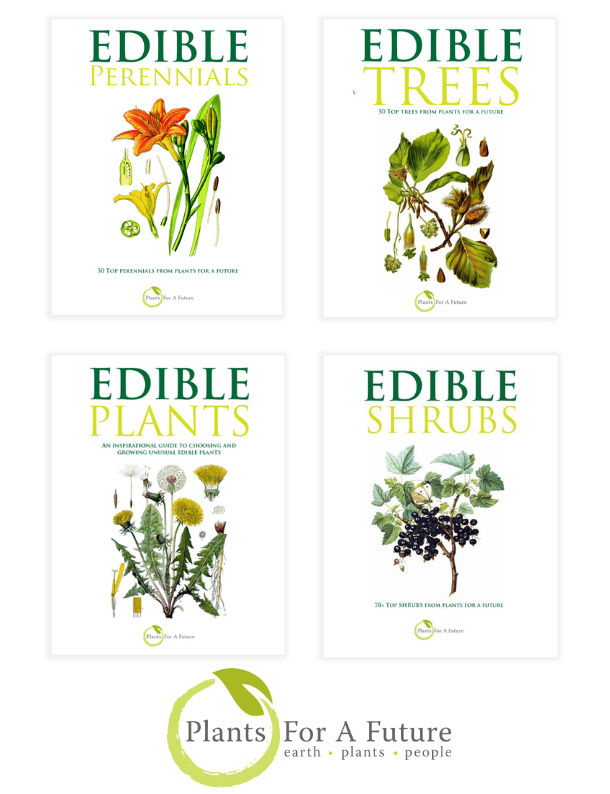
Plants For A Future have a number of books available in paperback and digital form. Book titles include Edible Plants, Edible Perennials, Edible Trees,Edible Shrubs, Woodland Gardening, and Temperate Food Forest Plants. Our new book is Food Forest Plants For Hotter Conditions (Tropical and Sub-Tropical).
Shop Now
Plant Propagation
Seed - sow spring in a cold frame. Prick out the seedlings into individual pots when they are large enough to handle - if you want to produce clumps more quickly then put three plants in each pot. Grow them on in the greenhouse for at least their first winter and plant them out into their permanent positions in spring once they are growing vigorously and are large enough. Division in spring. The plants divide successfully at any time in the growing season, pot up the divisions in a cold frame or greenhouse until they are growing well and then plant them out into their permanent positions.
Other Names
If available other names are mentioned here
Native Plant Search
Search over 900 plants ideal for food forests and permaculture gardens. Filter to search native plants to your area. The plants selected are the plants in our book 'Plants For Your Food Forest: 500 Plants for Temperate Food Forests and Permaculture Gardens, as well as plants chosen for our forthcoming related books for Tropical/Hot Wet Climates and Mediterranean/Hot Dry Climates. Native Plant Search
Found In
Countries where the plant has been found are listed here if the information is available
Weed Potential
Right plant wrong place. We are currently updating this section.
Please note that a plant may be invasive in one area but may not in your area so it’s worth checking.
Conservation Status
IUCN Red List of Threatened Plants Status :

| Related Plants
|
| Latin Name | Common Name | Habit | Height | Hardiness | Growth | Soil | Shade | Moisture | Edible | Medicinal | Other |
| Allium acuminatum | Hooker's Onion, Tapertip onion | Bulb | 0.3 |
5-9
| | LM | N | DM | 3 | 2 | 2 |
| Allium aflatunense | Persian Onion, Ornamental Onion | Bulb | 1.0 |
4-8
| M | LM | N | M | 2 | 2 | 1 |
| Allium akaka | | Bulb | 0.2 |
7-10
| | LM | N | DM | 3 | 2 | 1 |
| Allium altaicum | | Bulb | 0.3 |
-
| | LM | N | M | 3 | 2 | 1 |
| Allium ampeloprasum | Wild Leek, Broadleaf wild leek | Bulb | 1.8 |
5-9
| | LMH | N | DM | 5 | 3 | 2 |
| Allium ampeloprasum babingtonii | Babington's Leek | Bulb | 1.8 |
0-0
| | LMH | N | DM | 3 | 3 | 2 |
| Allium angulare | | Bulb | 0.0 |
-
| | LM | N | M | 3 | 2 | 1 |
| Allium angulosum | Mouse Garlic | Bulb | 0.5 |
4-8
| | LMH | SN | M | 3 | 2 | 1 |
| Allium atropurpureum | | Bulb | 1.0 |
7-10
| | LM | SN | M | 3 | 2 | 1 |
| Allium bisceptrum | Aspen Onion, Twincrest onion | Bulb | 0.3 |
7-10
| | LM | N | M | 3 | 2 | 1 |
| Allium bodeanum | | Bulb | 0.2 |
-
| | LM | N | DM | 3 | 2 | 1 |
| Allium bolanderi | Bolander's Onion | Bulb | 0.2 |
6-9
| | LM | N | M | 3 | 2 | 1 |
| Allium brevistylum | Shortstyle Onion | Bulb | 0.5 |
-
| | LM | N | MWe | 3 | 2 | 1 |
| Allium canadense | Canadian Garlic, Meadow garlic, Fraser meadow garlic, Hyacinth meadow garlic | Bulb | 0.5 |
4-8
| | LM | SN | MWe | 4 | 2 | 2 |
| Allium canadense mobilense | Canadian Garlic | Bulb | 0.5 |
4-8
| | LM | SN | MWe | 5 | 2 | 1 |
| Allium carinatum | Keeled Garlic | Bulb | 0.6 |
6-9
| | LMH | SN | M | 3 | 2 | 1 |
| Allium carolinianum | | Bulb | 0.4 |
-
| | LM | N | DM | 3 | 2 | 1 |
| Allium cepa | Onion, Garden onion | Bulb | 0.6 |
4-10
| | LM | N | M | 5 | 3 | 3 |
| Allium cepa aggregatum | Potato Onion | Bulb | 1.2 |
4-8
| | LM | N | M | 4 | 3 | 3 |
| Allium cepa ascalonicum | Shallot | Bulb | 0.3 |
4-8
| | LM | N | M | 5 | 3 | 2 |
| Allium cepa proliferum | Tree Onion, Walking Onion | Bulb | 1.2 |
4-8
| | LM | N | M | 5 | 3 | 3 |
| Allium cernuum | Nodding Onion, New Mexican nodding onion | Bulb | 0.5 |
5-9
| | LMH | N | M | 5 | 2 | 2 |
| Allium chinense | Rakkyo | Bulb | 0.3 |
6-9
| | LM | N | M | 4 | 2 | 1 |
| Allium condensatum | | Bulb | 0.6 |
4-8
| | LM | N | M | 3 | 2 | 1 |
| Allium cupanii | | Bulb | 0.3 |
7-10
| | LM | N | DM | 3 | 2 | 1 |
| Allium douglasii | Douglas' Onion | Bulb | 0.3 |
0-0
| | LM | N | DM | 3 | 2 | 1 |
| Allium dregeanum | Wild Onion | Bulb | 0.6 |
-
| | LM | N | DM | 3 | 2 | 1 |
| Allium fistulosum | Welsh Onion | Bulb | 0.6 |
5-9
| | LMH | N | M | 5 | 2 | 2 |
| Allium flavum | Small Yellow Onion, Ornamental Onion | Bulb | 0.5 |
4-7
| M | LMH | SN | M | 2 | 2 | 1 |
|
|
Growth: S = slow M = medium F = fast. Soil: L = light (sandy) M = medium H = heavy (clay). pH: A = acid N = neutral B = basic (alkaline). Shade: F = full shade S = semi-shade N = no shade. Moisture: D = dry M = Moist We = wet Wa = water.
Expert comment
Author
Regel.
Botanical References
43200235
Links / References
For a list of references used on this page please go here
Readers comment
© 2010, Plants For A Future. Plants For A Future is a charitable company limited by guarantee, registered in England and Wales. Charity No. 1057719, Company No. 3204567.