 |
|
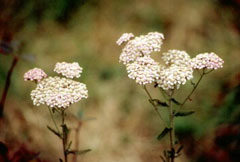
(c) ken Fern, Plants For A Future 2010 |
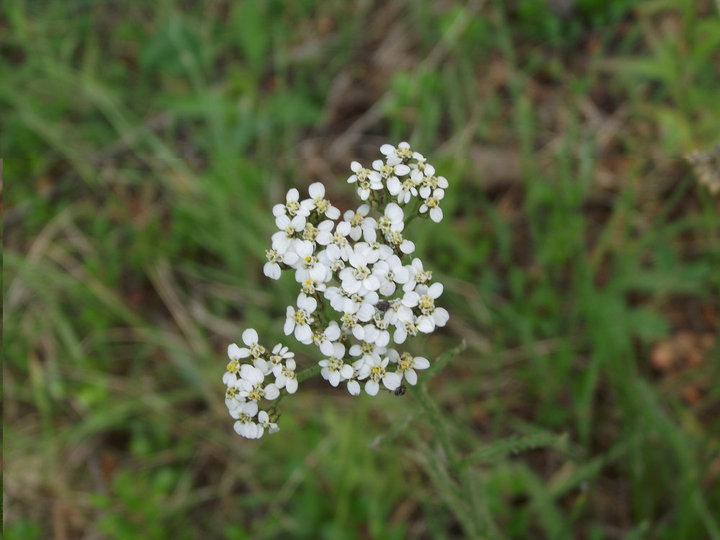 |
| (c) Steve Flanagan |
Translate this page:
Summary
Bloom Color: Pink, White.
Main Bloom Time: Early fall, Late summer, Mid summer. Form: Upright or erect.
Physical Characteristics

 Achillea millefolium is a PERENNIAL growing to 0.6 m (2ft) by 0.6 m (2ft in) at a fast rate.
See above for USDA hardiness. It is hardy to UK zone 2 and is not frost tender. It is in flower from June to August, and the seeds ripen from July to September. The species is hermaphrodite (has both male and female organs) and is pollinated by Insects.
It is noted for attracting wildlife.
Suitable for: light (sandy), medium (loamy) and heavy (clay) soils, prefers well-drained soil and can grow in nutritionally poor soil. Suitable pH: mildly acid, neutral and basic (mildly alkaline) soils and can grow in very alkaline soils.
It can grow in semi-shade (light woodland) or no shade. It prefers dry or moist soil and can tolerate drought. The plant can tolerate maritime exposure.
UK Hardiness Map
US Hardiness Map
Synonyms
Achillea lanulosa Nutt. Achillea gracilis Raf. Achillea albida Willd.
Plant Habitats
Ground Cover; Lawn; Meadow;
Edible Uses
Edible Parts: Leaves
Edible Uses: Condiment Tea
Leaves - raw or cooked[4, 5, 46, 52]. A rather bitter flavour, they make an acceptable addition to mixed salads and are best used when young[9, 183, K]. The leaves are also used as a hop-substitute for flavouring and as a preservative for beer etc[2, 9, 53, 183]. Although in general yarrow is a very nutritious and beneficial plant to add to the diet, some caution should be exercised[K]. See the notes above on possible toxicity. An aromatic tea is made from the flowers and leaves[183]. An essential oil from the flowering heads is used as a flavouring for soft drinks[183].
References More on Edible Uses
Medicinal Uses
Plants For A Future can not take any responsibility for any adverse effects from the use of plants. Always seek advice from a professional before using a plant medicinally.
Antidiarrhoeal Antiinflammatory Antiseptic Antispasmodic Appetizer Aromatic Astringent Carminative
Cholagogue Diaphoretic Digestive Emmenagogue Odontalgic Stimulant Tonic
Vasodilator Vulnerary
Yarrow has a high reputation and is widely employed in herbal medicine, administered both internally and externally. It is used in the treatment of a very wide range of disorders but is particularly valuable for treating wounds, stopping the flow of blood, treating colds, fevers, kidney diseases, menstrual pain etc[218, 238, 254, 257]. The whole plant is used, both fresh and dried, and is best harvested when in flower[222]. Some caution should be exercised in the use of this herb since large or frequent doses taken over a long period may be potentially harmful[222], causing allergic rashes and making the skin more sensitive to sunlight[238]. The herb combines well with Sambucus nigra flowers (Elder) and Mentha x piperita vulgaris (Peppermint) for treating colds and influenza[268]. The herb is antiseptic, antispasmodic, mildly aromatic, astringent, carminative, cholagogue, diaphoretic, digestive, emmenagogue, odontalgic, stimulant, bitter tonic, vasodilator and vulnerary[4, 9, 14, 21, 54, 145, 165, 172, 238, 240, 254]. It also contains the anti-inflammatory agent azulene, though the content of this varies even between plants in the same habitat[238]. The herb is harvested in the summer when in flower and can be dried for later use[4]. The fresh leaf can be applied direct to an aching tooth in order to relieve the pain[268].
References More on Medicinal Uses
The Bookshop: Edible Plant Books
Our Latest books on Perennial Plants For Food Forests and Permaculture Gardens in paperback or digital formats.
Edible Tropical Plants
Food Forest Plants for Hotter Conditions: 250+ Plants For Tropical Food Forests & Permaculture Gardens.
More
Edible Temperate Plants
Plants for Your Food Forest: 500 Plants for Temperate Food Forests & Permaculture Gardens.
More
More Books
PFAF have eight books available in paperback and digital formats. Browse the shop for more information.
Shop Now
Other Uses
Companion Compost Cosmetic Dye Essential Hair Liquid feed Repellent
The growing plant repels beetles, ants and flies[14, 99, 172]. The plant has been burnt in order to ward off mosquitoes[257]. A liquid plant feed can be made from the leaves[54]. You fill a container with the leaves and then add some water. Leave it to soak for a week or two and then dilute the rather smelly dark liquid, perhaps 10 - 1 with water though this figure is not crucial[K]. This plant is an essential ingredient of 'Quick Return' herbal compost activator[32]. This is a dried and powdered mixture of several herbs that can be added to a compost heap in order to speed up bacterial activity and thus shorten the time needed to make the compost[K]. The fragrant seeds have been used to impart a pleasant smell indoors[257]. An essential oil obtained from the leaves is used medicinally[17, 46, 61]. The leaves contain from 0.6 to 0.85% essential oil[240]. The leaves have been used as a cosmetic cleanser for greasy skin[268]. Yellow and green dyes are obtained from the flowers[168]. A good ground cover plant, spreading quickly by its roots[208]. A dynamic accumulator gathering minerals or nutrients from the soil and storing them in a more bioavailable form - used as fertilizer or to improve mulch. Nectary, invertebrate shelter.
Special Uses
Attracts Wildlife Dynamic accumulator Food Forest Ground cover Scented Plants
References More on Other Uses
Cultivation details
Landscape Uses:Container, Ground cover, Massing, Seashore, Woodland garden. Succeeds in most soils and situations but prefers a well-drained soil in a sunny position[1, 14]. Shade tolerant[13]. Plants live longer when grown in a poor soil[200] and also do well on lime[208]. Established plants are very drought tolerant[200], they can show distress in very severe droughts but usually recover[190]. It remains green after grass has turned brown in a drought[187]. Plants succeed in maritime gardens[233]. The plant has a very spreading root system and is usually quite invasive[233, K]. A very hardy plant, tolerating temperatures down to about -25°c[187]. Yarrow is an excellent plant for growing in lawns, meadows, orchards etc., it is tolerant of repeated close cutting and of being walked on[20, 54]. It works to improve the soil fertility[20, 54]. A very good companion plant, it improves the health of plants growing nearby and enhances their essential oil content thus making them more resistant to insect predations[14, 18, 20, 53]. There are some named forms, selected for their ornamental value[183, 238]. 'Pink' (syn. 'Rosea') has very aromatic foliage and deep pink flowers[183]. Hybridizes freely with other members of this genus[200]. A good bee plant, it is an important nectar source for many insects[24]. Special Features:
Attractive foliage, Edible, Fragrant foliage, Invasive, Naturalizing, Attracts butterflies, Suitable for cut flowers, Suitable for dried flowers. The plant is heat tolerant in zones 9 through 1. (Plant Hardiness Zones show how well plants withstand cold winter temperatures.
Plant Heat Zones show when plants would start suffering from the heat.
The Plant Heat Zone map is based on the number of "heat days" experienced in a given area where the temperature climbs to over 86 degrees F (30°C).
At this temperature, many plants begin to suffer physiological damage. Heat Zones range from 1 (no heat days) to 12 (210 or more heat days).
For example Heat Zone. 11-1 indicates that the plant is heat tolerant in zones 11 through 1.) For polyculture design as well as the above-ground architecture (form - tree, shrub etc. and size shown above) information on the habit and root pattern is also useful and given here if available. The plant growth habit is a runner spreading indefinitely by rhizomes or stolons [1-2]. The root pattern is fibrous dividing into a large number of fine roots [1-2]. The root pattern is rhizomatous with underground stems sending roots and shoots along their length [1-2].
References Carbon Farming Information and Carbon Sequestration Information
Temperature Converter
Type a value in the Celsius field to convert the value to Fahrenheit:
Fahrenheit:
The PFAF Bookshop
Plants For A Future have a number of books available in paperback and digital form. Book titles include Edible Plants, Edible Perennials, Edible Trees,Edible Shrubs, Woodland Gardening, and Temperate Food Forest Plants. Our new book is Food Forest Plants For Hotter Conditions (Tropical and Sub-Tropical).
Shop Now
Plant Propagation
Seed - sow spring or early autumn in a cold frame[133]. The seed usually germinates in 1 - 3 months[133]. When large enough to handle, prick the seedlings out into individual pots and plant them out in the summer. Division in spring or autumn. Very easy, the divisions can be planted direct into their permanent positions. Divisions succeed at any time of the year. Basal cuttings of new shoots in spring. Very easy, collect the shoots when they are about 10cm tall, potting them up individually in pots and keeping them in a warm but lightly shaded position. They should root within 3 weeks and will be ready to plant out in the summer.
Other Names
If available other names are mentioned here
Also known as bloodwort,
carpenter's weed,
common yarrow,
hierba de las cortaduras,
milfoil,
plumajillo.
Native Plant Search
Search over 900 plants ideal for food forests and permaculture gardens. Filter to search native plants to your area. The plants selected are the plants in our book 'Plants For Your Food Forest: 500 Plants for Temperate Food Forests and Permaculture Gardens, as well as plants chosen for our forthcoming related books for Tropical/Hot Wet Climates and Mediterranean/Hot Dry Climates. Native Plant Search
Found In
Countries where the plant has been found are listed here if the information is available
Weed Potential
Right plant wrong place. We are currently updating this section.
Please note that a plant may be invasive in one area but may not in your area so it’s worth checking.
The plant is often considered to be an aggressive weed and has spread from its original range in Europe and western Asia to many of the places humans have gone to.
Conservation Status
IUCN Red List of Threatened Plants Status : Least Concern

Growth: S = slow M = medium F = fast. Soil: L = light (sandy) M = medium H = heavy (clay). pH: A = acid N = neutral B = basic (alkaline). Shade: F = full shade S = semi-shade N = no shade. Moisture: D = dry M = Moist We = wet Wa = water.

Expert comment
Author
L.
Botanical References
17200
Links / References
For a list of references used on this page please go here
Readers comment