Translate this page:
Summary
Bloom Color: Yellow. Main Bloom Time: Early spring, Late spring, Mid spring. Form: Pyramidal, Rounded.
Physical Characteristics

 Sassafras albidum is a deciduous Tree growing to 25 m (82ft) by 15 m (49ft) at a medium rate.
See above for USDA hardiness. It is hardy to UK zone 5 and is not frost tender. It is in leaf from April to October, in flower from May to June, and the seeds ripen from September to October. The species is dioecious (individual flowers are either male or female, but only one sex is to be found on any one plant so both male and female plants must be grown if seed is required). . The plant is not self-fertile.
Suitable for: light (sandy), medium (loamy) and heavy (clay) soils and prefers well-drained soil. Suitable pH: mildly acid and neutral soils. It can grow in semi-shade (light woodland) or no shade. It prefers moist soil.
UK Hardiness Map
US Hardiness Map
Synonyms
S. officinale. S. sassafras. Laurus albida.
Plant Habitats
Woodland Garden Canopy; Secondary; Sunny Edge; Dappled Shade;
Edible Uses
Edible Parts: Leaves Shoots
Edible Uses: Condiment Tea
Leaves - raw or cooked. The young leaves can be added to salads whilst both old and young leaves can be used as a flavouring and as a thickening agent in soups etc[2, 20, 55, 62, 82, 102, 183]. They have a mild aromatic flavour[K]. The leaves are often dried and ground into powder for later use[82, 159, 183]. The young shoots have been used to make a kind of beer[4]. The dried root bark can be boiled with sugar and water until it forms a thick paste[183]. It is then used as a condiment[183]. The root and the berries can also be used as flavourings[55, 142]. Winter buds and young leaves - raw[62, 183]. A tea is made from the root bark, it is considered to be a tonic[18, 20, 55, 62]. The tea can also be made by brewing the root in maple syrup, this can be concentrated into a jelly[183]. A tea can also be made from the leaves and the roots. It is best in spring. A tea can be made from the flowers[2].
References More on Edible Uses
Medicinal Uses
Plants For A Future can not take any responsibility for any adverse effects from the use of plants. Always seek advice from a professional before using a plant medicinally.
Alterative Anodyne Antirheumatic Antiseptic Aromatic Carminative Diaphoretic Diuretic
Stimulant Vasodilator
Sassafras has a long history of herbal use. It was widely employed by many native North American Indian tribes who used it to treat a wide range of complaints, valuing it especially for its tonic effect upon the body[257]. It is still commonly used in herbalism and as a domestic remedy. The root bark and root pith are alterative, anodyne, antiseptic, aromatic, carminative, diaphoretic, diuretic, stimulant and vasodilator[4, 21, 46, 165]. A tea made from the root bark is particularly renowned as a spring tonic and blood purifier as well as a household cure for a wide range of ailments such as gastrointestinal complaints, colds, kidney ailments, rheumatism and skin eruptions[222, 238, 257]. The mucilaginous pith from the twigs has been used as a poultice or wash for eye ailments and is also taken internally as a tea for chest, liver and kidney complaints[222]. An essential oil from the root bark is used as an antiseptic in dentistry and also as an anodyne[213]. The oil contains safrole, which is said to have carcinogenic activity and has been banned from use in American foods - though it is less likely to cause cancer than alcohol[222]. In large doses the oil is poisonous, causing dilated pupils, vomiting, stupor, collapse and kidney and liver damage[4, 238]. The oil has been applied externally to control lice and treat insect bites, though it can cause skin irritation[238].
References More on Medicinal Uses
The Bookshop: Edible Plant Books
Our Latest books on Perennial Plants For Food Forests and Permaculture Gardens in paperback or digital formats.

Edible Tropical Plants
Food Forest Plants for Hotter Conditions: 250+ Plants For Tropical Food Forests & Permaculture Gardens.
More

Edible Temperate Plants
Plants for Your Food Forest: 500 Plants for Temperate Food Forests & Permaculture Gardens.
More

More Books
PFAF have eight books available in paperback and digital formats. Browse the shop for more information.
Shop Now
Other Uses
Companion Dye Essential Repellent Wood
An essential oil is obtained from the bark of the root[61] and also from the fruits[4]. One hundred kilos of root chips yield one litre of essential oil under steam pressure - this oil comprises about 90% safrol[245]. The oil is medicinal and is also used in soaps, the coarser kinds of perfumery, toothpastes, soft drinks etc[4, 46, 57, 82]. It is also used as an antiseptic in dentistry[61]. A yellow dye is obtained from the wood and the bark[4, 168]. It is brown to orange[168]. The plant repels mosquitoes and other insects[18, 20]. Wood - coarse-grained, soft, weak, fragrant, brittle, very durable in the soil. It weighs 31lb per cubic foot and is used for fence posts and items requiring lightness[46, 82, 171, 227].
Special Uses
Food Forest Scented Plants
References More on Other Uses
Cultivation details
Landscape Uses:Pest tolerant, Massing, Specimen, Woodland garden. Requires a deep, fertile, well-drained, lime-free, near neutral soil in sun or light shade[11, 200]. Does well in a woodland garden[166], especially in a sheltered position along the edge[200]. The plant is tender when young, the young shoots of older trees can also be damaged by late spring frosts[11, 238]. A very ornamental plant[1] with a wide range of uses, it is occasionally cultivated and often gathered from the wild[61]. All parts of the tree contain essential oils and give off a pleasant spicy aroma when crushed[229]. The stem bark is highly aromatic, more so than the wood. The root stem bark is the most pleasant of all[245]. The flowers have a spicy perfume[245]. Trees are long-lived, moderately fast-growing and disease-free in the wild[227, 229]. They can begin flowering when only 10 years old and good seed crops are usually produced every 2 - 3 years[229]. The trees spread by root suckers and can form thickets[229]. Although some flowers appear to be hermaphrodite, they are functionally either male or female and most trees are dioecious[229]. Both male and female plants must be grown if seed is required. Special Features:North American native, Attracts butterflies, Fragrant flowers, Attractive flowers or blooms. The plant is heat tolerant in zones 8 through 3. (Plant Hardiness Zones show how well plants withstand cold winter temperatures.
Plant Heat Zones show when plants would start suffering from the heat.
The Plant Heat Zone map is based on the number of "heat days" experienced in a given area where the temperature climbs to over 86 degrees F (30°C).
At this temperature, many plants begin to suffer physiological damage. Heat Zones range from 1 (no heat days) to 12 (210 or more heat days).
For example Heat Zone. 11-1 indicates that the plant is heat tolerant in zones 11 through 1.) For polyculture design as well as the above-ground architecture (form - tree, shrub etc. and size shown above) information on the habit and root pattern is also useful and given here if available. A sprouting standard sending up shoots from the base [1-2]. The root pattern is a tap root similar to a carrot going directly down [1-2]. The root pattern is suckering with new plants from underground runners away from the plant [1-2].
References Carbon Farming Information and Carbon Sequestration Information
Temperature Converter
Type a value in the Celsius field to convert the value to Fahrenheit:
Fahrenheit:
The PFAF Bookshop
Plants For A Future have a number of books available in paperback and digital form. Book titles include Edible Plants, Edible Perennials, Edible Trees,Edible Shrubs, Woodland Gardening, and Temperate Food Forest Plants. Our new book is Food Forest Plants For Hotter Conditions (Tropical and Sub-Tropical).
Shop Now
Plant Propagation
Seed - best sown as soon as ripe in a cold frame[200]. Stored seed requires 4 months cold stratification at 4°c[113]. It is best sown as early in the year as possible. Prick out the seedlings into individual pots as soon as possible and grow them on in the greenhouse. One report says to harden off the plants as soon as possible[78], but young plants are frost-tender[11] and so we recommend growing them on in the greenhouse for their first winter and then planting them out in early summer. Give the young trees some protection for at least their first winter outdoors[K]. Root cuttings, taken from suckers, 1 - 2cm long taken in December. Plant horizontally in pots in a greenhouse[78]. Suckers in late winter. Plant straight out into their permanent positions[200].
Other Names
If available other names are mentioned here
Native Range
NORTHERN AMERICA: Canada, Ontario (southeast), United States, Connecticut, Indiana, Maine (south), Massachusetts, Michigan, New Hampshire, New Jersey, New York, Ohio, Pennsylvania, Rhode Island, Vermont, West Virginia, Illinois, Iowa (southeast), Kansas, Missouri, Oklahoma, Alabama, Arkansas, Delaware, Florida, Georgia, Kentucky, Louisiana, Maryland, Mississippi, North Carolina, South Carolina, Tennessee, Virginia, District of Columbia, Texas,
Weed Potential
Right plant wrong place. We are currently updating this section.
Please note that a plant may be invasive in one area but may not in your area so it's worth checking.
Conservation Status
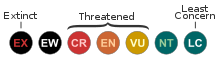
IUCN Red List of Threatened Plants Status :
Growth: S = slow M = medium F = fast. Soil: L = light (sandy) M = medium H = heavy (clay). pH: A = acid N = neutral B = basic (alkaline). Shade: F = full shade S = semi-shade N = no shade. Moisture: D = dry M = Moist We = wet Wa = water.
Now available:
Food Forest Plants for Mediterranean Conditions
350+ Perennial Plants For Mediterranean and Drier Food Forests and Permaculture Gardens.
[Paperback and eBook]
This is the third in Plants For A Future's series of plant guides for food forests tailored to
specific climate zones. Following volumes on temperate and tropical ecosystems, this book focuses
on species suited to Mediterranean conditions—regions with hot, dry summers and cool, wet winters,
often facing the added challenge of climate change.
Read More
Expert comment
Author
(Nutt.)Nees.
Botanical References
1143200
Links / References
For a list of references used on this page please go here
Readers comment